Wayne’s translations from Nepal
________
Wayne’s work online:photo-poems
flatLine witness
Siddhartha Art Gallery
Nepali times 01
Nepali Times 02
RE:AL
A-worldwide
Email Wayne
 Wayne Amtzis
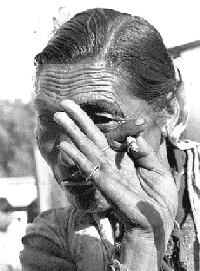
Where iron railings and barbed wire demarcate public space, in and about temple alcoves and surrounding barred verandas, thrust out against the street in doorways and against walls, held back in the inertia of their daily lives or simply waiting for work…With ropes, poles, boxes and baskets, the tools of their working lives, and with the canes and sticks that some hold to and rely on, often with cigarette gripped in a hand —artifacts of clinging, limits and supports, the immediate surface of their lives laid bare… Against the dismissive vantage of an enclosing city, exposed torsos and limbs, arms, hands, face and gaze, the speechless, the unseen, in warren-ed space…only the expanse of their longing remains, locked in, heralded by the outlandish signs of politics and business as usual.
Rite of Way
Up from Durga’s temple
past pigs scratching themselves on stone-faced idols,
the city rises out of a dying river
Apartments overlook temples fallen prey
to pigeons and rats. Where cows freely roam,
a trio of flute, drum and voice
celebrate an unearthing. Nudging by,
a street-wide car swerves
into the crater where a stone idol lies exposed
Pedestrians push on, not caring for the rite interrupted,
nor for the one taking place. A tire spins,
the god lies unmoved, the confused traveler
leans on his horn.
Among the peanuts he sells, Bahadur Badam
counts empty shells. The baksheesh is spent; the police
had their share. His wife curses the vehicle
that ran down their daughter. Traditional remedies
turn easily into rites of mourning. This is the way east
An operation would leave her alive… This the spirit ascending
but useless. A makeshift lean-to is home;
it’s mud floor: table and bed. On burlap outside,
thistles and greens are set for sale
Soon their corner and multi-media hovel
will make way for a bridge. Trucks as wide as the street
insistently honk for the right of way
There’s a Story Here
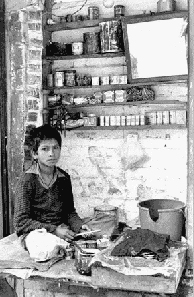
Among the bed-sized cubicles that line the street,
oversized toolboxes each with a man inside,
I stop at a ramshackle teashop
There’s a story here, I can almost feel it
But who am I to ask the girl
pouring tea out of a large metal pot?
and what can I say to the young men in tee shirts,
their necks and arms and fingers
smeared with grease? An old man perches on a window sill
He stares at the street that’s sprung up here
His house was once a mansion of sorts
the walls washed clean of paint bend outward
the second floor where he holds court
stands without support. The third floor and roof above
riddled with the roots of a bodhi tree
Putting down the glass of tea
too sweet to drink, I sketch these cubicles
and the tea shop, and place the dilapidated mansion
on a hill behind them. The face of the girl
resembles that of the old man. But those of the boys
in the cubicles are either darker & smooth
or rounder & flat. The angular face of the old man
scowls, and a frown mars the angular face of the young girl
I shade their skin the color of milk tea, and use tea itself
and coffee to mark the mountains from the plains
As I sketch I sing to myself — “sold my camera
to pay for a room; left the room in search of a story,
with pencil and pen I make due.”
As darkness pitches its tent along the avenue,
people thicken into rows that jostle; cars
stammer to a halt and crawl. A blue light in the distance
disappears. A blue light—a Ferris wheel!
A sadhu swings loose from the crowd, sets his staff
against the wooden teashop wall
As he sips his tea, the sign on his forehead
flashes blue SMIRNOV VODKA
red GREAT WALL SHOES. I must be dreaming
Where lane and avenue merge, a lone man stands,
animal skins slung over his shoulder and arm
Every so often he squeezes one
It honks! It sneezes. Twenty or so rabbits
or squirrels skinned and stuffed for toys
It’s now too dark to see my sketch
When I clear my throat and spit, like everyone else
I feel soot I feel dirt-flecked phlegm
I say “catarrh” With that scrungy word
the spell is broken. I can return to my room
I can lie back in my bed and stretch
In the tea cubicle and in the metal workshops
a whole new day is beginning
In the night I dream I’m the old man
framed in a window. Looking out at the moon
In the night I wake scarcely able to breathe
In the dim light of the room
I finish the sketch. And hearing the clash of metal
and the hiss of flame, I lean over the words
searching for a story. Searching for a reason to be here
Cage Box Bureau Cage
1.
Sunlight glares
off a tin-roofed
bamboo cage.
Bare-legged,
a man barely
scrapes past Palace,
slides towards holy
Bagmati, river of snakeskin
and phlegm.
Caged-in by the whip
of traffic, the snarl
of horns,
the man
keeps pace
with himself
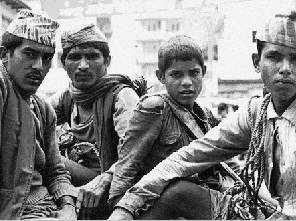
The man-sized
cage he carries
is big enough
for beast of burden
Latchitshut! Let a man sit
still for once
Slats let in
fume-hacked
light and air
2.
Now this is
something else:
this man-sized
box of wood
no one sees in
or out of — a man
could hide there
It’s the sheer size
and weight
that breaks
a man’s will
Head forward uphill,
chin with box,
corpse-size, slung rou\
nd his neck
3.
The bureau
on this man’s back
is no house
to spend the night in
less some magician –
– dismembered porter
was limb by limb
displayed For that’s what it’s for!
In some one’s house,
trinkets artifacts purchases
family heirlooms will rest there
gathering dust. Let the porter rest,
ease the bureau
from his shoulders
Let the glass shatter as it drops
4.
His gait is loose,
unlike these porters
bearing bureau box and cage
It’s wire cages he hauls;
parakeets chattering,
secretly
(like us)
plotting
escape
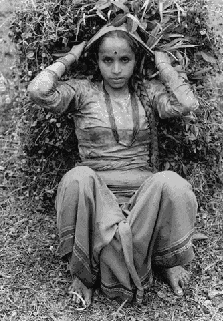
Not to Return Till Dusk
“Nepali woman farmers
spend 9.9 hours in the fields daily”
1.
With eyes cast down, the professor
speaks of an old woman nursing a child,
of nipples and their arousal
She says that encountering another culture
one learns of one’s own. And so the meditation on nipples
How it would be to nurse her own grandchild
What would her daughter think?
The nipple that nursed her so taut and tight
between her own child’s lips.
All this because assured by a Nepali servant
that a grandmother can take a child to her breast
while the mother is absent (—labors elsewhere—
was what she didn’t say). As her breath
catches on the words, that contact,
that questioning through the other
of one’s own,
almost grants her insight.
Speaking without taking on the weight
— the wait — of another way, she appropriates
those raised nipples for her own, but
it’s the absent mother that must be spoken of
Not heightened sensuality, but recognition
of difficult lives
that must be meditated on
2.
KATHMANDU POST May 2, 1994
Bitch Adopts Human Babe“feeding him with her pups
while the boy’s mother works in the fields.”
“The worried Ganga Kumari,
whose husband’s been working in India
for the past 20 months, took her son for a checkup
at the district Health office.“
That the child is healthy cannot be denied,
“but the boy and his surrogate mother
show signs of missing each other
The bitch is wary of people,
but still plays fondly with the boy
and feeds him.” Such
are the bonds of lips and nipple
“separating the two is almost impossible.”
“After feeding her son and completing her morning chores,
the mother would leave for the fields
not to return till dusk.” Not to return till dusk
Speaking of Suffering
1.
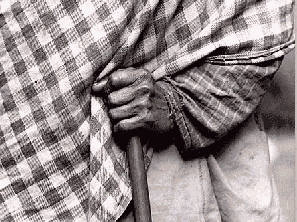
As I pass the pipal tree
that canopies the road winding
through Gairidhara, I see
perched on the low wall
circling the tree, a man I know
a cow herder, and beside him,
wearily slouched, perhaps
having hauled a sofa, refrigerator
or cabinet a few kilometers
from town, a man half his age
resting, waiting, talking
A familiar enough scene, but
as I offer “Namaskar,”
an off-key clarinet and strains
of conversation, the Nepali words
I cannot but recognize
wake me from my walking dream:
“Dukkha” I hear
“suffering” spoken of
as I step towards the corner
where piled high refuse spills path-wards
There, a thin dark man,
desultorily gathering plastic
and whatever else of worth
comes to hand, turns as I do
to see tentatively
emerging from a walled compound
just past the iron welder’s
sunken yard, men in red jackets,
some with golden epaulettes
and buttons, raise horns to lips
to play. The wedding party
slowly scuttles up the path,
but the bride, whose face I see
as the car bearing her away,
negotiating the turn
between cows and musicians,
stalls, yes, the bride
calls to me by raising her bent head
and lowering her eyes
From quivering lips — “Dukkha this
Dukkha that,” I hear
the cow herder and porter
say
2.
By the barracks
where bamboo and mimosa sway,
a Tharu woman
crouched in the road
plucks a dead vulture
featherless, scrawny neck
as limp as her own
On the wires above crows caw. No one
can see her eyes
No one feels her heartbeat
Feathers rise
ever so slightly
as cars and an agency van,
newly purchased, spewing black smoke,
hurry past
3.
On the long lane home,
every third room a shop
with biscuits, soap, rum
and a dull-faced shopkeeper
withering within,
while outside in the sun
wrapped in dirty towels
or simply sporting underwear,
workers raise up
second and third tiers
from every other house.
From a window trellised with vines
faces peer at she who sits
in the dusty road insisting to all
that she is not mad
“Bahulah hoina Hoina! Hoina!”
On paths and in fields
stranded between piled brick
and half-built houses,
children wander and play
Boys slide down the steps
to Sarasvati. Behind a grilled gate,
the goddess of learning
waits. The woman who insists
she isn’t mad, passes
hacked-limbed trees sprouting
and withering
Fingers scratching, eyes
biting through the dust
laden air; she forces a smile,
and instead of spitting
out words that would define “madness”
or “suffering”,
clearing her throat, she spits
Against a Turning Tide
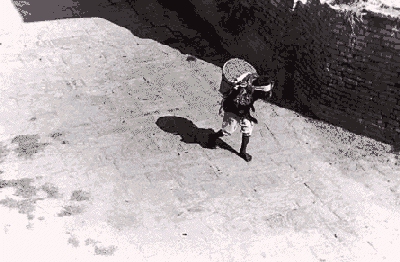
Slightly out of focus
the man climbs the splayed
road from the city center
At his back, rubble of houses rises up
to swindle the sky. Where walls
stand like sand-castles
against a turning tide, baskets
nailed to the upper floors
catch the light, hoops in the air
where coins are tossed. The man’s burden
stoops his shoulders; his voice
(could we hear through the makeshift-silence
that weighs on us) pulls at our own
vocal chords. It is a language we would speak,
it is a pitch we would hear, could we
only climb free of the rubble, could we
only lift the heavy girders from our chest
Though the man is no longer in view,
his thick-soled feet plod on plod on His thick-soled feet
plod on. Plod on. Barelegged, roped brow,
button-less shirt, filthy towel wrapped round his waist
Sand spills down shoulders and chest,
basket half-full hangs back with
the weight of it. Thickened soles sunk in,
push out and up from the hole
he’s dug. Along rock-strewn paths
where the river no longer springs
through fields towards concrete frames
where cornered, bedded down
round kerosene stoves,
as if camped out at the station waiting
for a train to take them away,
families live. Floating against walls of sky
these raised platforms are home
In a clay pot up there midst dust rising
from piled sand and bricks, a stunted geranium blooms
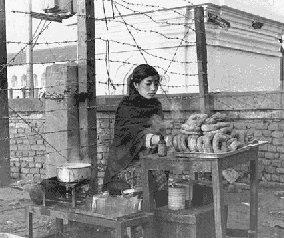
A Circle of Men
The slender white tower
no longer dominates the square
Noodle & beer-spangled signs
swim above buildings
ready to collapse at first tremor
Anchored by rocks, headlines trip us up
Relying on rumor, steadied
and assured, we pass
unscathed through the course
set on the path—
—of piled clothes & towels
—of men shining shoes
Without intention or destination
we enter the moving throng
Where roads slightly askew
slow down the flow of man and beast,
a market meanders. In shifting
sunlight, propped up by hand & shoulder
torn shirts, bare feet, each as poor as the other,
men and boys wait for work Trrp trrm
trrp trrm a stove sputters, its fumes
laced into murky tea & milk Hissstrrmm
hissstrrrm nuggets collide in a roiling sea of oil
Like punctured tires, crisp misshapen
hoops of dough pile up
No one is buying. Hissstrrmm trrp trrm
Along a path that leaves no trace
farther in, penetrating the entrails of the city,
a sunken square shaded by bodhi tree
Smooth stone beneath bare feet
Where bathers lean—a dragon’s mouth pours water
And beyond and below civilized spur,
mud hovels rise from the garbage-banked river
claiming this city as theirs. A man roasts peanuts,
another dips wool into a vat of dye.
In sunlight, a woman combs long black flowing hair
washed & oiled, wet & free. Where a river once flowed,
in a sea of refuse, pigs sleep; a man
shifting on one foot, raising arm & hand,
spits out words he knows will wake them
In that same riverbed, midst an indifferent
audience of buffaloes & pigs, a circle of men listen
and rise. With women amongst them,
a circle of men listen and rise
Kali’s Curse
Summoned. Roused at dawn
to bear some insistent landlord’s load
Like toppled statues or unclaimed bodies
the rest stay put on stoops where they’ve slept.
In the gutters crouched round burning trash,
workers smoke or drink sweet tea. Without gun or khukuri,
through city center and tourist squares, His Majesty’s
soldiers jog. How long will the stooped coolies
stand aside? At Kastamandap a bewildered cow
stands her ground and pisses. On the saluting roofs,
stunted cactus stand guard and meat astir with captive flies
hangs to dry. Bare-chested workers,
splattered by cement tossed from tray to tray,
swarm endless tiers of girder and sky
Borne down by brutal dreams of incarnation
kites swoop and crash. In a realm not yet emergent
from feudal crimes, gods resurrected on cinema billboards,
building-eclipsed peaks mourned with a carefree
procession of clouds, streets darkened till daylight’s
reprieve, on all avenues of access and regress,
police sport thin batons and heavy wicker shields
Where peddlers sprawl between piled misshapen fruit,
and rickshaw wallahs snare riders laden with cameras,
while her drunken man drones a harmonium,
arms twisted, hands clutching air, bent fingers pointing,
Kali curses and wails. Late in the day, the Himalayas wake
With nothing to do, boys ride long thin poles
pursuing a dog marked for the kill. Behind glass-spiked
compound walls, banana trees shade a sleeping dog
A Full Load of Bricks
With a full load on his back
he circles Boudhanath Stupa
Not like the penitent kneeling and sliding,
prayerful hands before him,
those he harmed still in mind,
but with a straddled gait
and inchoate thoughts—to feed a family,
to beat a wife. Dust rises about him
each time his burden eases.
“Om Mani Padme Hung” I hear myself say
The buildings he helps raise
sell imported wine, statues of beaten brass,
tins of coffee, ornately carved silver plates
Dharma tourists from New York and Paris
use for a ritual of offering “Om Mani
Padme Hung” A shower of blessings
each time his burden eases
From the monastery balcony, tea cup in hand,
try to reconcile his thoughts with your own
“A beaten man,” hear him say “is he not a man”
Be it confession or complaint that drives us,
complicity or complacence holds us in place
My hands are not worn,
my head is not scarred,
my back is not weary,
words ease my way. And so one imagines
rising free of this world
Wayne Amtzis was born in Corpus Christi, Texas, in 1947 and grew up in Staten Island, New York. He studied at Syracuse University and UC Berkeley and received his masters in Creative Writing from San Francisco State University. He has lived and worked in Asia since 1976. His writing has appeared internationally and in Nepali translation, and his photos have been published in the collection flatLine witness. He is editor and co-translator from the Nepali of Two Sisters: the poetry of Benju Sharma and Manju Kanchuli and of From The Lake, Love: the poetry of Banira Giri. He is currently working with the poet Purna Vaidya on a collection of translations from Nepal Bhasa. A long-time student of His Holiness Penor Rinpoche and Tulku Urgyen Rinpoche, he has been teaching meditation under the guidance of Tsoknyi Rinpoche in Kathmandu, Nepal since 1996.
Retrospectives of Wayne Amtzis’ photos, “If Bodies Have Voices: Kathmandu, 1985-95” and “Rite of Way,” were held at Siddhartha Gallery, Kathmandu (May 2001 and November 2002). A book-length presentation of his Kathmandu poems and photos, “The Decisive, The Unresolved,” appears in Studies in Nepali History and Society Vol. 6. 1, June 2001. An interwoven series of photo-poems can be found on his website: photo-poems.com. His photos and poems appear in the anthology an other voice: English Literature from Nepal. The photos in this issue of thedrunkenboat were taken in Kathmandu between 1985 and 1995 and the poems are from a series of poems begun in 1979.
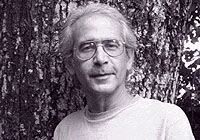
Photo of Wayne Amtzis by Rachel Amtzis
