The Modern Poetry of China: Introduction
ByMichael Day
This collection is a gathering of poetryfrom China and its Diasporas. A reader unacquainted with any one part(or more, as is quite possibly the case) will find here a stepping-stoneinto a poetry culture that is not only distinguished by itsextraordinary longevity and continuity (at least 2,500 years) but itsextraordinary depth and breadth, in both subject matter and geographicreach. The inclusion of poets who write in English or other languages inHongkong, Macau, Singapore, and non-Asian locations, indicates that theconcept of Chinese-ness in poetry moves writers well beyond China andthe Chinese language. Conversely, most of the non-Han or minoritynationality poets collected here use the Han Chinese script when theywrite. That said, Chinese poetry, in any language, travels with theChinese people as a readily portable part of their cultural heritage toevery corner of the earth and attracts admiration, if not as universallyas Hollywood movies, fast food restaurants, and localised-versions ofItalian and Chinese food.
There isthe possibility of an argument here claiming that this is an effect ofChinese cultural imperialism, especially with regard to minoritynationality poets resident in areas of China in which, until recentdecades, they made up the majority population, particularly with regardto Tibet, Inner Mongolia, and the Turkish-speaking Arabic-writingpeoples of Xinjiang. This mirrors arguments applied to the impact of theEnglish, French, Spanish, and Portuguese languages in majority immigrantcultures of the Americas, Africa, and Oceania, but does not fit theparadigm beyond China’s borders, as it may in the former colonies ofEngland, France, Spain, and Portugal.
The truth is that the millions of Chinese people who live outside ofChina are similarly bound together as much by language and poetry as byracial and regional characteristics, such as food. However, this doesnot mean the same forms and topics of classical pre-twentieth centuryChinese verse are still utilized today as they were 100, 1000, or 2000years ago. The Chinese modern world and modern issues are present in thepoetry here, just as life and culture not-of-China acts as a backdrop tomany poems. This modernity, and in particular the use of colloquialspeech in the writing of much of the poetry of the past eighty-fiveyears, still proves an obstacle to lovers of the classical forms, bothwithin and without China. Here comparisons with the reception Dante’spoetry initially received in renaissance Italy are most apt, or eventhat of Luther’s vernacular Bible — although in this case any resultantwarfare has been, and still is, entirely intellectual.
China has one of the oldestcontinuous cultures on the planet. And, until late in the twentiethcentury, the written character was at the centre of it, with the art ofpoetry at its apex. While this may no longer be the case, after therapid rise of the more populist and popular art forms of the novel,cinema, and TV soap opera in more recent times on the back ofnear-universal literacy and modern media, poetry arguably still attractsfar larger numbers of serious practitioners than any other art.
Between 1949 and 1979, officiallypublished poetry in China was under the firm control of the ChineseCommunist Party’s [CCP] cultural establishment and served theever-changing party line, or “the people”, in the parlance of communistparties everywhere. By the late 1960’s, however, growing numbers of thepeople, in particular the youth, were increasingly disenchanted with theCCP line on the arts. A policy requiring students who had completedtheir secondary education in the cities to go down to the countrysideand to continue their education at the feet of the nation’s farmers hadthe secondary effect of providing a hotbed for the creation of a “secondworld of poetry”, one relatively free of CCP aesthetic strictures. Tosome degree, all of these “educated youths” had participated in the RedGuard Movement that had swept the country during 1966-1969, and werethen forcibly dispersed throughout the land, the more culturallyinclined carrying books of literature, not a few of which had beenpreviously ‘liberated’ from the libraries of ‘bourgeois’ households. Themost famous of the poetry circles that developed in China’s countrysideand in secret literary salons in cities first publicly appeared in theform of the unofficially circulated journal Today in Beijing during1978-1980. The now iconic poem “The Answer” by Bei Dao (b. 1949; recentwork collected here) symbolizes the struggle for independence of mindand a new aesthetics among these nonconformist poets:
- . . . I tell you, world
I — do — not — believe!
Even if there be a thousand challengers at your feet,
Then considerme the thousand-and-first. . .
“The Answer” was also oneof the first of this new poetry to be officially published in 1979during one of the CCP’s politically inspired bouts of liberalism (othersuch periods were 1986, 1988-1989, and most of the past 12 years).
The poems of many of these formereducated youths spoke directly to the millions who had sacrificed yearsof their lives in the countryside. Another of the Today poets who founda large readership was Gu Cheng (1956-1993), whose short poem “AGeneration” spoke for them all: “Black night gave me black eyes / yet Iuse them to search for light.”
Theseyouth were in some ways like explorers rediscovering the world, ordiscovering a world and a self they had never known before:
- . . . — I don’t know what else there might be
only me,leaning against that sunlight
standing still for ten seconds
sometimes ten seconds can be longer than a quarter of a century
At last, I charge down the stairs, heave open the door,
and run inthe spring sun…..
Here in“I Feel the Sun”, the woman poet Wang Xiaoni (b. 1955; recent worksanthologized here) luxuriates in a sunlight that is no longer synonymouswith glories of Mao Zedong and the revolution, but is redolent of thepromise of life. This repossession and renaming of previouslyover-politicized poetical imagery by poets was a common feature of thisnew poetry and opened up new vistas to poets and readers alike.
The poet in the guise of a culturalhero was also a common feature, most markedly in the work of anotherToday poet, Jianghe (b. 1949), who took upon himself the burden ofreinterpreting Chinese history. One of his most famous poems is on “TheMemorial Stele” to the martyrs of the revolution in Tian’anmen Square:
- . . . I think
I am the memorial stele
My bodyis piled full of stones
However heavy the history of the Chinesenation
I am that weight
However many wounds to it
I havebled that much blood
. . .
Another highly influential Today poetto move off in this direction of searching for roots and reclaimingChinese culture from the CCP was Yang Lian (b. 1955; recent workscollected here). One of his poems — “The Big Wild Goose Pagoda” —called forth a response from the Nanjing poet Han Dong (b. 1961; recentwork collected here) in 1982 that has come to mark the rise of a youngergeneration of poets who have very different ideas about the directionsserious poetry can take.
- About The Big Wild Goose Pagoda
What more can we know
about the Big Wild Goose Pagoda
Many people hasten from afar
to climb it
to be a one-timehero
Some still come to do it two
or more times
Thedissatisfied
the stout
all climb up
to play the hero
then come down
and walk into the street below
gone in a wink
Some with real guts jump down
leave a red bloom on the steps
That’s really being the hero
a modern-day hero
What more can we learn
about the Wild Goose Pagoda
We climbup
look around at the scenery
then come down again
This mood is indicative of adifference in experience between the poets. For the most part, theyounger poets had only been passive witnesses of the Red Guards andlater educated youths. Unlike the older poets, they were among the firststudents in the reopened universities in the late-1970’s, and theirbonding experiences were limited to what they made for themselves there.The 1984 poem “The Chinese Department” by the Sichuan poet Li Yawei (b.1963) is indicative of this very different attitude towards life andpoetry:
- The Chinese department is a great well-baited river
inthe shallows, a professor and a group of lecturers are casting nets
the netted fish
when brought up on the bank become teachingassistants, later
they become secretaries for Qu Yuan, the retinueof Li Bai
and kings in tales for children, then
go to casttheir nets again
. . .
The Chinese department also studies foreignliterature
primarily Baudelaire and Gorky, one evening
aflustered looking lecturer raced out of the toilets
he shouted:Students
disperse immediately, there’s a modernist inside
. . .
Sometimes the Chinese department flowed in dreams,slowly
like the waves of urine Yawei pisses on the dry earth, likethe disappearing
then again rising footprints behind the pitifulroaming little Mianyang, its waves
are following piles of sealedexams for graduation off into the distance
New subject matter and diction is alsoreflected in experimentation with form. Indeed, a bifurcation in theranks of avant-garde poetry dates from this time and runs through tothis day. Generally speaking, the upholders of the Today-inspired lineare more interested in the traditions of western high modernism asdefined by Elliot and the later Pound (of the poets collected here ChenDongdong, Wang Jiaxin, Sun Wenbo, and Ouyang Jianghe may be included inthis tendency); while the younger, somewhat reactionary line takes agreater interest in what Christopher Simons [The Liberal, London,July/August ’05, Issue V: 36] terms democratization, although the poetsthemselves might describe it as an intense interest in life and anattempt to reflect it in forms and language that speak to more than justpoets (in this collection this tendency is represented by Han Dong, YuJian, Li Sen, and Yin Lichuan).
There has also been a great increasein woman poets delving into subject matter that can be termedwoman-specific, as well as new, more direct approaches to the topics oflove and sex, previously taboo in both traditional Chinese culture andin the new’puritan culture the CCP has attempted to inculcate since1949. Zhai Yongming (b. 1955) has been one of the most influential poetsof the woman’s poetry trend since the mid-1980’s, while Yin Lichuan is one of the most prominent of recent years.
In fact, this ‘younger’line of poetrycleaves to the thoroughly earthy nature of Chinese folk arts and humourthat are still very much alive among the general populace —a traditionthat even Mao appreciated and incorporated into his classical-formpoetry, even if others were not allowed to emulate his practice (seeXiao Kaiyu’s
- . . .
The real you is refused entry to a hotel because ofyour accent, stares eagerly at
‘Tailang’, ‘Gangcun’, ‘Songjing’embracing your sisters as they climb the steps
and enter a room,loosen clothes and undo belts, cherry blossoms and ancient
rhythmsinduce dreams, and your sisters call out softly “Thank you for your
attentions” after being seduced and raped by foreign currency, jewelry,furniture,
and top-quality woolen fabrics
Now three hundred thousand bitter souls in the War of Resistance AgainstJapan
Museum shout in alarm ‘the devils have entered the city’, inour hallucination
three hundred thousand bars revolve, run wild,shatter, like horse hooves sweeping
past amidst gun smoke ..
Begun in the spring of1989, the two concluding sections of the four-part poem dealt with thevery real slaughter that occurred on June Fourth:
- . . .
Another sort of slaughter takes place at Utopia’s core
The primeminister catches cold, the people must cough; martial law is declaredagain
and again
The toothless old machinery of the state rollstoward those who have the courage to
resist the sickness
Unarmed thugs fall by the thousands! Ironclad professional killers swimin a sea of
blood, set fires beneath tightly shuttered windows,wipe their regulation army boots
with the skirts of dead maidens.They are incapable of trembling
These heartless robots are incapableof trembling!
Their electronic brains have only one program: anofficial document full of holes
. . .
Liao was later sentenced to four yearsin prison for his efforts. (Elsewhere in this collection, the Hongkongpoet Louise Ho offers a different localized perspective on the massacrein
All through this period, the exampleof Today as an unofficial (and thus illegal) publication has beenemulated by hundreds of poetry groups throughout China. In fact, almostall avant-poetry is first published in this second world of poetry andonly later finds its way into official publication, or not (such asLiao’s Slaughter). Furthermore, since 2000, the Internet has alsoserved as a major outlet for such poetry, as witnessed by the hundredsof websites, forums, and blogs that have sprung into being. A majorityof the forums and blogs are associated with the younger, popular trendof the avant-garde, a situation that developed after a nationwide publicpolemic that occurred in 1998-1999. This polemic was between two broadcamps of poets under the over-arching labels of “Intellectual Writing”and “Popular Writing.” The polemic still simmers on, but as shown abovehas been present in varying forms since the early 1980’s.
Contrary to what some may believe,such a polemic and the intense interest demonstrated by and the largenumbers of younger poets born in the 1970’s and 1980’s is indicative ofthe continuing health of the art of poetry. While politically thecountry may be a dictatorship, the poets of China are in no mood toaccept anything but plurality and vivacity in pursuit of excellence intheir art.
Of the minority nationality poetscollected here, only the Yi poet Jimu Langge is a sometimes-activeparticipant in these polemics. This participation dates back to 1986 andhis involvement with the Sichuan-based Not-Not avant-garde poetry groupand its unofficial journals. Originally written in Chinese, the poemscollected here portray the continued strength of Yi traditions as wellas a sense of difference from Han Chinese friends.
Woeser, a Tibetan woman poet who alsowrites in Chinese and contributed to issues of Not-Not published duringthe early 1990’s, writes of a sense of loss, centering on images of Lhasaand the Potala Palace in two of her poems. A stronger sense ofnationalism can be found in the work of her compatriots Mei Zhuo andYidam Tsering, the former making use of Tibetan Buddhist history and thelatter strong political imagery to get their messages across. The Mongolpoet Bai Tao also infuses his poetry with a strong nationalistmessage mixed with feelings of loss, while Ran Ran is a poet who usesChinese to write of the life of the Tujia people in present day China.
The poetry scenes in Taiwan, Hongkong,Macau, and Singapore do not closely mirror events on the Mainland Chinascene. The work of the poets collected here reflect their relationshipwith Chinese culture and the local environment, and it is understandablethat poets in Hongkong and Macau may feel closer links and react morereadily to events in China proper (especially since reunification in1997 and 1999 respectively). The introductory essays to the sectionsthat hold their poetry offer a better overview of poetical events ineach locality.
Many of the poets inthe Overseas section are self-exiles from China. A founding member ofthe Today group together with Bei Dao and Mang Ke in Beijing in the1970s, Duo Duo left China on 4 June 1989, but returned to live thereagain in 2003. Bei Dao, Yang Lian, Yan Li, and Ha Jin all left Chinabefore that date and, with the possible exception of Bei Dao, are athome with their overseas lives. Furthermore, their recent poetry seldomfeatures themes of exile and loneliness, as some might expect it to, andas it once did. However, memory does feature prominently among some ofthe poets in this section.
Given the lively and burgeoning natureof Chinese poetry on the Internet today, there are ready opportunitiesfor overseas poets to continue to participate in the poetry scene onmainland China. Yang Lian is one of those at the forefront of this newtrend: in early 2005, he participated in an open chat room discussion onone of the most popular avant-garde poetry websites in China(www.poemlife.net), and he and his novelist-life partner Yo Yo haverecently opened a joint personal website. Since 1987 the New York-basedpoet Yan Li (formerly a member of Today and the Stars Art Group inBeijing during the early 1980s) has been editing the poetry journal OneLine that is privately distributed in China, and both this journal andthe reconstituted overseas version of Today (since 1991) operatewebsites, although neither features chat rooms. On the other hand, YanLi occasionally participates in mainland China chat rooms and regularlycontributes poetry to paper journals and webzines, both official andunofficial.
Taken together, this collection offersthe reader a unique insight into the global Chinese poetry scene overthe past 25 years. Through their work these poets demonstrate thecomplicated, multi-faceted nature of what it is to be a present-dayChinese poet, whether inside or outside China.
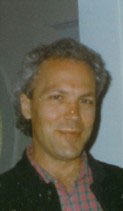 Michael Martin Day was born and educated in Vancouver, Canada. He receivedhis BA in Asian Studies and the Chinese Language from the University ofBritish Columbia (UBC) in 1985 and his MA in Modern Chinese Literaturefrom the same university in 1994. Between the years 1982 and 1992, hespent seven years in China, first as a cultural exchange scholarshipstudent at the universities of Shandong and Nanjing, then as a teacherof English language and literature in Zhanjiang and Xi’an, and later asa journalist and editor in Beijing and Hongkong. He began teaching theChinese language as an assistant lecturer at UBC in 1986, and laterserved in the same position for courses in Modern Chinese Literature inChinese and a General Introduction to East Asian History and Culture. In1995 and 1996, he was lecturer in charge of the Chinese Language SummerProgram at the University of Lethbridge in Alberta, Canada. Since 2000,he has worked at Charles University, Prague, as a part-time lecturer ofModern Chinese Poetry, Advanced Chinese, and Poetry Translation. In2002, he entered the Doctoral program at the University of Leiden, theNetherlands, as a long-distance student under the supervision ofProfessor Maghiel van Crevel. In September 2003, he was awarded a CCKFoundation Doctoral Dissertation Fellowship, which made the writing ofhis thesis possible. He has published several English languagetranslations of Chinese poetry and fiction in Canada, the USA, the UK,and the Netherlands, as well as articles on Chinese poetry and politicsin the Czech Republic, Hongkong, and China (prior to 1989), and hasgiven numerous public lectures and talks on Chinese literature, culture,and politics. His doctorate China’s Second World of Poetry: TheSichuan Avant-Garde, 1982-1992 was published as an openly accessiblee-book on the day of official graduation at the University of Leiden inOctober 2005. This, other internet-related work, and an anthology oftranslated poetry are available athttp://www.sino.uni-heidelberg.de/dachs/leiden/poetry/index.html, thepoetry page of the Digital Archive for Chinese Studies, a joint-projectoperated by the universities of Heidelberg and Leiden. Michael hasrecently emigrated to join his wife in Minneapolis, Minnesota. He has translated a numberof poets in this feature.