Formage © P.O.L éditeur, 2003
Contributor Notes
From “We Two” (2) (Formage)
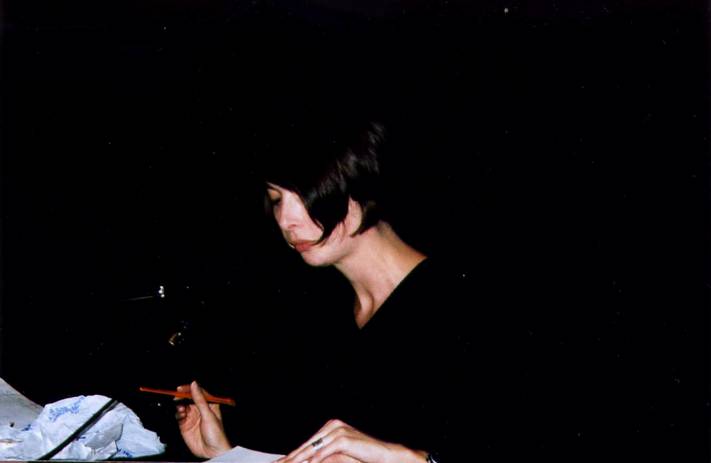
NathalieQuintane
Translated by
Sylvain Gallais
 and
and  Cynthia Hogue
Introduction to the work of Nathalie Quintane
By Cynthia Hogue
Quintaine writes within a lineage of metapoetic writers like Isadore Ducasse and Francis Ponge. Her earliest works were constructed from a montage of prose and poem fragments, part narrative,part pastiche. In the last decade, however, Quintaine has created experimental, politicallyengaged works that reference history’s ferocity and social injustice, a consistent theme in herwork. In Grand ensemble, for example, Quintaine confronts the specter that still hauntsFrancetoday, the brutal war it fought against the Algerian liberation movement (1954-1962). But inFormage, from which the current selection of prose poems has been translated, she castsback toboth personal memories and those of the previous generations, before the French colonists-amongthem her own family-were expelled from Algeria when it achieved independence from France in the1960s.
* * * * * * * *
There are two generations betweenme and this farmer named Grave who showed no interest in getting revenge on theone who had denounced him because then he’d have been acting like the other,which he refused to do. I waswondering how to reap the pieces.
We had, for example, an old kettle of yellow enamel, inwhich the filter, hidden in the spout, created a barrier but the water passingthrough it poured more quickly if my mother tapped the nails of her middle andindex fingers against the metal. This kettle was from my mother’s time.
We had fish, writhing and too numerous, plugging the sink,causing complaints, which my uncle fished on his weekends off from the stinkingfactory always in a cloud of Gauloises which killed him with lung cancer,gray-faced in the hospital dead before fifty.
We had the old refrain about a girl, orphaned at nine, whowas a milkmaid, runner of parcels, beater of sheets with the flat of her handbecause there were few washing machines, who kept repeating that she had neverseen the sea never seen it.
