Work of Natalie Quintane by permission ofthe publishers. Formage © P.O.L éditeur, 2003
_______
Photo of Tedi López Millsby Alberto Tovalín
_______
Photo of Wendy Burk by Eric Magrane
_______
Photo of Kerry Shawn Keys by Andrius Konickis
_______
Photo of Melissa Buckheit by Rebecca Seiferle
Translation Issue: 2011
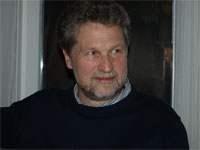 Johannes Beilharz, born 1956, writes in German and English, paints and translates. His most recent books are End Game (a short play), published in 2007, Fallschirme, Geliebter (poems by Barbara Guest in his German translation) and Best of Meme, a collection of poetry and short fiction, both published in 2008. He currently lives in Stuttgart, Germany.
 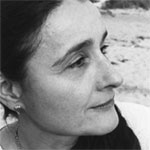 Olga Broumas is a poet and translator, whose eight books of poetry are collected in RAVE, and her translations of the Greek Nobel Laureate Odysseas Elytis in EROS, EROS, EROS: Selected and Last Poems, both from Copper Canyon Press. A CD of her reading from these volumes is also available from the press, as well as a selection of essays by Elytis, OPEN PAPERS. Her honors include a Guggenheim Fellowship, two NEA Fellowships (the current one supporting the translation project excerpted in this issue), a Witter Bynner Translation Award, a Lamda, and the Yale Younger Poets Award. She teaches Creative Writing at Brandeis University, and lives on Cape Cod. A previous issue of The Drunken Boat has featured her poetryand her scraptals.
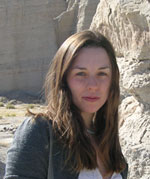 Melissa Buckheit’s poetry, prose and photography have appeared or are forthcoming in Shearsman Journal, Bombay Gin, nth position, Blue Fifth Review, Blue Fifth Chapbook: The Body, University of Arizona Poetry Center e-Newsletter, Cutthroat: A Journal of the Arts, Spiral Orb, Pirene’s Fountain, A Trunk of Delirium, Eyewear, and Sonora Review, among others. Her chapbook, Arc, was published in TheDrunken Boat in 2007, and her first manuscript, On the Back of the Animal Is the Mouth of the Vase, has been a finalist and semi-finalist for several prizes. She began translating Ioulita Iliopoulou when she was an undergraduate at Brandeis University, studying Literature, Creative Writing, Dance/Theatre and French; she also holds an M.F.A. from Naropa University in Poetry. She has been awarded the American Poets Honorary Prize, the Grossbardt Memorial Prize, a Will Inman Scholarship, and a Tucson-Pima Arts Council Grant in Dance. Her poetry has been nominated for two Pushcart Prizes, as well as two Best of the Web Awards. Melissa is a member of Brandeis Dance Collective, in Boston, MA and Zuzi Dance Company, in Tucson, AZ; she has performed her multi-media Modern Dance and Aerial Trapeze choreography, as well as the repertory of Susan Dibble and other choreographers, in Boston, Boulder and Tucson. She founded and curates Edge: A Reading Series of Emerging and Younger Writers, monthly through Casa Libre en la Solana, in Tucson. Previous issues of The Drunken Boathave included her poetry, as well as an interview with Eleni Sikelianos.
 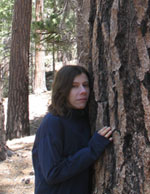 Wendy Burk is the author of two poetry chapbooks, ThePlaceNamesthePlaceNamedand TheDeer,and the translator of Tedi López Mills’ WhileLightisBuilt.The translations in this issue are drawn from her manuscript of the selectedpoems of López Mills in translation, 1994-2008. You can read some of herrecent poems and translations in Terrain.org,SpiralOrb,The Literary Review, Pilgrimage, and Tygerburning. Wendy’s work also includes collaborations inseveral genres: the InvisibleCityProject,a writing and performance collective; Borderlands Theater’s fifteenth annual TucsonPastorela;and (F)light,a song cycle about migration along the northern and southern borders of theUnited States. Also online are an interview and Poemgraph,and this videopoembased on Wendy’s work.Wendy’s poetry has previously appeared in The Drunken Boat.
 Brian Diamond has a MA in CreativeWriting from California State Northridge and an MFA from Arizona State University. His work haspreviously appeared in such publications as DMQ Review, Sycamore Review, The Los Angeles Review, 42Opus and 14 Hills. He is the recipient of the Wilhoit Poetry Fellowship and a one-time winner ofthe New Yorker cartoon contest. He currently teaches at American Jewish University in Los Angeles.
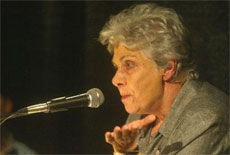 Kiki Dimoula (Κική Δημουλά) (b. Athens 1931) is an acclaimed Greek poet, a member of the Academy of Athens, one of three women so honored since the Academy began inducting members in 1926. Among her honors are two State Prizes (1971, 1988), the Excellence of Letters (Αριστείο Γραμμάτων) of the Academyof Athens (2001), The European Literature Prize in 2010, awarded by the Association Capitale Européenne des Littératures, and, in February 2011, the Greek Grand Prize in Literature for Lifetime Achievement. Her poetry has been translated into English, French, Swedish, German, Italian, Polish, Spanish, Bulgarian, and other languages. She married the poet and mathematician Athos Dimoulas; they had two children.
 Sylvain Gallais isan economistwhose most recentbook is France Encounters Globalization. Hogue and Gallais received the 2009 Witter BynnerTranslation Residency Fellowship from the Santa Fe Art Institute. They teach at Arizona StateUniversity.
 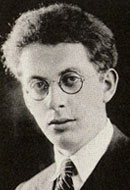 Yankev Glatshteyn (JacobGlatstein) was born in Lublin Poland in 1896 to a religious family. In 1914, he immigrated to the United States under the pretense of enrolling in Law School, but almost immediately dropped out and became involved with the burgeoning Yiddish poetry scene in New York City’s upper-east side, where he would live the rest of his life. As a brash young poet he helped form the In-Zikh movement (the Introspectivists), a group that rejected previous schools of formal Yiddish poetry in favor of free-verse poems “drawn from the own soul and from the world as reflected in it.” After a visit to Poland in 1938, Glatstein turned his attention from the personal to the political writing on the atrocities of the Holocaust. He would write some of his most moving, and well-known poems during this period. Glatstein’s later works turned their attention to the Yiddish language itself, a language he wrote in exclusively from his first published work in 1919 to his last work in 1966. Glatstein passed away in 1971.
 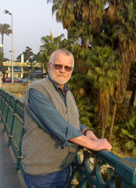 Sam Hamill is the author of more than forty books, including fifteen volumes of original poetry (most recently Measured by Stone and Almost Paradise: New & Selected Poems & Translations); four collections of literary essays, including A Poet’s Work and Avocations: On Poetry & Poets; and some of the most distinguished translations of ancient Chinese and Japanese classics of the last half-century. He has also translated from ancient Greek, Latin and Spanish and co-translated the Estonian of Jaan Kaplinski. A previous issue of The Drunken Boat has featured Sam’s poetry, an interview, as well as a featureof Yellow River his translations from the Chinese.
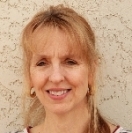 Cynthia Hoguepublished OrConsequence and When the Water Came: Evacuees of Hurricane Katrina, a series ofinterview-poemswith photographs by Rebecca Ross, both in 2010. A previous issue of The Drunken Boat features Hogue’schapbook Under Erasure, an interview, and an introduction and excerpt from H.D.’s The Sword Went Out to Sea. Hogue and Gallais received the 2009 Witter BynnerTranslation Residency Fellowship from the Santa Fe Art Institute. They teach at Arizona StateUniversity.
 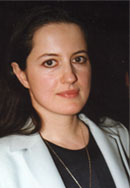 Ioulita Iliopoulouhas studied Byzantine and Modern Greek Letters at theSchool of Philosophy, University of Athens and Theatre Studies at the DramaSchool of the Athens Conservatory. She has published five poetry collections. Her recenteditions are: 11 places for 1 Summer(2007, Poetry) and What Zinon is asking for ?(2005, children’s book).She has written the libretto for the opera by George Couroupos,The Fir-Ship and the poetry forthe Lyric Tragedy, Jocasta, bythe same composer. She also writes essays, works as a book editor, andcooperates with the Orchestra of Colours in the creation of programmes based onmusic and literature.
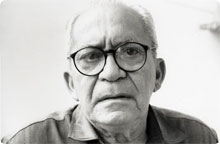 Lêdo Ivo was born in Maceió, Alagoas, in northeast Brazil, in 1924. In 1943 he moved to Rio de Janeiro, building on a journalistic career that began in his homeland. He graduated in law but never practiced. He made his poetic debut in 1944 with The Imaginations, a book of poems now considered the watershed between the modernists, noted for its iconoclastic spirit and denial of the past, and a new generation – that of 45 – characterized by aesthetic concerns and a constructivist rigor for the composition of the poem and the rediscovery of the great poetic traditions of the West. To the rigor and accuracy of his formalist generation, Lêdo Ivo adds, in his vast poetic work, diverse elements that differentiate his work from that of his generation: the cultivation of long verse, incantatory language, and the cultivation of the sonnet. Another differentiating factor is the clear celebration of his homeland by this poet who, since his youth in Paris, has traveled the world, and has represented Brazil in international festivals of poetry.His work, especially his poetry, has been translated and published in numerous countries and languages. Besides being a poet, a novelist and essayist, Ledo is one of Brazil’s most honored writers and belongs to the Brazilian Academy of Letters.
 Julie Kane is a native of Bostonand a longtime resident of Louisiana. She has a B.A. in English from Cornell University, an M.A.in creative writing from Boston University, and a Ph.D. in English from Louisiana State University. Her two most recent poetry collections are Jazz Funeral (Story Line Press, 2009), which wasDavidMason’s choice for the Donald Justice Poetry Prize, and Rhythm & Booze (University ofIllinoisPress, 2003), which was Maxine Kumin’s selection for the National Poetry Series and a finalist forthe Poets’ Prize. In 2002 she was a Fulbright Scholar to Vilnius Pedagogical University inLithuania, and in 2005 she was the guest of the Lithuanian Writers Union as a featured performer inthe Poetry Spring international poetry festival. A former George Bennett Fellow in Writing atPhillips Exeter Academy and New Orleans Writer in Residence at Tulane University, she teaches atNorthwestern State University in Natchitoches, Louisiana.
 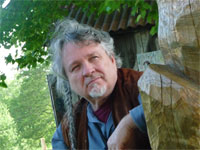 Kerry Shawn Keys’ roots are in theAppalachian Mountains. From 1998 to 2000, he taught translationtheory and creative composition as a Fulbright Associate Professor at Vilnius University. He hasdozens of books to his credit, including translations from Portuguese and Lithuanian, and his ownpoems informed by rural America and Europe, and Brazil and India (Peace Corps) where he lived forconsiderable time. His work ranges from theatre-dance pieces to flamenco songs to meditations onthe Tao Te Ching, and is often lyrical with intense ontological concerns. Of late, he has beenwriting prose wonderscripts, and monologues for the stage. A children’s book, The Land ofPeople,received a Lithuanian laureate in 2008 for artwork he co-authored. He performs with the free jazzpercussionist and sound-constellation artist, Vladimir Tarasov – Prior Records released their CD in2006. His most recent book is Transporting, a cloak of rhapsodies (2010). Keys received theRobertH. Winner Memorial Award from the Poetry Society of America in 1992, and in 2005 a NationalEndowment For The Arts Literature Fellowship. He received a Translation Laureate Award from theLithuanian Writers Union in 2003. He was a Senior Fulbright Research grantee for African-Brazilianstudies, and is a member of the Lithuanian Writers Union and PEN. Selected poems have appeared inCzech, English, and Lithuanian. A previous issue of The Drunken Boat included his translationsof Lithuanian poetry.
 RimaKrasauskytė is a native ofKlaipeda, Lithuania. She received her B.A. in English Philology from Vilnius PedagogicalUniversity, where she was Julie Kane’s student during her senior year. She then earned a master’sdegree in English with a concentration in writing and linguistics from Kane’s home institution ofNorthwestern State University in the United States. She has since taught English at VilniusPedagogical University herself, and she is presently an English language instructor at the MilitaryAcademy of Vilnius.
 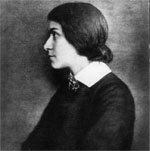 Elsa Lasker-Schüler, born 1869 in Elberfeld, was the daughter of a banker and granddaughter of the chief rabbi of Rhineland-Westphalia. In 1894, she married Berthold Lasker, a physician. The couple lived in Berlin. Her son was born and her first poems were published in 1899. Her first book of poetry, Styx, was released in 1902. She was divorced from Lasker in 1903 and married Georg Levin, who became one of the leading theoreticians of expressionism under the name of Herwarth Walden, which she had invented. Meine Wunder, another volume of poetry, was published in 1911 and established Lasker-Schüler as the leading female representative of German expressionism. The separation and divorce from Walden in 1912 left her in poverty. She was friends with many writers of the period, including Karl Kraus, Gottfried Benn and Franz Werfel. In 1933, the year Hitler ascended to power, Lasker-Schüler fled to Zurich. She lived in Palestine off and on from 1934 to 1937, moving there permanently in 1939. She died in Jerusalem in 1945.
 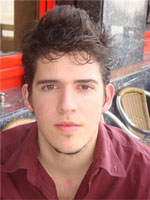 David Leo García’spoems have beendescribedby Luis Antonio de Villena as a projection of “a new realism…[they] make use the most open-endedaspects of classicism.” García, born in Málaga in 1988, is the youngest representative in Villena’srecent anthology of contemporary Spanish poetry, La Inteligencia y la Hacha. In 2006, García’sfirst attempt at a book, Urbi et Orbi, won Spain’s prestigious premio Hiperión for poetsunderthirty-five. He is currently living and writing in Madrid.
.jpg) Tedi López Mills was born inMexico City in 1959. She studied philosophy at the Mexican National Universityand literature at the Sorbonne. She has published ten poetry books: Cincoestaciones,Un lugar ajeno,Segunda persona(Efraín Huerta National Poetry Award), Glosas, Horas, Luz por aire y agua, Un jardín, cinco noches(y otros poemas),Contracorriente(Premio de Literatura José Fuentes Mares), Parafrasear and Muerte en la rúa Augusta (Premio XavierVillaurrutia). In 1994 she won a poetry scholarship granted by the FondoNacional de la Cultura y las Artes; in 1995 the Mexico/US Fund for Culture gaveher a fellowship for the selection and translation of the poetry of theAmerican writer, Gustaf Sobin, and in 1998 she was granted the first OctavioPaz Poetry Scholarship. She has translated the work of numerous American,English and French poets and, very recently, Anne Carsons’ Autobiography ofRed. A selection of her poems, While Lightis Built, translated by Wendy Burk,was published by Kore Press. Since 2009 she belongs to the Sistema Nacional deCreadores.
Tedi López Mills was born inMexico City in 1959. She studied philosophy at the Mexican National Universityand literature at the Sorbonne. She has published ten poetry books: Cincoestaciones,Un lugar ajeno,Segunda persona(Efraín Huerta National Poetry Award), Glosas, Horas, Luz por aire y agua, Un jardín, cinco noches(y otros poemas),Contracorriente(Premio de Literatura José Fuentes Mares), Parafrasear and Muerte en la rúa Augusta (Premio XavierVillaurrutia). In 1994 she won a poetry scholarship granted by the FondoNacional de la Cultura y las Artes; in 1995 the Mexico/US Fund for Culture gaveher a fellowship for the selection and translation of the poetry of theAmerican writer, Gustaf Sobin, and in 1998 she was granted the first OctavioPaz Poetry Scholarship. She has translated the work of numerous American,English and French poets and, very recently, Anne Carsons’ Autobiography ofRed. A selection of her poems, While Lightis Built, translated by Wendy Burk,was published by Kore Press. Since 2009 she belongs to the Sistema Nacional deCreadores. 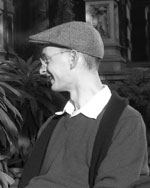 Mischa Lucyshyn was born in 1973 in Graz and spent his childhood in Tamsweg.He worked in factories in Austria and in various companies in the UK.Some of his plays have been performed in Austria and Paris, other texts werepublished online and in literary magazines. His most recent project and workin progress is a new translation of Thomas Paine’s The Age of Reason into German.
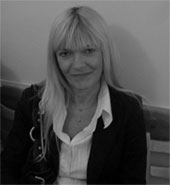 Tautvyda Marcinkevičiūtė is anative of Kaunas, Lithuania, and a graduate of Vilnius University. She has published twelvecollections of poems, including one book of poems for children. Her work has been honored with theZigmas Gelė prize, the Moteris prize, the Vienas Litas award, and the Kauno Diena prize, and in2000 she was nominated for Poezijos Pavasaris (“Poetry Spring”) Laureate, which is the Lithuanianequivalent of U.S. Poet Laureate. She has also been the recipient of two grants from theLithuanian Ministry of Culture and of fellowships to artist colonies in Sweden and Austria. Shehas translated the work of English-language poets including Sylvia Plath, Anne Sexton, Edna St.Vincent Millay, and Julie Kane into Lithuanian. Her translation of Shakespeare’s Taming of theShrew was staged by the Vilnius Youth Theater, and her translations of Shakespeare’s sonnetswillbe published in book form by the publishing house Naujoji Romuva later this year.
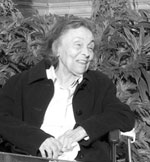 Helga Michiewas born on the 1st of November 1921 in Vienna. She spent her childhoodtogether with her sister in Linz and Vienna. Shortly before the start of World War II in 1939she managed to escape to England on one of the last “Kindertransporte”. She became aMember of the Austrian Centre in London. Amongst her friends were Elias and Veza Canetti,Erich Fried, Anna Mahler and Hilde Spiel. She worked in factories, as a waitress, secretary,actress (for example in Carol Reed’s The Third Man), as translator and later as an artist.A book with poems by Helga Michie was published in 2006.
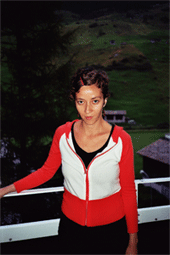 Sabina Naef was born on the 5th of April 1974 in Lucerne, where she isalso currently living.After finishing school she spent a year in Bordeaux, France.From 1994 on she studied Romance and German studies in Zurich andLausanne. Her debut book with poetry Zeitkippe was published in 1998,her second poetry book tagelang möchte ich um diese Ecke biegenwas released in 2001. In 2005 her third book leichter Schwindelwas published by Edition Korrespondenzen in Vienna. Sabina Naef alsohas written short theatre plays and short prose for literary magazines. Sheparticipated in several international poetry festivals.In 2010 a selection of her poems were set to music by composer andclarinettist Claudio Puntin, together with the Lucerne Jazz Orchestra.
 Nathalie Quintane,born in Paris in 1964, now lives in Marseilles. Her many books include Chaussure (POL 1997),JeanneDarc (POL 1998), Début (POL 1999), Saint-Tropez – Une Américaine (POL 2001),Formage (POL 2003),Antonia Bellivetti (POL 2004), L’Année de l’Algérie (Inventaire-Invention 2004),Cavale (POL2006), and Grand ensemble (POL 2008). Quintane is also a literary critic, and with StéphaneBérardand Christophe Tarkos, founded the review RR, essentially a parody of journals ofcontemporarypoetry.
  Sara Sams is currentlypursuing herMFA in poetry at Arizona State University. After graduating from Davidson College in 2008, shespent a year in Granada, Spain teaching science to fourth graders and lurking in an Andaluztertulia, followed by a year in New York working as an editorial assistant for Parnassus: PoetryinReview.