Also in this issue, Alison’s Essays on Poetics and the Erotic andpoetry
_______
Alison has a new chapbook Mnemosyne available from Wild Honey Press
_______
Alison’s website
_______
Photo of Alison Croggon by Jacqueline Mitelman 2001. All rights reserved.
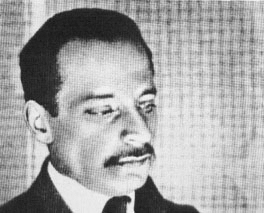 Rainer Maria Rilke
 Translated by Alison Croggon
The Eighth Elegy
For Rudolph Kassner
With all its eyes the creaturely sees
the open. But our eyes are
as if reversed and placed all round it
like snares ringing its free departure.
What’s outside, we know from the beast’s
face only: for we turn around
the early child and force it to see formation
backwards, not the open, which is so deep
in beastsight. Free from death.
We only see death; the free beast
has its going down behind it
and before it god, and when it goes, goes
into eternity, like a running spring.
We have never, not for a single day,
the pure space before us, in which flowers
unendingly burst open. It is always world
and never nowhere without no:
that pureness, that unwatched, which one breathes and
endlessly knows and never wants. But a child
might lose himself inside the quiet and become
shaken. Or someone dies and is.
For near to death one sees that death no more
and stares ahead, perhaps with a beast’s huge glance.
Lovers, were not the other barring
sight, are nearby, astounded . . .
As if in error one is lifted
behind the other. But beyond him
nothing emerges, and world returns.
The universe is always empathetic, we see
there only the reflections of freedom
darkened by us. Or an animal’s
dumb glance, silent through and through.
These rule destiny: to be opposite
and nothing else and always opposite.
Were the awareness of our species in the
sure beast, which pulls towards us
from another direction — it would drag us
into its mutability. But for the beast its being is
unending, unprepared, and without insight
of its belonging, pure, like its outward glance.
And where we see future, there it sees all
and itself in all and healed for always.
And yet in the wakeful warm animal
is the weight and sorrow of a huge dejection.
For it also clings to what often
overwhelms us — a memory,
that what we thrust after, was formerly
nearer, truer and its connection
endlessly tender. Here all is distance,
and there was breath. After the first home
the second is ambiguous and windy.
O bliss of tiny creatures
which remain always in the womb which carries them;
o happiness of the gnat, which still hops within,
even on its wedding: for womb is all.
And see the half assurance of a bird,
which almost knows both through its origin,
as if it were one of those Etruscan souls
received by space out of a corpse
whose silent figure is its lid.
And how dismayed is one which must fly
out of its native womb. As if it is
afraid of itself, it zigzags through the air, like a crack
running through a cup. So the track
of a bat rends through the porcelain evening.
And we: onlookers, always, over all,
interested in everything, and never looking out!
Overfills us. We order. It decays.
We order again and ourselves decay.
Who turned us thus around, so we,
no matter what, have the pose
of one who is departing? As he who on
the last hill which still shows
his whole valley, will turn, halt, pause —
so we live, forever taking leave.
The Tenth Elegy
Sometime, on the way out of this violent vision,
I’ll sing up joy and glory to assenting angels.
Let none of the clearstruck hammers of my heart
fail against softening, uncertain or
rent strings. Let my streaming face
shine forth; let the plain weeping
flower. O grieving night, then you become to me
what love is. Why didn’t I kneel before you, inconsolable sisters,
why not accept you, give my loosening
within your loosened hair. We, spendthrifts of sorrows.
How we look away to the sad duration beyond them
to see if they end. Truly they are but
our enduring winter leaf, our dark evergreen,
one of the seasons of the secret year — not only
seasons — are place, settlement, storehouse, ground, home.
How strange, alas, are the streets of the city of pain,
where in the falseness, uproar becomes a powerful
silence, and out of the mould of the void outpours,
bragging its gilded noise, this bursting monument.
O, how an angel would trample their market of solace,
and the fenced church, bought ready-made:
clean and shut and disillusioned as the post on Sunday.
But outside swirl the edges of carnival.
Swings of freedom! Divers and jugglers of passion!
And the embracing happiness of shooting galleries,
where the trickshot hits the target, fidgeting off
its tinplate. From applause to chance
he staggers on; for booths enlist his every curiosity,
drumming and crying. Especially
for adults: how money reproduces anatomically,
more than just amusement: the genitals of money —
everything, the whole process — worth seeing for instruction
and fertility… Oh but just outside, over there,
behind the final hoarding plastered with ads for “Deathless”,
that bitter beer which seems so sweet to drinkers
if they always chew it with fresh dissipations,
just at the back of the hoarding, just behind, it’s real.
Children play and lovers hold one another — aside,
earnestly, in the shabby grass, dogs follow nature.
It draws the youth further; perhaps he loves
a young Lament. He comes up behind her in the meadows. She says:
Far away. We live there outside…
Where? And the young man
follows. Her posture moves him. The shoulder, the throat — perhaps
her origins are noble. But he leaves her,
turns away, waves. What’s the use? She’s just a lament.
Only the young dead, in that first condition
of timeless equanimity, that of weaning,
follow her lovingly. Girls
she awaits and befriends. Gently she shows them
what she has on. Pearls of pain and the fine
veils of endurance. — She goes with the young men
silently.
But where they live, in the valley, one of the older Laments
grabs the youth when he questions her: — We were,
she says, once a great family, we Lamentations. Our fathers
worked the mines there in that huge range; among men
sometimes you find a polished fragment of original pain
or slaggy petrified rage from an old volcano.
Yes, that came from here. Once we were rich. —
And lightly she leads him through the wide landscape of Lament,
shows him the temple columns or the ruins
of towers, from where the Lament Lords wisely
ruled the land. Shows him the high
tear trees and fields of blossoming sadness,
(the living know them only as gentle foliage);
shows him the pastured beasts of mourning — and sometimes
a startled bird, flying straight through their upglance,
writes the distant image of its solitary cry.
At evening she leads him on to the graves of the oldest
Lamentations, the sibyls and omen masters.
But night presses, so they walk more gently, and soon
the moon lifts up the sepulchre
that watches over everything. Twin to the one of the Nile,
the lofty Sphinx — : the secret chambered
countenance.
And they are awed by the regal head, that forever
silently places human vision
on the scales of stars.
His sight can’t take it, dizzied
by early death. But her glance
from behind the pschent frightens an owl. And its
slow downstroke brushes along the cheek,
the one with the ripest roundness,
sketches softly in the new
death-given hearing, over a doubly
upflapped page, the indescribable outline.
And higher, the stars. New. The stars of the Painlands.
Slowly the Lamentation names them: “Here,
see: the Rider, the Staff, and that fuller constellation
they call Fruitwreath. Then, further, towards the Pole,
Cradle, Way, The Burning Book, Doll, Window.
But in the southern sky, pure as the interior
of a blessed hand, the clear radiant M
that signifies mothers…”
But the dead must go on, and silently the older Lament
brings him as far as the gorge,
where the source of joy
shimmers in moonlight. She names it
with reverence, saying: “Among men
it’s a sustaining stream.”
They stand at the foot of the range.
And there she embraces him, weeping.
Alone then he climbs the mountains of primal pain.
And his step never once rings on his soundless destiny.
But if they awakened a likeness within us, the endlessly dead,
they’d show us perhaps the catkins hanging
from empty hazels, or
would mean rain falling on dark earth in the early year.
And we, who think of happiness
climbing, would feel the compassion
which almost confounds us,
when happiness falls.
