Poetry – Spring/Summer 2005
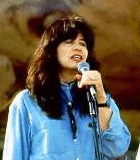 Joy Harjo, a member of theMvskoke/Creek Nation in Oklahoma, is an internationally knownpoet, performer, writer and musician. She has published seven books ofacclaimed poetry, including such well known titles as She Had SomeHorses, In Mad Love and War, The Woman Who Fell From the Sky and hermost recent How We Became Human, New and Selected Poems from W.W.Norton. In Harjo’s first music CD, Letter from the End of the 20thCentury she is featured as poet and saxophone player. Her recentlyreleased second CD of original songs, Native Joy for Real crosses overmany genres and has been praised for its daring brilliance. She has wonnumerous awards for her poetry and writing, including the Arrell GibsonLifetime Achievement Award, Oklahoma Book Awards; the 2000 WesternLiterature Association Distinguished Achievement Award,: 1998 LilaWallace-Reader’s Digest Award: the 1997 New Mexico Governor’s Award forExcellence in the Arts; the Lifetime Achievement Award from the NativeWriters Circle of the Americas; the William Carlos Williams Award fromthe Poetry Society of America. Her most recent award was the EagleSpirit Achievement Award for overall contributions in the arts, awardedby the American Indian Film Festival. Harjo has performedinternationally, from the Riddu Riddu Festival held north of ArcticCircle in Norway to Madras, India to the Ford Theater in Los Angeles. She is currently the Joseph M. Russo endowed professor at UNM in creative writing where she will be in residence every fall. When not teaching and performing she lives in Honolulu, Hawaii. For complete information, visit her websitewww.joyharjo.com.
Tony Barnstone is Associate Professor of Creative Writing and English at Whittier College,and has published his poetry, fiction, essays and translations in dozens of major American journals. His books include Impure: Poems by Tony Barnstone; The Anchor Book of Chinese Poetry; Out of the Howling Storm: The New Chinese Poetry; Laughing Lost in the Mountains: Poems of Wang Wei; The Art of Writing: Teachings of the Chinese Masters; and the textbooksLiteratures of Asia, Africa and Latin America, Literatures of Asia, and Literatures of the Middle East. His forthcoming books are Sad Jazz: Sonnets (Sheep Meadow Press, Fall 2005)and a number of textbooks for Prentice Hall Publishers, including The Pleasures of Poetry: An Introduction, World Literature (two volumes), and Modern Poetry: An Anthology with Contexts,among others. He is currently working on two new books of poems and a critical book titled The Poetics of the Machine Age: William Carlos Williams and Technological Modernism. Born in Middletown, Connecticut, and raised in Bloomington, Indiana, Barnstone lived for yearsin Greece, Spain, Kenya and China before taking his Masters in English and Creative Writing and Ph.D. in English Literature at UC Berkeley.
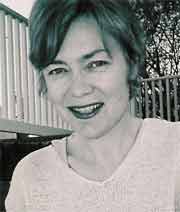 Mairéad Byrne immigrated to the United States from Ireland in 1994 forreasons of poetry. Her collection NELSON & THE HURUBURU BIRD waspublished in 2003 by Wild Honey Press. Recent and upcomingpublications include two chapbooks, AN EDUCATED HEART (Palm Press2005) and VIVAS (Wild Honey Press 2005), and poems in 5 AM, CONDUIT,DENVER QUARTERLY, and VOLT. She is the author of two plays, two booksof interviews with Irish artists, a short book on James Joyce, and alot of journalism in Ireland and the United States. She earneda PhD in Theory & Cultural Studies from Purdue University in 2001 andlives with her two daughters in Providence, Rhode Island, where sheteaches poetry at Rhode Island School of Design.
 Ann Fisher-Wirth teaches poetry workshops andseminars, and courses in environmental literature, at theUniversity of Mississippi. She also teaches yoga. She hasbeen a senior Fulbright lecturer at the University ofFribourg, Switzerland, and has held the FulbrightDistinguished Chair in American Studies at UppsalaUniversity, Sweden. Her academic publications include a book, William CarlosWilliams and Autobiography: The Woods of His Own Nature, andnumerous articles on American writers.Ann is the author of Blue Window (Archer Books, 2003) andThe Trinket Poems, which was runner-up in the 2003 QuentinR. Howard Poetry Chapbook Competition and is published byWind. A new book of poems, Five Terraces, will appear fromWind Publications in September 2005. She won a 2003 Malahat Review Long Poem Prize for“Olaus Magnus, Carta Marina,” the first section of abook-length poem “Carta Marina.” She also won the 2004Rita Dove Poetry Award from the Salem College Center forWomen Writers for a poem called “Rain”; a poem called“October” was a Finalist in the same contest. In 2004she received the Poetry Award from the Mississippi Instituteof Arts and Letters, and a Poetry Fellowship from theMississippi Arts Commission. Her chapbook, “Walking WuWei’s Scroll Le Grand Fleuve perte de vue,” receivedHonorable Mention in the 2005 Center for Book Arts contest. She has been featured online in PoetryMagazine, Forpoetry, Gloria Mundi, and Verse Daily and was awardedresidencies at The Mesa Refuge and Djerassi, both inCalifornia.
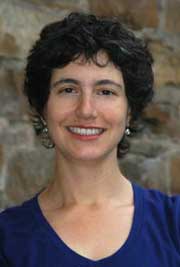 Naomi Guttman was born and raised in Montreal, Canada where her book, Reasonsfor Winter, (Brick Books, 1991), won the A.M. Klein Award for Poetry and wasshort listed for The League of Canadian Poets’ Pat Lowther Memorial Award. Shehas received grants from the Canada Council for the Arts (2000) and theConstance Saltonstall Foundation for the Arts (2002) as well as an Artist’sFellowship from the New York Foundation for the Arts (2001). Her work hasappeared in numerous journals and anthologies, including Southern Poetry Review,Connecticut Review, The Marlboro Review, The Malahat Review, The Emily DickinsonAwards Anthology, Rattapallax, River Styx, and Sad Little Breathings & OtherActs of Ventriloquism, edited by Heather McHugh (PublishingOnline, 2001). Sheteaches English and creative writing at Hamilton College in central New York.
Victoria Edwards Tester has taught English in Peru, worked as ajournalist in Egypt and as a photographer at the Mexico-U.S. border. Shestudied literature, creative writing and art history at the Universityof Houston, where she was a fervent activist against the Gulf War, andwas also a border rights activist who collected and translated bordercrossing stories. She abandoned her doctoral studies in 1994 to live amore reclusive life in the mountains of New Mexico. Her book Miraclesof Sainted Earth (University of New Mexico Press) won the 2003 WILLALiterary Award in Poetry, an award given to those books that, in thespirit of Willa Cather, best portray the lives of women in theSouthwest. She is also the author of a memoir Dying in the City ofFlowers (Five Star Press), which recounts her harrowing search for heryoung child in Peru. Now she has recently written, at the request of aHollywood director, a screenplay whose haunting story is set at theMexico-U.S. border. At present she is grateful to be at work finishingtwo long projects: a book of stories told in the voices of fifteen womenof historical New Mexico, and a film about the Irish Famine, which willbe translated into Irish Gaelic. She sometimes teaches creativewriting, independently, or through the Extended University Program atWestern New Mexico University.
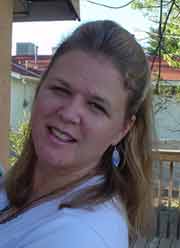 Kimberly Kobyl Williams teaches English at San Juan College in Farmington, New Mexico. She was recently awarded the San Juan College Foundation Distinguished Chair in Literacy, which has allowed her to begin an exciting three-year poetry project bringing writers and writing workshops to the Four Corners region. In 2002, she received an NEH grant to travel through Central America and Mexico writing poetry and studying the relationship between writing and place. In 1996, she fled to Ecuador, escaping a Ph.D. program in literature. There, her love affair with Latin America blossomed. In the middle 1990s she studied with Robert Wallace and was selected the Case Reserve Review poetry prize-winner in 1995. Wayne State University Press encouraged her nascent attempts with poetry in 1988 with the publication of Pale Bones and Light, a chapbook of poetry. Kimberly’s passion for traveling and writing has spread to her students; this summer they traveled through Central Europe together for a course on writing and place. She has also traveled with students to Nicaragua for a service learning project in the Jalapa Valley. October 2005 will find her in Puebla, Mexico presenting a portion of her current writing project, translating poems by Guatemalan poet Maya Cu.