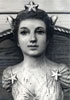
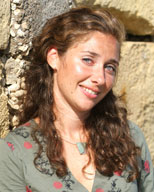
Photo of Simone Inguanez by: Thomas Langdon / vsg
_______
Rights to all photos reserved.
_______
Fall/Winter: Maltese Poetry
Edited by Maria Grech Ganado
 NorbertBugeja‘s writing articulates the many facets of contemporary Mediterranean living, seekingnew possibilities of literary expression in the process. His poetry has been published in variousinternational and Maltese anthologies and journals, and aired on radio and TV stations. His newcollection of poems, Cities, will be published towards the end of 2007.Norbert graduated with first class honours in English from the University of Malta in 2002 andreadfor a Masters degree with distinction in 2005. This year he has been selected as a Commonwealthscholar and is currently preparing his doctoral research in English literature and critical theoryat the University of Warwick, UK.
 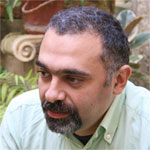 Writing and Life aresynonymous for Lino Buhagiarwho was born on 17 February, 1967, and who decided, at the age of twelve, that he was a writer andhas never deviated from this conviction. He has given his life to his talent and following hisgraduation as Bachelor of Arts in English from the University of Malta, went on to graduate with aMaster’s Degree in Writing from Bretton Hall, College of the University of Leeds in the UK.Speaking to Lino brings to mind the words of Isaac Asimov: “I write for the same reason Ibreathe — because if I didn’t I would die.”His passion for writing includes poetry and long and short fiction and some of his work has beenpublished in the UK. To experience his writing is to be assimilated into a world he has created,to live it and leave it with an altered awareness.” (Diana Abela)Lino’s first collection of poetry Particles of Fate was published in interaction with thephotography of John Grech in 2006.
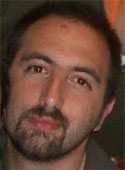 Born in London to Maltese parents in 1978, Antoine Cassarwas brought up and educated in England,Malta, Italy and Spain. He is currently completing a PhD thesis on the origins of the Spanishsonnet. He now lives in Luxembourg, where he works as a translator. In his work, “Mużajk isan experiment in multilingual verse, an attempt to combine the sounds of differentlanguages into a single rhythm and a single thought. Written in a blend of English, French,Italian, Maltese and Spanish (in no particular order), but occasionally also including phrasesfromother languages, the “mużajki or mosaics” endeavour to explore the possibilities of playing aroundwith the syllables and cadences, literary references and motifs of different tongues. Thesuccessful interaction of the various elements will depend on how well the seemingly multiplevoices are gelled into one by the rhythm and logic of the poem. The rigid but versatile form ofthesonnet, together with the flexible verse of the alexandrine, aim to help achieve a tightly-knitstructure of a musical and perhaps even natural-sounding quality. Solitude and the joy of beingplural, the pleasure and futility of living, love unrequited or unfulfilling, desire forsimplicityin an ever-increasingly complicated world, the beauty of the Mediterranean, and the existentialcompulsion to write, are among the themes dealt with by the mużajki. More so than to be read, themużajki are designed to be heard. They may be seen as a humble manifesto in favour of continuingto bring performance back into poetry, whilst taking unity in diversity another little stepforward, towards a literature which is at once local and supranational.”
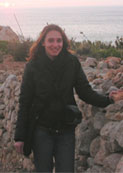 PriscillaCassar graduated as a Speech Language Pathologist and furthered her studiesobtaining a post-graduatediploma in Gerontology and Geriatrics. After nine years working within the health sector, mainlyin a rehabilitation hospital for the elderly, she spent a year learning German in Germany andanother year practising her profession while working in an acute hospital in Dublin. Although shedid not particularly like poetry at school, she rediscovered its pleasure at University and hasbeen hooked on it since. She joined INIZJAMED (www.inizjamed.org) and continuedexperimenting with writing poetry and attending courses, workshops, seminars etc. To date she hasonly had poems published in F’Kull Belt Hemm Kantuniera (2003); La Vuelta al Mundo en unPoema (2003); Klandestini. Emerging Mediterranean Writers (2004); Ktiebghall-Hruq (2005); Il-Malti. Rivista ta’ L-Akkademja Tal-Malti (2005). While trying tocreate a balance between her interest in the sciences and her passion in the arts, she iscurrentlydiscerning where to go next in life.
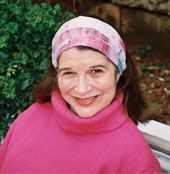 Maria GrechGanado, (b. 1943), poet, translator, critic, studied English at the Universities ofMalta, Cambridge andHeidelberg. She was the first Maltese female Full-Time Lecturer at the University of Malta(Department of English), has published three collections of Maltese poetry (the first of which wona National Book Prize in 2002) and two of English (the second of which won a National Book Prizein 2006). Her poetry in both languages has been translated into Italian, French, German, Greek,Spanish, Lithuanian, Finnish, Czech and Catalan . It has appeared in English in the UK, the USA,Australia. South Africa and Cyprus. She has been invited to many literary events abroad. Maria hasalso translated into English much of the contemporary poetry and prose written by Maltese writerstoday. In 2000, she received the MQR – Midalja ghall-Qadi tar-Repubblika (Medal for Service totheRepublic). She has three children and one grandson.
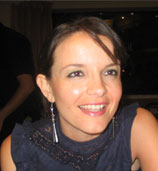 ClaudiaGauciwas born on the 25th September 1976. She graduated from the University of Malta in 1997 with aB.A.(Gen) in Maltese and French. She joined the NGO Inizjamed in 2002 and participated in manyworkshops with diverse writers, both national and international. Her work has been published inF’Kull Belt hemm Kantuniera (Every City has a Corner—Inizjamed, 2003) andKtieb ghall-Hruq (A Book to be Burnt — Inizjamed, 2005). She has alsoparticipated in various projects, amongst them Borders (2003), the Biennial Un Anno diPassione (Naples, 2005) and Steps (2006). She is currently working as Project Managerfor a translation company and is also attending a course in proof-reading in Maltese.
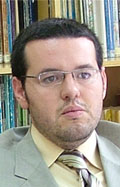 Sergio Grechwas born in October 1975. He was one of the Poezijaplus’ founders. Poezijaplus promotesliterature in Malta. Sergio regularly presents cultural programmes on the state’s radio stationandthe local university radio. He is employed as a regular teacher with the Education Division andispresently the National Book Council’s Public Relations Officer. He is the author of the biographyPatri Felicjan Bilocca— Hajtu u Zminijietu Father Felicjan Bilocca — His Lifeand Times). He is also one of the editors of www.maltapoetry.com. Sergio is currently reading for aMaster of Arts degree in History.
 Adrian Grima(Malta, 1968) lectures in Maltese Literature at the University of Malta. He has read papers onliterature, culture and the Mediterranean at conferences in the Mediterranean, Europe and the USA.His academic articles have been published in various countries and he contributes toBabelmed.net,Counterpunch and ZNET. He is the coordinator of the Mediterranean culturalorganization Inizjamed,which he co-founded in 1998. and the Head of the Technical Committee for Literature within theNational Council for the Maltese Language. Adrian Grima has published two collections of poetry inMaltese, It-Trumbettier (The Trumpeter, 1999) and Rakkmu (Weavings,Klabb Kotba Maltin, 2006). His poems have appeared in translation in various publications,including the collections The Tragedy of the Elephant (Midsea Books and Inizjamed, 2005)andDieser verwundete Frühling — Dir-Rebbiegħa Midruba (Edizzjoni Skarta, 2007). Dr. Grimahas edited various collections of recent Maltese literature, including a series of six books ofContemporary Maltese Literature in Translation. His introduction to Maltese poetry is in this issue. His website iswww.adriangrima.com.
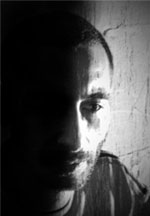 Cali (Carmel) Grimawas born in Valletta, is in his thirties and is a Piscean — and that is all I know about hisbirth. I know though that he has had hardly any formal schooling and spends every spare hour hecanin the Valletta library avidly reading in Maltese, Italian or English whatever he findsinteresting. His spare hours also cover occasional unemployment, an intense love/hate relationshipwith life in general, especially the sea, beer and women. He doesn’t actually write poetryconsciously — his emails, even his speech, emerge as the lines he or his friends extract fromhis normal intense form of communication, in which spelling plays no part at all. Images, rhythm,an irrepressible energy and force are the hallmarks of being Cali Grima and the language heemployshis only qualification. I have for it the highest respect and perhaps even a bit of envy (MariaGrech Ganado).
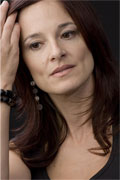 SimoneInguanez (1971) Published two collections of poetry: Water, Fire, Earth, and I (Translated by Maria Grech Ganado, Klabb Kotba Maltin, 2005) and Ftit Mara Ftit Tifla ‘Part Woman PartChild’, (Klabb Kotba Maltin,2005). She has also been represented in a number of anthologies and publications, and some of herworks were set to music. Some of her poetry is available in English, Italian, French, Hungarian,Russian and Finnish. Inguanez holds a degree in Law from the University of Malta and a certificatein Proofreading fromthe same university. She has worked on various project as a revisor and translator.This year, Inguanez was Malta’s writer in residency for the International Writing Program at theUniversity of Iowa, courtesy of the US Embassy in Malta. She was also featured as the poetrepresenting Malta in the Recital dei Poeti del Mediterraneo held annually in Lecce, Italy. In 2005, Inguanez participated in the XII BJCEM biennale dei giovani artisti dell’europa e delmediterraneo — Un anno di passione. In 2004, she participated in the 7th edition of the Voixde laMéditerranée held annually in Lodéve, courtesy of the French Embassy in Malta. Inguanez’s work has been described as highly idiosyncratic, especially in her use of rhythm andtone. Her early work is mainly an exploration of her intense inner self, minutely analysing itsinteraction with what or whom she experiences. Her new work seems to be directed outward, focusingmore on what she encounters and finding patterns in it which often border on the metaphysical. Inboth cases, her syntax surprises with its experimental musicality and her tone can just as suddenlyswitch pitch. The condensation achieved through this approach to words is skilfully controlled by aharmonious blending which is both pleasing and delightful.
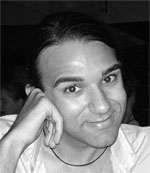 Roderick Mallia (1982) is a medical science graduate currently reading for doctor of medicine andsurgery at the University of Malta. Roderick has been working within Inizjamed since 2005, and haspublished poetry in the collection Ktieb għall-Ħruq as well as in local newspapers. Insummer2006, he was invited to represent Malta in the Voix de la Méditerranée poetryfestival in Lodéve,France. Roderick’s main interests lie in the arts and since he is also a musician and painter, heis very interested in the marriage between different forms of art and new, innovative ways ofexpression.
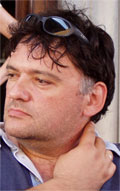 ImmanuelMifsudwas born in Malta in 1967. He has published five poetry collections, including a collection oftravel poems, KM (Malta: Klabb Kotba Maltin: 2005) in bi-lingual edition with translationsby Maria Grech Ganado and Confidential Reports (Ireland: Southword Editions, 2005) withtranslations by Maurice Riordan and Adrian Grima. He has also published five collections of shortstories, including L-Istejjer Strambi ta’ Sara Sue Sammut (Sara Sue Sammut’s StrangeStories) which won the national literary award for 2002, and the highly controversialKimika (Chemistry).
 Abigail A. Zammit was born in Malta in 1976 but moved to England in September 2004 in order tofollowa Masters degree in Creative Writing. Before that, she graduated from the University of Malta,obtaining a B.A.(Honors) in English, a P.G.C.E. and a Masters degree in English literature andsubsequently taught English for three years at a Junior Lyceum for boys. After terminating herMasters in Creative Writing, Abigail taught GCSE and A level English at Stoke-on-Trent Sixth FormCollege and in November 2005 she attended a creative writing course organized by Writing Ventures.She then carried out publishing work experience with Icon Books, Sweet and Maxwell, Eburyand Traveller Magazine. Last July she returned to Malta and is now assistant-lecturer atG.F. Abela Junior College as well as part-time piano accompanist.Abigail has had poems published by Orbis and Libertine magazines and has won thirdprize in a local poetry competition as well as a Lancaster Poetry Slam. She was chosen as featurepoet for the online November 2006 issue of Poet’s Letter. Abigail has also writtenarticlesand short stories for an alternative magazine entitled Manic. Her first collection ofpoems,Voices from the Land of Trees, was published by Smokestack in June 2007. The subject isGuatemala where Abigail spent six weeks in the summer of 2003 — the poems speak in variousvoices and tackle the complexities and moral ambiguities of poverty, civil war and missionary workin the land of the Mayas. Her other poetry varies enormously in style and content, ranging fromthepersonal and lyrical to the spiritual and political. Although she is bi-lingual, Abigail has sofarwritten only in English.