
These poems are from Habitation: Collected Poems, which is featuredin this issue.
_______
Habitation: Collected Poems of Sam Hamill can be orderedfrom his publisher Lost Horse Press
Habitation: Collected Poems
$25 / $30 (Canada)
6 x 9 624 pages
SEPT 2014
_______
Interview with Sam Hamill in a previous issue.
Sam Hamill’s translations from the Chinese Crossing the YellowRiver in a previous issue.
Poetry from Sam Hamill in a previous issue.
A Pisan Canto by Sam Hamill in a previous issue.
_______
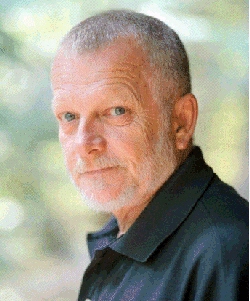
Sam Hamill
The Orchid Flower
Just as I wonder
whether it’s going to die,
the orchid blossoms
and I can’t explain why it
moves my heart, why suchpleasure
comes from one small bud
on a long spindly stem,one
blood red gold flower
opening at mid-summer,
tiny, perfect in its hour.
Even to a white-
haired craggy poet, it’s
purely erotic,
pistil and stamen, pollen,
dew of the world, aspoonful
of earth, and water.
Erotic because there’sdeath
at the heart of birth,
drama in those old sunrise
prisms in wet cedar boughs,
deepest mystery
in washing evening dishes
or teasing my wife,
who grows, yes, morebeautiful
because one of us will die.
True Peace
Half broken on thatsmoky night,
hunched over sake in aserviceman’s dive
somewhere in Naha, Okinawa,
nearly fifty years ago,
I read of the SaigonBuddhist monks
who stopped the traffic ona downtown thoroughfare
so their master, Thich Quang Dúc,could take up
the lotus posture in themiddle of the street.
And they baptized himthere with gas
and kerosene, and he strucka match
and burst into flame.
That was June, nineteen-sixty-three,
and I was twenty, a U.S. Marine.
The master did not move,did not squirm,
he did not scream
in pain as his body wasconsumed.
Neither child nor yet aman,
I wondered to myOkinawan friend,
what can it possibly mean
to make such a sacrifice,to give one’s life
with such horror, but withdignity and conviction.
How can any man enduresuch pain
and never cry and neverblink.
And my friend saidsimply, “Thich Quang Dúc
had achieved true peace.”
And I knew that nighttrue peace
for me would never come.
Not for me, Nirvana.This suffering world
is mine, mine to suffer inits grief.
Half a century later, Ithink
of BôTát Thich Quang Dúc,
revered as a bodhisattvanow— his lifetime
building temples, teachingpeace,
and of his death and thestatement that it made.
Like Shelley’s, his heartrefused to burn,
even when they burned hisashes once again
in the crematorium—his generous heart
turned magically to stone.
What is true peace, Icannot know.
A hundred wars have comeand gone
as I’ve grown old. I beartheir burdens in my bones.
Mine’s the heart thatburns
today, mine the thirst, thehunger in the soul.
Old master, old teacher,
what is it that I’velearned?
Of Cascadia
I came here nearly fortyyears ago,
broke and half broken, havingchosen
the mud, the dirt road,alder pollen and
a hundred avenues of grayacross the sky
to be my teachers and mymuses.
I chose a temple made ofwords and made a vow.
I scratched a life inhardpan. If I cried
for mercy or cried out indelight,
it was because I was a manchoosing
carefully his way and his words,growing
as slowly as the trunks ofcedars
in the sunlit garden.
Let the ferns and themoss remember
all that I have lost orloved, for I carry
no regrets, no ambition tolive it
all again. I can’t make itbetter
than it’s been or will beagain
as the seasons turn and anold man’s heart
turns nostalgic as he sipshis wine alone.
I have lived inCascadia, no paradise
nor any hell, but both atonce and made,
as Elytis said, of thesame material.
A poor poet, I studiedwar and love.
But Cascadia is what I’mof.