Poetry by Sam Hamill.
Sam’s translations from Crossing the Yellow River.
_______
Books at bn.com by Sam Hamill
______
Visit our other interviews with:
Ruth Stone
David Romtvedt
Eleanor Wilner
Tony Barnstone
Arthur Sze
______
Visit coppercanyonpress.org
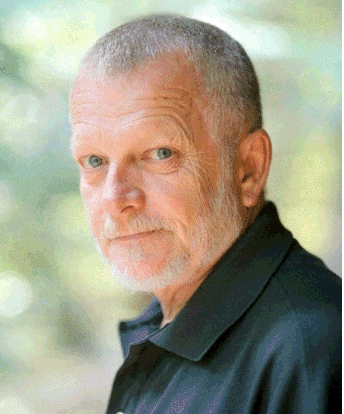
An E-view with Sam Hamill
By Rebecca Seiferle
I first met Sam Hamill in 1990 when I was the Writer’s Exchange Award winner in poetry from New Mexico. Each year Poets & Writers has a competition that chooses one poet and one fiction writer from two participating states. The winners are taken on a literary tour first in New York, and then in the other participating state. In our case after four days in New York City, we went for three days to Seattle. The idea was to introduce new writers to various communities of publishers, writers, and editors. An essential stop in the Seattle area was Copper Canyon press, that rarest of things, a press that published only poetry and which had a national reputation for the quality of the work published. To visit the press meant a ferry ride across Puget Sound and a long drive through the beautiful woods of the Olympic Peninsula. Copper Canyon is housed in a former army building, a small clapboard with wooden floors, in Ft. Worden State Park, a stunning location located above the beach and a view of the Sound. Sam Hamill welcomed us that day, showing us around the offices, pointing out a few of the broadsides that he had printed by hand on the same press with which he had first begun Copper Canyon and then invited us to his home for lunch. He had built his house himself in the traditional Japanese style on land that had previously been logged. I was surprised by the depth of his hospitality. On our tour, we had taken many publishers, agents, editors to lunch or dinner at various elegant and expensive restaurants, but Sam Hamill was the only publisher and editor who waited upon us. His welcome seemed to originate in a deep sense of another tradition, the tradition of Chinese and Japanese poets who, living as hermits in their remote retreats, perfected the art of welcome for visiting and often itinerant poets. His house that day seemed both an intensely private place, attuned and reflective of a unique sensibility, and also a kind of sanctuary to the spirit of hospitality.
In a similar spirit, Sam Hamill has made a home for American poetry at Copper Canyon press. He has been instrumental in bringing poets to national attention, for instance Arthur Sze (see our Summer interview) who with Archipelago became known beyond his previous audience. He has published the life’s work of poets like Hayden Carruth and Carolyn Kizer. He has been committed to publishing translations, from the Asian traditions to the seven books that Pablo Neruda left at his death, and so has “contributed to the shape and the style, even to the process itself, of American verse in this century.”
If Hamill were an editor and publisher alone, he would be a significant presence. But he is also a renowned translator, having translated such classics as The Art of Writing: Lu chi’s Wen Fu, The Essential Chuang Tzu , The Essential Basho, as well as rich anthologies, Only Companion: Japanese Poems of Love & Longing , The Erotic Spirit, The Infinite Moment: Poems from Ancient Greek , and most recently Crossing the Yellow River: Three Hundred Poems from the Chinese (see our feature). In his books of essays, such as A Poet’s Work: The Other Side of Poetry, he is a passionate critic and thinker, deeply informed of other languages and cultures, who profoundly considers the nature of poetry within the whole context of life, including considerations of war and poverty and imprisonment. And last, but certainly not least, he is the author of over a dozen volumes of original poetry, including Destination Zero: Poems 1970-1995 and Gratitude (BOA, 1998) a poetry which is distinguished by its quality of passion embodied in clarity. His work makes a clear path in the snow. Following the often elegant simplicity of his lines, we seem to follow the thinking of the heart itself. In his work in all of its aspects, we see the deeply lived presence of spiritual practice, how many things have grown from “this shadow work,” as he calls it, to create a clearing of light for us all.
Seiferle: These poems all seem of the early morning hours,to have been written by the light of “the great acornof light/ an hour before sunrise.” Do you usuallywrite in those early hours and, if so, is that habit,a result of temperment or your practice as aBuddhist or just a matter of necessity?
Hamill: Yes. Habit, temperament and practice. But truth is, often the morningexperience doesn’t become a poem until days, weeks or months later. I writeshorter poems entirely aurally-that is, I “work on” the poem by saying thepoem until it feels “just right.” Then, to get it out of my mind, I writeit down. I revise very little after the poem is actually written out. Oftennot at all. Because I’ve spent a great deal of time listening, reallylistening, to the poem before it gets to the page.
I sit zazen each morning, usually rising at 5 or a little earlier. Afterzazen, a cup of coffee and that other kind of meditation which seems oftenenough to inspire poems. Then my workday begins a little before six. Habit,temperament and practice are one thing. All any poet can do is present atradition and a legacy. My tradition mixes Eastern and Western classicaltraditions with many of the tenets of the High Modernists, Pound andWilliams, and those who’ve followed a similar path-Rexroth, Levertov,Carruth.
Seiferle: Each of these poems is full of allusions,particularly “Sisyphus” and “Zuihitsu,” intersectingwith various writers and sages from both the Easternand Western traditions. The poems are also replies,messages, to other poets, Hayden Carruth and JaneHirshfield, guessing at the initials, and Kimiko Hahn,and then the unnamed poets who have entered a poetrycontest. Would you like to talk a bit about theintersection of event and feeling and thought thatbrought each of these poems into being?
Hamill: “Sisyphus” is part of a conversation with two elders/brothers, HaydenCarruth and Jim Harrison. I lift lines from poems of theirs, placing themin a different context, and while it is a conversation, and as such, partlyprivate, the poem does not require one to know anything about eitherCarruth or Harrison, but rewards one’s reading, the more one knows.Likewise, Kimiko Hahn’s work (I don’t actually know the poet) inspired mymeditation on the “pillow book” and its Japanese traditions and mostfamous author, Sei Shonagon.
How do these things come about? I don’t know. In the case of the former,I’ve known and loved and published the poets for a long time. In the caseof the latter, the inspiration is perhaps more “purely literary,” butnonetheless necessary.
Seiferle: “Sisyphus” and “Zuihitsu” are both written in thetanka stanza, of five-seven-five-seven-sevensyllables. It seems to result in a form that is bothfluid and capable of the cadence of a particularvoice. Do you often use that form?
Hamill: That rhythm got firmly into my body during years of translating classicalJapanese poetry, and when I began working on the poems in Gratitude, the“waka” or “short poem” 5-7-5-7-7 just kind of revealed itself as I beganto work on many of the poems, and I found that such a formal device couldbe quite flexible and useful, both rhythmically and syntactically.
Gratitude is the first volume of a trilogy that is really about practice-thepractice of poetry, the practice of Zen. The second volume, Dumb Luck,will be published a year from now and also has many poems in tanka stanzas,as will the final volume, presently underway. The Japanese language, unlikeChinese, is polysyllabic, and many of the poems I’ve composed in thoserhythms can actually be presented with Japanese bamboo flute (shakuhachi),underscoring the lyrical quality of the form even as I use the line topresent argument or philosophical meditation.
Seiferle: Each of these poems contains an argument, “Judgingthe Poetry Award” argues with contemporary poetry’s’cultivated desperation of the self, “Sisyphus” argueswith our cultural expectations of growing old, and“Zuihitsu” with a narrow definition of the erotic.Are your poems often impelled into existence by asense of argument, a sense of necessity to reply towhat is false in our culture?
Hamill: I don’t think of my poems as making arguments, but agree that they oftenmake assertions, especially when I’m addressing what I consider to becertain kinds of all-American assumptions. I think we live in anembarrassingly self-centered culture in which far too many people squandertheir precious lives in the interminable search for immediateself-gratification. If nothing else, being a poet means never knowingwhether your work has any real merit. No poet knows what contemporary artwill endure. Blake was mostly despised in his lifetime, his poetryvirtually unknown before Whitman. Nobody read Dickinson until this century.Only a handful of poets knew the work of Tu Fu and it remained unknown tothe literarti for nearly a hundred years after his death. We have thisyear’s pop stars and this year’s Poet Laureate, and this year’s Pulitzerprize winner. But none of that means anything to the art and practice ofpoetry, which insists upon the long view of things that requires a certainhumility before the task at hand. Only an ego-maniac would “write forposterity.” So I try to make my art from humble origins and humble dailypractice, nevertheless believing completely that the path of poetry is oneof the ten thousand paths to the Buddha, and that the practice of poetryitself is entirely sufficient in and of itself. I am a tireless student ofthe Way of Poetry. I’ve always loved Gary Snyder’s remark, “As a poet, Ihold the most archaic values on earth.” I share such convictions as theybecome both my tradition and my legacy.
I have been a working poetry editor for thirty-five years, and I still findtoday that being in the service of poetry is liberating in ways almost noone who has not been an editor could understand. Whether bringing HaydenCarruth’s great body of work into print, or Eleanor Wilner’s magnificentSelected Poems, or Arthur Sze’s poems and translations-my friends are myteachers and their art is part of my art, and they become part of my dailymeditation on poetry, and getting myself out of the way in order to presentthem in the best possible light is a deep abiding pleasure. They become myraison d’etre. Their poetry becomes the reason I study typography and thearts of the printed book, the reason I’ve lived by my begging bowlunapologetically for three decades.
Seiferle: Could you explain a little more what “Zuihitsu” isand translate the poem by Issa at the beginning of thepoem of the same title? How important do you thinkthat the erotic is to writing? It seems that you feelthat the erotic is that spark embedded in “the tenthousand things” of daily life?
Hamill: Issa’s haiku says: “As old age arrives / considering just the day’s length /can move one to tears.” The “zuihitsu” is what we know as the “Japanese pillow book.” It takes allkinds of shapes, including diary entries, lists, commentaries on readingand social life… all sorts of things. The Pillow Book of Sei Shonagon isthe most famous example.Poetry begins and ends in the erotic. Poetry requires noises, which requirea body and a breath and an ear for rhythm. The printed page is merely somuch sheet music which the reader must learn in order to hear it and/orpresent it properly, by way of breath and voice. To paraphrase Rexroth, theerotic is the spark in the tinder of knowing. I don’t mean merely a sexualspark, either. The erotic encompasses far more than the sexual. Ourrelationship with the earth is erotic. Our spirituality is borne up throughthe erotic. Being alive is simply processing erotic data. Poetry selectsits data very carefully, presenting luminous details capable oftranscending time and space, gender and culture. Through the poetry ofLevertov and Wilner and Olga Broumas and Jane Miller, I experience “thefeminine” in previously inconceivable ways, and I come to understand Olga’sor Denise’s passion is not something different from my own except inparticulars. I become more eroticized, not merely sexually, butuniversally. Through poetry, I come to understand, at least in some degree,how we may rise above mere self-gratification to see our suffering asuniversal-the first Noble Truth-and through poetry, begin to transcend theego, to really learn that poetry is a gift… to the poet who makes art outof inspiration, and to the reader who heart and mind open to the poem.
Seiferle: One of the most engaging qualities of “Sisyphus”is its sense of “real comfort/ in saying, So this is/ what I’ve become, this is/ the man I am,” a kind ofsimplicity brought on by age. Yet on the other hand,the poem ends with “Sisyphean tasks. . . arethe only ones worthwhile.” What “Sisphyean tasks” areyou still looking forward to?
Hamill:
How much I desire!
Inside my little satchel,
the moon, and flowers!
–Basho.
