
An excerpt from The Sword Went Out to Sea by H.D., with Cynthia’s notes.
_______
Cynthia’s chapbook Under Erasure
_______
Interviewwith
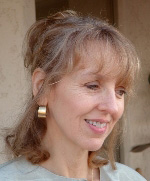
Cynthia Hogue
By Rebecca Seiferle
Cynthia Hogue has published fivecollections ofpoetry, most recently The Incognito Body(Red Hen Press, 2006).She is the co-editor (with Elisabeth Frost) of Innovative Women Poets: An Anthology ofContemporary Poetry andInterviews(University of Iow Press, 2006), and (with Julie Vandivere) of the first edition of H.D.’s TheSword Went Out to Sea (Synthesis of a Dream), byDeliaAlton (University Press of Florida, 2007). She has received Fulbright, NEA (poetry), and NEH(Summer Seminar) Fellowships. In2005, she was awarded H.D. Fellowship at the Beinecke Library at Yale University. Hogue taught inthe MFA program at the University of New Orleans before moving to Pennsylvania, where she directedthe Stadler Center for Poetry at Bucknell University for eight years. While in Pennsylvania, shetrained in conflict resolution with the Mennonites and became a trained mediator specializing indiversity issues in education. In 2003, she joined the Department of English at Arizona StateUniversity as the Maxine and Jonathan Marshall Chair in Modern and Contemporary Poetry. She livesin Phoenix with her husband, the French economist, Sylvain Gallais.
Rebecca Seiferle: You describe the poems in “Under Erasure” as “interview-poems” based upon theaccounts of evacuees from Hurricane Katrina and seem to have developed a relationship with a numberof the people who speak in the poems. How did the project of writing “Under Erasure”develop?
Cynthia Hogue: I lived in New Orleans for four years in the early 1990s, so I knew the city that flooded afterKatrina, and mourned its loss deeply. I didn’t feel that I had a right, however, to write aboutit, or perhaps I should say more specifically that I felt I should refrain from expressing mypersonal feelings of loss. After all, I wasn’t from the region, had moved a decade earlier, andwasn’t affected personally by the devastation. Somewhere between that restraint and my feelings, Ihappened upon the shape of this project, that I could interview evacuees here in Arizona, and beginto make poems that would speak both to individual and shared experience. I felt quite tentative atfirst about approaching such a project, but two former colleagues from New Orleans had relocated toPhoenix, and I asked if I could interview them. What came out of those first two interviews(“Jim’s Story” and “Mimi’s Story”) spoke to experiences that hadn’t receivedmuch “air time” in public— visions and dreams, not simply loss but trauma (watchingyourhouse be shown again and again on CNN and knowing you’d lost every last thing you had in theworld). The facets of what happened to individuals tell a different story than a historian orreporter tells. How does one negotiate psychologically a tragedy as it is unfolding? How does onesurvive such shock (several of the interviewees mention in passing that they have bad hearts, forexample)? What amazed me was the depth of analysis that emerged as people spoke about what hadhappened to them, the kind of sense they have made of what they have been through.
I found interviewees eventually by being put in touch with Robert Sanders, who was overseeing thePhoenix office of the Lutheran Social Services providing aid for Katrina evacuees. Robert has beenthroughout these interviews so interested in helping me to connect with the evacuees he workedwith, to tell their stories, for many would simply otherwise get lost or silenced. He would askhis clients if they were willing to speak to me, and then give me the names of those who agreed tobe interviewed (the first of these was Elizabeth Sutton, included here). I conducted eachinterview in person, because I wanted that personal connection to the subject and to thetestimonies. Often it was heartfelt, quite palpable, and often, great perceptivity and faith (notto mention courage) would be expressed, almost matter-of-factly, as if in passing. There was suchmodesty among them, though they had risen to meet such overwhelming tragedy.
Rebecca Seiferle: Did you interview the various people you thank in your acknowledgements, and was it that you feltthe poem was often implicit in their own accounts, those moments when you could feel the intensityof poetic language? In writing the poems, was the process thatof being an editor, a messenger, a witness, one who is haunted at times, or . . .?
Cynthia Hogue: I was at various times fulfilling all of these rolesexcept, of course, witness. Rather, I was bearing witness in order that these voices, theindividuals who went through this storm, not be silenced by the historical record. I was also aneditor, shaping the interviews into poems. In the interviews with Jim and Elizabeth, I could hearthe poem as we spoke, but there were digressions, repetitions, far more detail than would sustain areader’s interest. With some focus and scraping away of the many layers of human discourse, thepoem emerged like a sculpture in stone, but with the interview with Mimi, I was initiallynonplussed. It was an amazing account because it was so detailed an account of both loss andpersistence, and it was so impassioned in its outrage, but the detail was of homeowners havingtrouble collecting on their insurance policies. The subject was so unpoetic! Once I began toshape the interview, however, I could hear how cadenced the language was, and that was interesting,that dissonance between rhythm and topic. That was the first poem in which I first tried shapingthe lines to catch the lilt of the speech. Mimi had been a professor of Medieval Studies and hersyntax is very precise, her attention to phonetics exact. When I first gave her the poem, she wasunsurprised by its form, remarking casually that she always speaks in cadenced units!
In these poems, then, I am a secondary witness, as Dominic LaCapra terms it (speaking of historiansof the Holocaust). That I am “haunted” by what happened feels like the right term, but Idon’t identify with the interviewees. I mean, how could I? I am only “haunted” as onewhose love for New Orleans and the Gulf Coast was ambivalent and hard-won. The beauty of theregion is built on a very racist past, of course, and the tragedy is due in part to corrupt, racistpolitics, as some of the interviewees address narratively, but that is not speaking to theirexperience of losing the life they knew there, of having friends and families scattered across thecountry, of being immediately impoverished—or more vulnerable—and of having to rebuildtheir lives elsewhere. How would I dare to claim that I could imagine what that feels like? Butevery American should be thinking about it for we have caused this to happen elsewhere. I canonly approach that enormity through the voices of individuals, through attentive listening, andthrough empathy. They shared with me what happened, gave me permission to shape their words, tocollaborate with them on bringing these poems into being.
Rebecca Seiferle: Since post-modernism is noted for borrowing, appropriating, altering various texts andexperiences, whether historical or contemporary, I wonder if you would like to say something aboutyour relationship, as a poet, to the experiences and accounts that speakin “Under Erasure?” I have a strong sense of your wishing to honor these particularexperiences and the people involved while honoring the integrity of the poem simultaneously.
Cynthia Hogue: I promised the interviewees that I would use only theirwords and also that if they didn’t approve of the poem, if it wasn’t accurate to their experience,or if they were uncomfortable with anything in the poem, that I would revise it or they couldrefuse to give me permission to publish it. So far, no one has refused that permission, andeveryone has said that the poems are accurate to their experience. The most I’ve done is to focusand shape the interviews. In a few places, I moved a section of the narrative. I wanted each poemto reflect the complexity of the interviewees’ insights and not to sentimentalize their suffering. I also hoped that the poems would reach readers as poetry, but I was not sure that the interestwould extend beyond me. A number of the interviewees mention that the region has been forgottenand the world has moved on. To do this project, I couldn’t worry about all that, though. It trulywas all about the process of listening, listening in the words for the poems to come forward.
Rebecca Seiferle: The title of the chapbook evokes the erasure of communities and lives under the effect of Katrina,and the work as a whole is preoccupied with the persistence of the individual sensibility and voicewhile being subjected to the forces of erasure, political erasure, the obliterations of war andbeing at war, and also the way in which language itself can erase experience and sensibility when“no one has heard TELL.” The use of all caps, italics, and also the spatial form of thepoem seemintegral to this; was that a predetermined choice or an organic necessity driven by the processitself or. . .?
Cynthia Hogue: The series started with those two more visually dramaticbut narratively broken poems that now open the chapbook. The first, “Under Erasure as in:Sign (Silence),” which eventually gave the chapbook its title, tells the story of a quest, andI realized as it was happening that it would become a poem (not that I thought of it at the time asa quest, for I was just plain lost). I went to see the assemblage piece, “Floodwall,”the sculpture by New Orleans artist, Jana Napoli, which she made from drawers gathered from thestreets of the city as people were cleaning out their destroyed homes. It was on display in NewYork—a city I know well except for the financial district—and so, I had trouble findingtheexhibition. I spoke to the homeless veteran, Jonathan, whom I at first ignored and then went backand spoke with for awhile. I didn’t want to insert or assert the first person, though. I didn’twant it to be a personal lyric. That pronoun was what I signified as “under erasure”initially, but the unconscious has its own logic. How could I have missed that New Orleans, theGulf region, was itself “under erasure,” or that the veteran who spoke to me had beenerased from the public record as a casualty of our military policies arcing across theadministrations of Presidents Reagan and Bush I and II?
The form was organic, as you surmise. I “discovered,” for example, the tiers of drawersin the poem’s visual shapes as I played around with the form as I wrote. The capitalizationsinitially were emphatic, but then I began to break them up, discover words within words, andexplore how to stretch meaning. I’d done that particular formal investigation in the titlesequence of The Incognito Body as well, so I was not planning on repeating it in this poem,butthen it happened to emerge in the writing itself.
Rebecca Seiferle: Is the chapbook in this issue the whole of the work, or is this an excerpt from a longer work? Doyou feel that there is more to be written of “Under Erasure,” and do you envision this asthe title for a book or longer work?
Cynthia Hogue: These poems are excerpts from a book-length project onwhich I’m collaborating with a photographer, the Arizona photographer Rebecca Ross. I’minterviewing twelve evacuees in all and have tried, wherever possible, for a range ofvoices—acrossthe spectrum of the region’s classes and races (with the exception of the upper class, whom I havenot found represented among the evacuees in Arizona).
Rebecca Seiferle: You’ve recently co-edited the first publication of H.D.’s novel WWII memoir-novel, The SwordWent Out to Sea (Synthesis of a Dream), by Delia Alton. In that novel there’s a preoccupationwith the voices of the dead, from H.D.’s own spiritualist practices where she believed she washearing the voices of dead RAF pilots who were using her as a messenger to convey warnings aboutdeveloping the atomic bomb. In the poems in“Under Erasure” you, as a poet, are also hearing other voices, speaking of those who werelost, or what might be lost. What is your sense of the poet as messenger? And is that somehowconnected as well to the prophetic, of warning of certain impending losses?
Cynthia Hogue: I had not thought of that similarity, because, ofcourse, the people I interviewed are alive, and the pilots whom H.D. channeled had died defendingBritain from the Nazi Luftwaffe in the Battle of Britain in 1940. But I think many artists today,as in H.D.’s day, are passionately and maybe desperately trying to wake us Americans up from thisdream of plenty, that there is no cost to unlimited expansion and consumption, that we will neverrun out of resources, that it doesn’t matter that so many other species of life are going extinctbecause of humans. We now know that the planet itself is alive, that it is a self-regulatingecosystem that we have thrown terribly out of balance. As perhaps everyone knows now but fewbefore Hurricane Katrina ever thought twice about, in the Gulf Coast, wetlands act as filters ofpollution and also as buffers from the full force of the seasonal hurricanes. Developers haddrained them in order to develop the coast for profit. I think of something Wendell Berry wrote along time ago, in a little essay entitled “In Defense of Literacy,” that “Short termprofit is long term idiocy.”
Poets take note. Artists see things. They bring us, as Alice Fulton has called it,“inconvenient knowledge,” because to come to know something brings responsibility thatmany of us don’t want. The difficulty of knowing is the quandary of the listener who bearswitness. And as Susan Sontag remarked in Regarding the Pain of Others, a meditation on warphotography and art, artists who disrupt our psychic comfort are offering a deep and humane“invitation to pay attention, to reflect, to learn, to examine the rationalizations for masssuffering offered by established powers.” My project is a small piece of that larger,collective voice. Art tethers us to our humaneness.
Rebecca Seiferle: H.D.’s novel was not published in her lifetime in part because the work was perceived as her‘breakdown’ novel, and I know in your reading from it for the first time at Casa Libre in Tucson,you were a bit concerned that it might seem too ‘out there’ or somehow inaccessible due to thedensity of its symbolism and the nature of its preoccupations withspiritualism, communication with the dead, etc. As it turned out! and as you note in yourintroduction to the excerpt in these pages that was happily not the case. I’m wondering if youwould like to discuss how a particular sensibility and experience might be dismissed or go unheard.This seems also connected to the work in “Under Erasure”” where the poems convey howsensibility andvoice are fragmented by the forces of erasure, and yet poetic fragmentation of hierarchal languagecan create the persistence of sensibility and voice.
Cynthia Hogue: My being tentative about the accessibility of H.D.’snovel originates in the scholarly debate over whether the novel should have been published and howmuch of a scholarly context the novel needed in order to be understood. I can’t imagine that thereis a better non-scholarly audience for this work than the one I encountered in Tucson, to mysurprise. I am a poet, not a scholar of esoteric traditions in which H.D. was deeply learned. Icouldn’t contextualize H.D.’s novel without extensive research, or begin to make a case for itsessential sanity and humanity until I could place it in a larger investigation of modernist poetryin the context of war. Then, my co-editor, Julie Vandivere, and I could argue that in writing thisnovel, H.D. wrote her way out of her devastating experiences as a civilian in war time London andliterally back into self-composure. She tried valiantly to write her way out of “romanticthralldom” (the term is Susan Stanford Friedman’s and Rachel Blau DuPlessis’) as well, andarguably, or almost, succeeded in freeing herself from the judgment of the male-dominatedestablishment. Remember in the novel that she believes herself chosen as a messenger to warnhumanity of the bomb, but is, like Cassandra, ignored and silenced. After her breakdown, sheasserts that what she learned from her illness is this: “There was love and hate. Love waseternal, hate was ephemeral. . . . Fear was another word for hate, or hate was another word forfear” (49). She knows it’s considered sentimental and she knows it’s the truth.
For me, with “Under Erasure,” I had to give myself permission to be a conduit forindividuals who would never otherwise have spoken out so publicly. Nor would I have necessarilyspoken to—or met—them. But who did I think I was to write about what had happened to theGulfCoast and New Orleans?
And yet, I knew that few whites saw the New Orleans I came to know (which I wrote about in aseries, “Three Streets from Desire,” in The Never Wife). New Orleans was almostalwaysromanticized for its “voodoo” traditions in the French Quarter or its lovely and wealthyGarden District. Its micro-segregation was exposed by Katrina, but I had observed it all by beinga fairly invisible observer in New Orleans (as an outsider, I had no placement in the socialhierarchy). The New Orleans I remembered was both racist and multicultural, both beautiful andfilthy, both rich and impoverished. I am not being accusatory but factual, since my very firstlesson in New Orleans was about internalized racism—a very hard lesson to confront for aNorthernprogressive. And so, this series is both narrative and analytic, a deconstruction of adestruction. Its fragments express both trauma and a literal sub/version, you might say, in thatit’s in voices of the unheard.
Rebecca Seiferle: Yes, that’s so true, I think, that the city’s “micro-segregation,” “ was exposed by Katrina.” I’m wondering, in the same sense of retrospective revelation, if H.D.’s novel perhaps seems ‘clearer’ to us now, looking back from this differentvantage point,after the atomic bomb, so that what seemed esoteric and strange in her time seems sometimes obviousand accepted, at least theoretically, to us now, even while our erasures continue. There is thesame tension between the obvious and the marginalized in your work in “Under Erasure.” Doyou feel there is a correspondence of the poet and the role of the poet between the war years ofH.D.’s novel and the war years now? An obvious question, I know, but where do you think we are? Doyou feel that the H.D. novel is particularly significant now? that it arrives both as an unheardmessenger of the past and an unheard (?) or perhaps to be heard messenger now?
Cynthia Hogue: The short answer is yes, I think her novel can be heardand understood now. She wanted it to be a healing narrative—not therapeutic in the writingbut in the reading, that is, though the writing was, in fact, therapeutic—but in the sensethat wenow know that we can repattern our brains’ circuits through sound and word (how interesting: I justcombined them into “wound,” which I corrected, but note here as apt error). Now it’spossible. Whether it’s probable or not, I cannot say.
The other answer is more tentative, and not as optimistic, that collectively poets, artists,visionaries, activists, are raising our awareness of the issues at hand. H.D.’s novel was printedin a scholarly edition of 1000, so really, realistically, who will hear her? Does it matter? If,as H.D. believed, putting words forth could shift the vibrational resonance on the planet (justlike prayer or chanting), then this work will now contribute to that necessary shift (it is thisbelief that Trilogy contemplates as well). In this sense, the role of the poet is like therole ofthe prophet: to speak from a place of truth in affective language. That’s what H.D. did. Not tomythologize her—she was a very complex person—but artistically she was very courageous,and that iswhat I admire in her and in fearless poets and artists today. It seems to me that we need more notless fearlessness, by which I mean intellectual and emotional courage. To reiterate H.D., we needto counter hate with love in any way possible. You can see in the novel the way shock took H.D.out beyond her self to a larger story, a larger version of the self’s story through and beyondtime. We don’t need to believe in reincarnation to come to the conclusion that human evolutionmust be heartfelt, that the psyche must evolve for the planet to survive us.
