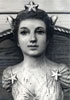
Selection of Poems

by Tautvyda Marcinkevičiūtė
 Translated by JulieKane, with the author and RimaKrasauskytė
Ifirst became acquainted with Tautvyda Marcinkevičiūtė in the late1980s, when Lithuania was still part of the Soviet Union. A mutual friend of ours—the journalistŠiaurys Narbutas—carried a copy of my first poetry book home withhim to Kaunas, Lithuania, and placed it in Tautvyda’s hands. Thus began a correspondence andfriendship that has endured for over twenty years. Writing letters in longhand that took four to six weeks toarrive, since they had to pass through the Soviet mail censors, Tautvyda and Idiscovered that we both had red hair, we were both born in July (three yearsapart), and we were both admirers of Sylvia Plath. In fact, Tautvyda was the first person to translate Plath’spoems into Lithuanian.
Tautvydatranslated a group of my poems into Lithuanian and had them published in theLithuanian journals Nemunas in 1989 and Gabija in 1991. Together with Manly Johnson, I translated two of Tautvyda’s poems intoEnglish and placed them in the special issue of Nimrod titled “From the Soviets,” in 1990. Tautvyda and her husband, the poetGintaras Patačkas, were able to take a side trip to New Orleans to visitme in 1990 while they were giving poetry readings in several U.S. cities withlarge Lithuanian populations. Iwas able to visit her during my trips to Lithuania in 2002 as a FulbrightScholar and in 2005 as a guest of the Lithuanian Writers Union for their annual“Poetry Spring” international poetry festival. Tautvyda translated the poems of mine that were published inthe festival’s anthology, Poezijos Pavasaris ’05 (Vaga), and in turn, with assistance from Tautvyda,I translated several of her poems into English for the bilingual anthology PoetinisDruskininku Ruduo 2005 (Vaga).
Mytranslations for The Drunken Boat wereaccomplished with the aid of two different literal English-languagetranslations of the poems, one by the poet herself and one by Rima Krasauskytė,who was my undergraduate student in Lithuania and then my graduate student inthe U.S. I was also able to emailthe poet with my specific questions and to receive responses within twenty-fourhours—far different from my first experience translating two of her poemsfor Nimrod in 1990, when ourletters would take more than a month to pass through the Soviet censors!
Over the course oftime, I have seen Tautvyda’s work change from a formal, confessional, and lyricstyle to the more edgy, experimental, and prose-like signature reflected inthis group of poems. One thingthat has remained constant is her focus on “women’s experience” and her use offairy tales, myths, and allusions to critique the lingering oppression of womenwithin Lithuanian society.
Icould not begin to explain how many personal confidences Tautvyda and I haveshared over the course of 22 years, or what our long friendship has meant tome. Perhaps Robert Frost said itbest: “That day she put our headstogether / Fate had her imagination about her.” Tautvyda is my Lithuanian sister poet, and I am grateful forthis opportunity to present a large sampling of her work to internationalEnglish-language readers.
I’m not saying
that this is our national dish,
but just that we’re used to it, like all of Eastern Europe.
I don’t know
on which nation’s genealogical tree they alighted,
sweetly pursing their beaks, before landing
in this bubbling cauldron:
I. guillotinedhead of cabbage
II. meatground fine by the machinery of State
III. ricethat gives an oriental tang to the filling, though it’s okay without it
IV. salt,pepper
Note: To avoidovercooking them, Mom would bind them with slender threads, forming an artisticsign of the cross with her filigree, so as not to frighten the eater.
But I’m talking nonsense, my cousin, my real
cousin, already born in the State
forwhich I wish only such
gastronomicalexcess—
Bonappétit!
Theywant to know if I have swallowed a precious stone. I suffer patiently through the procedure until it becomesclear that I am as empty as a museum hall after visiting hours, but in order topay the X-ray bill they present me with, some of my body parts are going tohave to be golden, at least. Andwhy not? Because I have pearls inmy mouth, silk on my head, and emeralds in my eye sockets, all very difficultto conserve, regulating the temperature and light as crowds of visitors passslowly by, and yet it doesn’t occur to anyone that the most beautiful thingsare concealed in my head—a sparkling treasure of thoughts, enough to lastme through the end of my life. Howsad that no one else will get to admire the diadems of sentences, thepearl-strings of the night’s meditations, which even I, in my solitude, muststash back in the head’s safe and lock for the night.
Sothat’s why I’m making this folded paper boat and putting all of my treasuresinto it, letting it go on the river to sail toward a person who will owneverything from now on.
How difficult it is to part withfriends (the endless conversation still running like a fire truck at fullspeed, their cigarette butts burning in the ashtray): you linger a moment before beginning to wash the cups ofjust-evaporated coffee, hoping to evoke an illusion of their presence from thecup brims warmed by their lips: words like squirrels, jumping from lips to the branches of ears—
You must see them, enjoy theirnimbleness and grace, try in vain to cuddle with them—even the son,already dressed in his school uniform, chases them until the last minute,risking being late again—yes, it is still possible to trick them into sittingdown at the table again, to command their full attention, so that they forgetthe grandiose projects of the day into which they will soon be plunging; and,laughing until tears form, suddenly you feel yourself to be the richest personin the world, strewn with the amethysts of their hearts and the emeralds oftheir minds, understanding that friendship is the greatest of all diamondmines.
On the same day when, seventeen million years ago, a smallgirl with red cheeks, seventeen years old and studying floriculture, I came tomy Teacher Snow to learn the art of composing the Ikebana of Happiness,charming people with the beauty of massed orchids and its subtle fragrance; onthe same day, only seventeen million years later, I was visited by a tall andelegant seventeen-year-old boy who declared me to be his teacher, so that eventhough both of my arms were occupied (the boy Caius and the girl Gerda sweetlywhimpering on them), I realized that I had no right to stop halfway throughharsh February, which had frozen the begonias and myrtles, because I couldcompose ikebanas anywhere, even by breathing on a window glass, scarcelytouching its cold surface with my lips, since what had been sown in me by myteacher had already come into leaf in my pupil—flowers, without which theelusive Ikebana of Happiness would be unimaginable.
Howlonely she felt in her ancestors’ gray Gothic castle with the soul of her deadfather, her invalid mother, and her two children whose hair smelled likefeathers. On successful huntingdays her husband would invite his whole clan to the castle: his still-strong father and mother,three brothers like oaks, four children from his previous marriage to anItalian countess who’d run off with the captain of the Hussars, who knowswhere, and the daughter-in-law who’d made him a present of his first-borngrandson. It was like that forestof the future moaning and rustling on her grave.
Theprincess was thin and pale, living on the crumbs of her husband’s love. He was hardly ever at home, nowteaching the youngest son by his first marriage how to shoot with a bow, nowfeasting at the eldest son’s wedding (at which the fugitive Italian countesshad put in a rare appearance), now baptizing his grandson, now choosing a bridefor his middle son. Certainly, itwas good that he took care of his family, always organizing noisy feasts forthem, at which she felt like a foreign body. But since the church had blessed his union with the Italianwoman, the princess felt that not even religion could dispel the hatred andbitterness she felt toward her ambivalent life, that nobody inside or outsideof the castle walls gave a damn about her, though she knelt for hours at a timein her ancestors’ oak-carved chapel, begging heaven for an intercession.
Itseemed that nothing was going to change until she died. That was why, above all, the princessdid not want her husband’s clan invited to her funeral: all those strange oak, birch, and ash treesrustling and swaying for all time in the one place that had always been hersalone—the grave of the princess.
The building was made of ferroconcrete, like atypical project, but standing apart from its absolutely identical relatives,its corridors daubed with grimy oil paint, the doors to its rooms sealed shut,its ceiling whitened with chalk, women of different ages knocking timidly onits doors but never dreaming that, at the other end of the corridor, a girl ofthree or four with blue eyes wide open would shoot them a friendly look,surprised that they tried to hide their flushed faces under kerchiefs or hatveils, as if a glance of theirs could kill the girl with the cold blade of aknife.
Theywere as smart as dolls, blondes and brunettes, but their industrial eyes neededwork—they neither opened nor closed, nothing but decorated plastic.
Nowwhen the girl grew up to play every day with blood pressure monitors andstethoscopes, it seemed to her that if those dolls, moving but not blinking orspeaking, had only let her play with them back then, they wouldn’t have stayedin that building forever, their hideously naked cloth bodies filled withsawdust, their wrenched-off heads and twisted-off arms and legs and poked-outeyes rolling who knows where, under the furniture—toys that one is sickof, toys that have served their time, banished to some utility room of thebuilding. If only they had playedwith her! But the dolls had beenkeen to play with boys, not knowing that boys don’t like to play with dolls.
I’min a hurry, I’m already late for the jazz concert, and I have no idea whatcould happen in that jam-packed hall, face to face with the executioner whotediously consults his assistant and reads the sentence from the notes thatonly he can see, maybe taking pity, or maybe opening an artery, chopping off ahead, compelling everyone to howl with horror and fascination—thatexecutioner whose name is Music!
Butthe jazz goes on breaking like this crown of dandelions my son has asked me tomake, crying through his clarinet, not caring that I don’t have time forit. After a few minutes thedandelions will wither, individual as sounds that some musician has played orsighed, though he’s not likely to remember them, or be remembered for havingplayed them one time only.
Butthe futility of this job, weaving a crown of dandelions, gives me a certainpleasure that I don’t quite understand, feeling feverish and glancing at theclock whose hands don’t show the time that’s still left, like life after death.
Becausewhat kind of concert could evoke the jazz of life?
Whenleaves and parchment scrolls begin to rustle and turn yellow, it becomesnecessary to fall in love, gracefully tugging the blameless gossamers of Indiansummer which men and women assume must be binding their personalities to eachother—to fall in love the way a storm wastes its energy rending the roofsof houses as if they were meaningless tin cans—suddenly a star and not adesk lamp lights up, and fields of Mars stretch where there had been wallpaper,now reddening when the cosmic ship of passion approaches, now getting pale forfear that nobody will touch the incandescent body, and—what does itmatter, where it might lead?—Heaven and Hell mixing right here on oursinful Earth.
Whippedby hail, flooded by the Sun—oh, Lord—how small and uninteresting wewould look to ourselves standing on trial in front of your eyes that are a skyof changing tints and colors, covered with the clouds of compassion.
Quick little bird on the rim of the chimney:
the city is burning in the flames of sin
as glittering nightclubs devour the patrons
thrusting at each other. Tonight a stripper
will run through her act in a foreign bordello
and a student coming from a visit to a friend
will snarl like a mermaid in Nemunas River
weeds after getting raped at knifepoint.
Pennies will fall into the margarine tub
of the beggar kneeling on the public sidewalk,
and a Good Samaritan organization
will run out of clothes for the homeless woman
spending the night above a heating vent.
And they, and all the patients
waiting for spring to arrive, will pulsate
in the city’s lungs, and when the sleeping giant
awakens, he’ll spit lava through the chimney,
though he pities the wagtail perching on its rim.
