
Aselection from Sam Taylor’s Nude Descending an Empire featured in this issue.
A feature of Nude Descending an Empire in this issue.
Sam Taylor’s Nude Descending an Empire from University of Pittsburgh Press
_______
Sam Taylor’s poetry in a previous issue.
Sam Taylor’s website
_______
“Infernal” at The New Republic
“Jataka Tales” at Agni
“The Book of Endings”Poetry Daily
“The Book of Revelation” Verse Daily
Three poems at Pank
_______
An Interviewwith
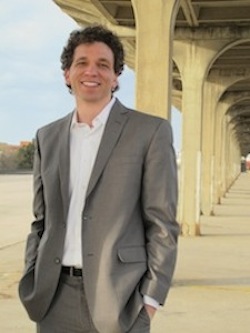
Sam Taylor
byRebecca Seiferle
SamTaylor is the author of two books of poems, Body of theWorld (Ausable/Copper Canyon Press) and Nude Descendingan Empire (Pitt Poetry Series),and the recipient of the 2014-2015 Amy Lowell PoetryTravelling Scholarship. Heteaches as an Assistant Professor of Poetry in theMFA program at Wichita State University. You can find him on the webat www.samtaylor.us.
Rebecca Seiferle: I remember being struck by thesingularity of your work when I first had the chance to publish it inThe Drunken Boat. That was, almost unbelievably, eight years ago,and it’s very exciting to see where your poetic project has takenyou. In Nude Descending an Empire, your poems seem to have takenon a centrifugal energy, sweeping ever largerconcerns into the gravitational pull of the lyric. What do you see as the mostimportant influences in that evolution?
Sam Taylor: Well, the collection began with adesire to develop a kind of lyrical voice that could sing within theactual conditions of the world, a desire to discover what that voicewould say. This quest haddifferent aspects: On a personal level, I felt like my first book hadlargely sidestepped a direct, “I”-centered, singing lyricism,which seemed to reflect some level of myself I hadn’t fullyinhabited. Meanwhile, I wasbothered by what I called an aesthetic isolationism in American poetryat the time. And, in aglobal world of constant information, “political concerns”seemed to be almost an existential part of the experience of beingalive, part of any honest and aware subjectivity.
Theincubating time for this book were the post-9/11 Bush years, anexperience of living in a country whose leaders walked a line somewherebetween reckless hubris and evil deceit and greed. Meanwhile, imperial agendasaside, the urgency of Global Warming was becoming undeniable, and whilethe administration was in denial, it still seemed possible that we mightmobilize in time to do something about it. The peace dividend at the end ofthe cold war was receding from view but still seemed within imaginativereach, and with it the dream that we could transform the world into amarvelous place, a global community, remained alive within the ominousnew winds. It seemed we wereat a crossroads, in which the full capacity of our voices, might be ofsome use. Of course, thatmay have been naïve—doubly so considering the glacial pace ofpoetry publication—but I still feel that I needed to discover thevoices in this book. I had no agenda though—and I think this isimportant—other than to include whatever an urgent, feeling voicewould include in its song, while moving toward the mystery of apoem.
Whilethere were many important influences—from Whitman and Ginsberg toW.S. Merwin and Yehuda Amichai—I think the most important touchstonefor me was Federico Garcia Lorca’s Poet in New York, a book I loveboth as poetry and as record of this sensitive, pastoral soul suddenlythrown into modern New York City, circa 1929. I have the image right now of achemical or thermal reaction, a hot poker plunged into cold water, orthe reverse; the cante jondo,the deep song, thrown into the city. I wanted to move toward a voicethat was that naked—not necessarily personal, but that rooted inthe core of one’s being—and singing, even if the song turnedfrightening or ugly, as Lorca’s sometimes does. I think that as a culture we areaccustomed to a diminishment of feeling, which is why it is rare toencounter a free-ranging song, and even more so to encounter an earnestone.
Rebecca Seiferle: You’ve said that in this book youwanted to develop "the lyrical voice of a citizen-poet engaged withpolitics, history, and the urgency of our contemporary moment." Youwrote most of this book from 2004-2010; how is the context of the poemsin the world now different from the context in which the poemsoriginated?
Sam Taylor: I’m glad you asked thisquestion. While the bookbegan in dialogue with the U.S. empire, as the collection evolved, itbecame more and more about empire as a general pattern, an impulsetoward domination in human societies and individuals. To that extent—though oneof the aims of the poems was to speak lyrically into its particularmoment—I hope the book also transcends its particularnanosecond.
As muchas the book wrestles with the imperial hypocrisies of the United States,it is also rooted in the sense that the ideals of America—neverfully realized—are noble and enlightened and worth fighting for(even when that involves fighting against what the nation isdoing). One of the epigraphsis Ginsberg’s “America when will you be angelic,” whichfor me is not only the lodging of a complaint with America’sfailure, but an expression of its promise.
Just inthe past few months, the global landscape has dramatically shifted inways that underscore some of the ways that the United States, for allits faults, can still be preferable to the other alternatives. Still, these recent events alsohighlight how much has been lost in the past 15 years. At a time when we should bemobilizing to create an ecologically sustainable world, we are insteadresponding to barbaric and authoritarian threats that have partly grownout of our country’s recklessness and indifference. Regardless, I’d say I’meven more convinced of the book’s vision for the only livablefuture. Many of us havealways been citizens of, have always been fighting for, the republic ofthe heart—what Martín Espada perhaps called “TheRepublic of Poetry”—one nation of all people based incelebration and relationship rather than domination and alienation. Recent events are dishearteningbecause they not only show how far we are from that, but they throw thewhole view of a progressive evolution into doubt.
Rebecca Seiferle: You lived in isolation for severalyears as a caretaker in the wilderness of New Mexico. I remembercorresponding with you about that experience, since it was one we had incommon. In your interview at The Best American Blog you discusshow out of that experience you “came to see our ecological crisisas the fulfillment of a long history of violence, domination, lies,alienation, and insanity—in one word, empire—and I think thebook suggests that a livable future requires that we wholly inhabit ourbody-heart-mind and charter a new paradigm.” How do you view poetryas a way of wholly inhabiting our body-heart-mind?
Sam Taylor: While poetry might be a way of wholly inhabiting our body-heart-mind andthat certainly parallels the quest of this book —I wouldn’t want to claimthat such a development is in any way the special province of poetry. I’d be more likely to say almost the opposite: That if we wholly inhabitour body-heart-mind, some kind of poetry might be an inevitableside-effect. The quest of this book was only part of a larger, ongoingquest of how to live (Merwin: I went from “room to room asking how shallI live”). I feel as if I am always trying, struggling, discovering howto more fully inhabit the body-heart-mind; it is a constant occupation. I wouldn’t care much for a way of doing it in poetry that is notcontinuous with doing it in life, and perhaps that is where I part wayswith Yeats.
I wouldsay my frustration with a great deal of poetry is that it does not seemto inhabit the full range of consciousness, but rather seems to restrictitself to one dimension only, usually the intellect. The intellect is marvelous, and Ilove poets like Robert Hass and George Oppenand T.S. Eliot—and perhaps early JorieGraham—whose poems are brimming with intellectual exploration, butI love them because that intellect is woven with heart, and sometimesalso with sex and with guts. I have a theory that poetry should travel through all theenergetic centers of the body, all the chakras in the Yogicsystem—not necessarily in any single poem, butoverall.
But, asfor how poetry can be a way of inhabiting the whole body-heart-mind, Ithink it is inherently a vehicle for exploration and discovery, alwaysvoyaging into the inchoate realms that do not yet exist within a publiclanguage or even within our awareness. Bringing these realms ofexperience into language and the public square is important, but so isreminding ourselves that even that which we possess in language wedon’t really know. So,it’s not merely a matter of making the unknown known. It’s also a matter ofremembering that our very being is unknown and that we can only fullyinhabit it when we relinquish our conscious, linguistic maps. In other words, we expand thepublic square, but we also return the public square to themystery.
Rebecca Seiferle: In the Best American Poetry blog youstate that you “find contemporary poetry deluded when it considersitself beyond the modernist age. Compared to the monumentaloriginality of Eliot, Apollinaire, W.C. Williams, and Gertrude Stein,the inventions that have happened since seem paltry.” And yet yourown work seems to have a great deal of inventive energy. How do you enact that poeticinventiveness both in terms of your subject matter and formally? Or how does it enact you as a poet?
Sam Taylor: What’s important, I think,is to give expression to whatever you need to say, to give life to whatyou seek. Sometimes thatrequires wild invention or innovation, othertimes only small variations within an established art form or mode. Pound’s injunction to“make it new,” entirely deserved in 1900, has mixed with arestless and ambitious consumer culture in such a way that we sometimesnow value novelty over significance. If I were going to name a few ofmy favorite books from the 2000s, two would be Ben Lerner’s Angle of Yaw and AnneCarson’s Beauty of theHusband—innovative yes, but in ways motivated by necessity andcontent—and Robert Bly’s My Sentence was a Thousand Years ofJoy, which hardly seems to be doing anything dramatically new andyet reinvigorates the possibilities of a lyric as much as any bookI’ve seen.
Rebecca Seiferle: What was the inception and processfor the four poems taken from NudeDescending an Empire included in this feature?
Sam Taylor: “The Book of Poetry” wasa poem handed to me by the extraordinary coincidences and meaningsincluded in the narration, many of which I discovered along theway. Nevertheless, it was adifficult poem to get right in that it had to establish so muchinformation before it could really take off, and it had to patchtogether all these different modes—narrative, expository, lyrical,humorous, and serious—in a seamless way. To make matters more difficult, Ilost some of my first draft to the poem when I left my notebook in ataxi on my last night in Xining, China while saying goodbye to a friendin the rain. It took me along time to muster the fortitude to try to resurrect thepoem.
“Madagascar,” by contrast, was mostly an outpouring orsingle flow of writing, and I think one without a defined point ofbeginning or ending other than the process of writing. I revisited it only to make smallchanges, additions, and subtractions to bring it to its finalform.
“#DeadFacebookFriends” wasone of a series of poems with that hashtagtitle that emerged from the experience of seeing the poet Steve Orlen’s Facebook page sometime after hedied. I was particularlyhaunted to see a guest who was apparently unaware of his passing leave anote on his wall that said something like “Hey I haven’t heardfrom you, I have some new pictures to show you.” That put this title phrase in myhead and got me thinking and writing this series of poems, exploring allangles of the situation. This poem here has traveled quite some distance from the originalprovocation. I haven’tfinished the others, but think I still might make a chapbook out of themsome time, though by saying so, I’m almost certain now notto.
“Testimony” is one of my favorite poems, and I amreluctant to talk about it. I wrote certain key parts of it on a typewriter while I wasliving in the woods with my partner. While it is not about trees oranimals or anything, I think it might be as much of a wilderness poem asany poem. I was also readinglots of the travesty we call history or civilization, and I becameconvinced that many of the foundations of our civilization wereinsane. One such pillar, ofcourse, is the historical violence against women, the body, andsexuality, but another is the effort to make the world mean somethingbeside itself. The worlddoes not need meaning to be meaningful or miraculous! At the time though, I didn’teven care that much about working things up into poems, and the finalpoem didn’t come together until I returned to it and addedsignificant new passages a couple of years later. It can sometimes be hard toreenter a voice much later, but I was able to do it in this case, andthe poem took on a new life with the finalmovement.
Rebecca Seiferle: What directions are you exploringin your new work?
Sam Taylor: I amnearly done with a third collection, a book-length experimental poemthat incorporates a number of innovative techniques (includingself-erasure, alternative lyric constructions, and hybrid memoir andessay-like passages) into the larger arc of an accessible narrative,while marrying personal, confessional themes with global, ecologicalones. It is probably themost innovative work I’ve done. In a way it continues thepolitical/ecological concerns of the second book but it is much morepersonally exposed. If thesecond book was largely concerned with a public lyrical voice, a way ofinhabiting the whole energetic self in public, this third book is muchmore concerned with private realms of experience (in the context ofglobal catastrophe) and with the difficulty of saying anything.
But, Ilargely consider that book already to be a matter of the past. So, when I think of new work now Ithink of two things. At alevel of traditional page-oriented poetry, I am starting fresh in thediscovery stage, which is the most exciting time for me, and I’drather say little about it at this point except that it will bedifferent from everything else. After the experimental, stylistically focused, and elegiac thirdbook, I think it may be more celebratory, lighter in tone, moreinviting—a romp through the pleasures of the modern world.
At thesame time, I have been exploring poetry as word-art occupying visual,spatial, and/or sculptural dimensions. I’ve done a series of wordart pieces forming words out of the natural materials available in agiven environment or landscape—sort of a fusion of Jenny Holzer and Andy Goldsworthy. As I worked on these pieces, andstruggled with the element’s constant disintegration of the text, Ibegan to foreground this tension between the enduring fixity of wordsand the constant flux of the world’s materials. I am also developing a number ofother word-art ideas. Ithink I will always write traditional poems, but our culture andtechnology is changing so fast, shifting toward a post-literate,image-centric literacy, and I want to engage at this level as well. Moreover, in a world ofmass-produced, commercial-sponsored, empty language, I am drawn to findways to re-enliven language by producing unorthodox, spatial encounterswith the power of words. So,there are now two parallel tracks to my quest.
