| |
|
Interviews

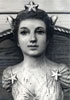
“In this sense, the role of the poet is like therole ofthe prophet: to speak from a place of truth in affective language. That’s what H.D. did. Not tomythologize her—she was a very complex person—but artistically she was very courageous,and that iswhat I admire in her and in fearless poets and artists today. It seems to me that we need more notless fearlessness, by which I mean intellectual and emotional courage. To reiterate H.D., we needto counter hate with love in any way possible. You can see in the novel the way shock took H.D.out beyond her self to a larger story, a larger version of the self’s story through and beyondtime. We don’t need to believe in reincarnation to come to the conclusion that human evolutionmust be heartfelt, that the psyche must evolve for the planet to survive us.” An interview with
Cynthia Hogue by Rebecca Seiferle
Cynthia’s Under Erasure as in: Sign (Silence)
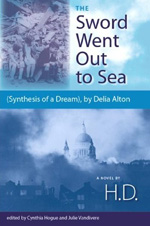
Cynthia’s notes and introduction to an excerpt from H.D.’s The Sword Went Out to Sea
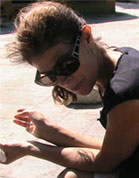
“What I have learned, besides the anguish of trying to carry a long text from language tolanguage, which is something like trying to carry a handful of water over rough terrain—itjust keeps leaking—is that translating or being translated is one of the most intimateconversations one can have about poetry. As a translator, you learn more about the poem than youcould in any other way. As a translatee, likewise, you explain things about the poem you wouldnever otherwise explain to anyone, even yourself. In either position, you feel you’ve written awhole new poem, a whole new book on top of the poem or the book that was written.” An interview with Eleni Sikelianos
by Melissa Buckheit.
Excerpt from Eleni’s Body Clock
Third Night from Eleni’s translation ofJacques Roubaud’s Exchanges on Light
– – – – – – – – – – – – – – – – – –– – – – – Malta Feature
Maltese Literature — The New Writing
“The term ‘Maltese Literature’ normally refers to literature written in the Maltese language,a Semitic language that owes its birth to the arrival of the Arabs on Malta in 870AD and that was subsequently heavily influenced by Italian, Sicilian and more recently English. Some Maltese authors do write in other languages, especially English, but most Maltese would identify Maltese literature with authors who have written exclusively or mainly in Maltese.”
By Adrian Grima
Post-Independence Maltese Poetry —An Overview
“Interrogating the inherited value of signs is also typical of that Maltese poetry challenging a gendered discourse from a feminist viewpoint, and appearing at a laterphase of Maltese post-independence poetry. Among other woman writers comprisingRena Balzan, Doreen Micallef Chritien, Lilian Sciberras, and Marlene Saliba, Maria Grech Ganado offers a distinctive ability to evoke and disrupt the physical, emotional, and social discourse in which womanhood is encoded. Wordplay, syllepsis (a word applied to two other words in different senses), and antanaclasis (the repetition of a word with different meanings in the same context) occur at key points in her poetry to unveil the semantic instability of biological terms that crucially differentiate female roles.”
By Bernard Micallef
Contemporary Writing Scene in Malta
“I think that if we look at the Maltese scene now, we can state with conviction that never has there been so much literary ferment in the Maltese islands since the sixties.The sixties had broken with the themes and influence of the first wave of national,religious and sentimental love which dogged the first appearance of poetry in the Maltese language — and had replaced it with a political and existential wave, inspired by the rest of Europe, which addressed the former themes from a confrontational perspective.”
By Maria Grech Ganado
Contemporary Maltese Poetry
Edited by Maria Grech Ganado
|
| |
|
|
Chapbooks
Arc
by Melissa Buckheit
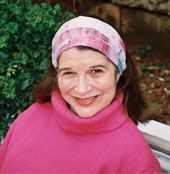
Blue Field
by Maria Grech Ganado
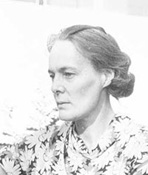
Excerpt from The Sword Went Out to Sea (Synthesis of a Dream)
A Novel by Delia Alton
by H.D.
Under Erasure as in: Sign (Silence)
by Cynthia Hogue
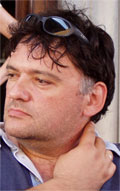
A Handful of Leaves
by Immanuel Mifsud
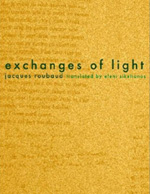 Third Night Third Night
by Jacques Roubaud
Excerpt from Body Clock
by Eleni Sikelianos
– – – – – – – – – – – – – – – – – – – – – – – – – – – – – – Send Comments to
[email protected] |