More translations in our
Fall 2001
Summer 2001
Spring 2001
Summer Issue 2000
Fall Issue 2000
Winter 2000
Spring 2000
Neringa Abrutyte was born in 1972 in Nida, Lithuania. She has studied Lithuanian language and literature at the University of Vilnius and published 2 poetry books whose titles in English are Autumn of Paradise (Rojaus ruduo, 1995) and A confession (Is pazinties, 1997). Her third book, Neringa’s l is forthcoming from Neringos.m press. She has appeared in poetry festivals in Lithuania and throughout Europe.
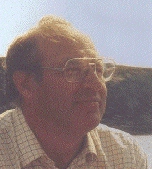 Timothy Ades, born in Britain in 1941, is a poetry translator, working mainly with rhyme and metre. In 1996 he won a BCLA/BCLT award (equal first) with the 33 Sonnets of the Resistance, which Jean Cassou composed in his head in prison. These will be published by Arc in the Visible Poets series in 2002. His Renaissance Elegies of Louise Labe appeared in Modern Poetry in Translation magazine, as did his Classic Gallic Lipograms. Victor Hugo’s How to be a Grandfather (a selection) is to appear in 2002 from Hearing Eye. Homer in Cuernavaca, a sequence of thirty poems by the Mexican, Alfonso Reyes, won the Premio Vallé-Inclan Prize in 2001, and was published by the journal Translation and Literature (Edinburgh U. Press). He has also translated from the German and Greek. Two longer poems of Cassou have appeared in Translation and Literature, and various translated poems have appeared in Agenda, Classical Association News, In Other Words, Outposts, Update Mexico, etc, and above all on the poetry translation website, www.brindin.com. Other poets he has translated include Desnos, Nerval, Brecht and Huch.
Eugenijus Alisanka was born in Barnaul, Russia, 1960. He has published three collections of poems: Ligiadienis (Equinox), 1992, awarded the best debut of the year prize, Peleno miestas (City of Ash), 1995, also published in English, translator H. L. Hix, by the Northwestern University Press in 2000, and Godbone, 1999. He is also the author of two books of essays An Imagining Man, 1998 and Return of Dionysus, 2001. He has translated a number of contemporary poets including Szymorska, Carolyn Forché, Dannie Abse, and Jerome Rothenberg and has translated three poetry books into Lithuanian: Kerry Shaw Keys, 1999; Zbigniew Herbert, 2001; Ales Debeljak, 2001. He has been editor of Citizens, an almanac on culture and literature, in 1991, 1995 and 1999 and a fellow of the International Writing Program in Iowa in 1995 and of the literary project “Literary Express Europe 2000”. Currently he is a director of international programs at the Lithuanian Writerss Union in Vilnius and secretary general of the Lithuanian PEN Center.
Vyt Bakaitis has published a book of poems City Country ( New York: Black Thistle Press), a book of visual poems and photographs con/structs ( NY: Arunas K. Photo + Graphics), and a generous selection of his translations from Lithuanian poetry, largely from the past century Breathing Free ( Vilnius: Lithuanian Writers Union). He lives in Brooklyn. He translated the untitled poem and “The Three Wrights” by Vytautas P. Bloze and the work of Antanas A. Jonynas.
 Aliki Barnstone‘s Wild With It is forthcoming from The Sheep Meadow Press in early 2002. Her previous collection, Madly in Love, (Carnegie Mellon University Press, 1997) was nominated for the Pulitzer Prize. She’s the editor of Voices of Light: Spiritual and Visionary Poems by Women around the World from Ancient Sumeria to Now (Shambhala 2000), and A Book of Women Poets from Antiquity to Now (Schocken/Random House, 1992), both of which contain her translations. A previous issue contained a selection from her study, A Changing Rapture: The Development of Emily Dickinson’s Poetry. She teaches in the International MFA Program at the University of Nevada in Las Vegas.
Vytautus P. Bloze was born in Baisogala, a northern village, in 1930, the son of well-to-do landowners. He underwent an exacerbated adolescence during the prolonged eclipse of Nazi occupation and Stalinist terror. He saw his father first condemned to death, then sentenced to Siberia for aiding the local resistance. By 1953, both his parents and a sister had died in Siberian exile. Bloze himself only survived by hiding out for a time. Suppressing his family identity, he managed to get work as a literary editor and enrolled at the Vilnius Teachers’ Institute. In the late 1960’s and throughout the 1970’s, he suffered an enforced psychiatric hospitalization, marked, as he notes, by deliberate “misdiagnoses and mistreatments.” In 1972 his work was banned as “anti-revolutionary.” Bloze hid it to avoid its confiscation. What has been recovered has appeared since 1982 in thirteen collections and, translated into English by Jonas Zdanys, in Four Lithuanian Poets. Honors include the Lithuanian National Prize for Nocturnes in 1991, the first National Prize awarded after Lithuanian Independence, and a Poetry Spring Laureate. He is also noted as a translator of Pushkin, Schiller, Shakespeare, Rilke, Vallejo and Cavafy. (Note adapted from Vyt Bakaitis, Breathing Free, Vilnius: Lithuanian Writers Union, 2001 and from Laima Sruoginis, Lithuania: In Her Own Words, Vilnius: Tyto Alba, 1997.)
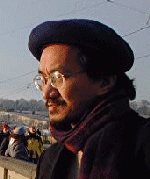 Ian Bui was born on December 15, 1961, in Saigon. On April 30, 1975 his familywas evacuated from the U.S. Embassy on one of the last helicopter flightsout of Vietnam. His entire childhood was spent in a war, but he was also able to attend the Saigon Conservatory of Music and to study Englishafter school. After resettling in Shreveport, Louisiana, he finished high school andwent on to study Computer Science at Louisiana State University andgraduated with double minors in English and Economics. He is currentlyworking as a Systems Engineer in Telecommunications at Harris Corp.in Melbourne, Florida. Besides writing and translating poetry (in English and Vietnamese,)he also does some singing/songwriting for pleasure and is an avid amateurphotographer. He’s a longtime member of the first online Vietliterary magazine Van Hoc Nghe Thuat (Arts and Literature)at www.saomai.org and his photos can be seen there http://saomai.org/~vhnt/ianb/collection.htm. In this issue, Ian’s translations of Co May, Nguyen Duc Son, Than Nhien and Tue Sy. is a poet and translator whose first collection of poetry, Ideograms (1999) was published in Vilnius; a second collection, Planning a Murder is forthcoming. His poems have appeared in Lithuanian, Finnish, and Russian Journals. In 2001, he was a fellow at the Iowa International Writing Program. He is a project manager and editor in Lithuania’s largest public relations company, Viesuju Ryiu Partneriai, while he completes graduate studies in Lithuanian literature at Vilnius University.
Bartolo Cattafi was a poet who flourished in the very lively post-war Italian cultural scene, but who has not been much translated into English. He was born in Barcellona, near Messina in Sicily, in 1922. Inevitably he had to serve in the war, but was a very reluctant soldier. After the war he graduated in law and settled in Milan, where he worked in industry, publishing and journalism. He travelled extensively in Europe and Africa, and his travels were paralleled by a spiritual odyssey, continually seeking some sense in life. In 1967 he returned to his roots in Sicily, where he remained until his death from cancer in March 1979. Although Cattafi was a Sicilian, he was regarded in the ’50s as one of three poets called the linea lombarda — the others being Luciano Erba and Nelo Risi. This group were part of the “Hermetic Revival” which was concerned to maintain continuity with the poetry of the hermetic tradition, in which, according to the critic Anceschi, “objects (were) intensified and charged to such an extent as to turn the language into a symbol with some references to reality and familiar situations.” Though poetry was often a spare time activity for Cattafi, he was very prolific and successful. In 1959 he was awarded the prestigious literary prize, the Premio Cittadella. There is an unexplained gap from January 1963 to February 1971 when he seems to have written nothing, and in 1974 and 1975 he wrote no new poetry, but spent a lot of time editing his papers. After his death a considerable quantity of work, largely unpublished, was collated in collaboration with his wife, Ada, by Giovanni Raboni, and a collection of over 300 poems was published in 1990.
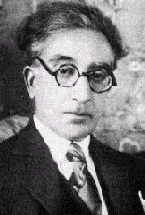 C.P.Cavafy is considered to be the most influential modern Greek poet. He was born Konstantínos Pétrou Kaváfis on April 29, 1863 in Alexandria, Egypt. He spent thirty years working as a clerk in the Irrigation Service of the Ministry of Public Works. He lived with his mother until she died in 1899 and then with his unmarried brothers, and acknowledged only two brief love affairs and one longer relationship. He never attempted to publish his work commercially. All of his work was privately printed as pamphlets which he gave to friends and family.The Poems of Constantine P. Cavafy appeared posthumously in 1935 in Alexandria. His only public recognition was the granting of the Order of the Phoenix from the Greek dictator Pangalos in 1926. He died on April 29, 1933 in Alexandria. It’s said that his last motion before dying was to draw a circle on a sheet of blank paper, and then to place a period in the middle of it. He himself wrote the following biographical note: “I am from Constantinople by descent, but I was born in Alexandria — at a house on Seriph Street; I left very young, and spent much of my childhood in England. Subsequently I visited this country as an adult, but for a short period of time. I have also lived in France. During my adolescence I lived over two years in Constantinople. It has been many years since I last visited Greece. My last employment was as a clerk at a government office under the Ministry of Public Works of Egypt. I know English, French, and a little Italian.”
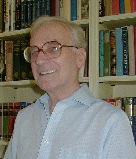 Brian Cole was born in Southampton, England in 1932 and has spent his adult life near London. After studying French and German at Oxford University he followed a career in business as a senior executive in three multi-national groups. After retirement he set up an accountancy practice, which traded until 2000, after which he started Brindin Press (see our feature)- with a website which celebrates poetry in translation – http//www.brindin.com.In 1994 his first published work was a translation of Pablo Neruda’s The Captain’s Verses, published by Anvil Press in London and reprinted four times. In 2000 Arc Publications in Todmorden, England published Anthracite, a selection of translations from the Italian of Bartolo Cattafi – this collection was awarded the accolade “Recommended Translation” by the Poetry Book Society in London. In August 2001 Brindin Press published his translations of Circe Maia under the title Yesterday a Eucalyptus, which was also chosen Recommended Translation by the Poetry Book Society, and awarded a translation prize by the British Centre for Literary Translation. A selection of his Neruda and Cattafi translations are included in this issue.
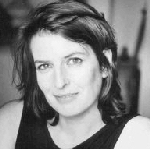 Alison Croggon is one of a new generation of Australian poets which emerged in the 1990s. She writes in many genres. Her first book of poems, This is the Stone, won the 1991 Anne Elder and Dame Mary Gilmore Prizes. Her novel Navigatio, published by Black Pepper Press, was highly commended in the 1995 Australian/Vogel literary awards and is being translated for publication in France. Her second book of poems, The Blue Gate, was released in 1997 and was shortlisted for the Victorian Premier’s Poetry Prize. A chapbook, Mnemosyne, was just published by Wild Honey Press. Penguin Books Australia will also bring out her first novel for young adults, The Gift, in 2002. Alison has written and had performed nine works for theatre. Her theatre work includes the operas Gauguin and The Burrow, both with Michael Smetanin, and the plays Lenz (Melbourne Festival 1996), Samarkand and The Famine. Many of her poems have been set to music by various composers, including Smetanin, Christine McCombe, and Margaret Legge-Wilkinson. Recently she was the 2000 Australia Council writer in residence at Cambridge University, UK. She was poetry editor for Overland Extra (1992), Modern Writing (1992-1994) and Voices (1996) and founding editor of the literary arts journal Masthead. She is represented in this issue by poetry, two essays on the poetic and the erotic, and her translations of Rilke.
Craig Czuryis the author of several small press collections of poetry, most recently, Closing Out, and a Russian/English edition of Parallel Rivertime. He has also edited an anthology of prison poets, Fine Line that Screams from his Northeast Pennsylvania Prison Poetry. In Lithuania his poems have been anthologized in Poezijos Pavasaris ’99, and published widely in 7 Dienos Menos and Literatura ir Menas, with interviews appearing in Kulturos Barai and Respublica national newspaper. A selected volume of Czury’s poems in Lithuanian is published by Vario Burnos, 2001. Craig’s website is www.poet-in-education.com. In this issue he has translated Arturas Valionis.
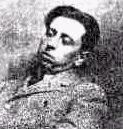 Robert Desnos was born in 1900 and is considered one of the great French poets of the 20th century. Breton praised him for his “necessary, unforgettable role” in the development of Surrealism. Desnos broke with the Surrealist movement in 1930 and moved toward a more public art: writing film scenarios, children’s books, and working for French radio. During World War II, he was active in the Resistance and worked as a jouranlist. Arrested by the Gestapo in 1944, he was sent to Buchenwald. He died in 1945 in the camp in Terezine, Czechoslovakia, shortly after the camp had been liberated.
Sigitas Geda was born in 1943 in Pateriai, Lithuania. He is a poet and leading intellectual with more than twenty books, including literature for children, essays, reviews and translations. He translated The Book of Psalms and, most recently, The Works of Francois Villon and Edgar Lee Master’s A Spoon River Anthology. He has edited and compiled the first complete selection of Rilke’s work in Lithuanian and has done the same with Lithuanian poetry on the Holocaust. He is perhaps the most important and respected writer in Lithuania today, with a lyrical voice and a post-modern aesthetic that proves historical and metaphysical themes and the natural world with incredible insight and energy. Widely regarded as an innovative poet, he merges a pantheistic voice with a post-modern aesthetic. One of the leading intellectuals, he was involved with the Lithuanian reform movement, “Sajudis.” A Selected Poems has recently appeared in Germany and Sweden, and an edition will be forthcoming in English. Honors include the Poetry Spring Laureate and other awards. He participated in the Commentary on Lithuanian poetry in this issue. (Note adapted from Laima Sruoginis, Lithuania: In Her Own Words, Vilnius: Tyto Alba, 1997.)
 Kevin Germain is an American poet, musician, composer and Sufi. He studied musiccomposition at Berklee College of Music and has had music published with Edizoni Berbén in Italy. Heperforms on the classical guitar and traditional Greek and Turkishinstruments. His original poetry has been included in the New Romanticschapbook as well as on their web site. He is currently working on a book oftranslations of the French poet Albert Samain. Kevin lives with hiswife and daughter in Easthampton Massachusetts. is an American Book Award winning author of ten books of poetry and prose from major and alternative presses. Her first book of poems, Eggs in the Lake (BOA, 1979)won her a New York State Council for the Arts grant in poetry. Her newest collection of poems, Symbiosis is an e-book from Rattapallax Press. Daniela is editor/publisher of www.PoetsUSA.com which incorporates Wise Women’s Web and ItalianAmericanWriters.com among other literary web sites. Her renown anthology, WOMEN ON WAR: International Voices for the Nuclear Age will be reissued in new edition by The Feminist Press, NY, 2002. She also published a novel, and a short story collection, as well as ON PREJUDICE: A Global Perspective (Doubleday, 1993). Her chapbook of Spanish translation, Dust Disappears, has been published in the Latin American Series of Cross Cultural Communications, Merrick: NY, edited by Stanley Barkan, with a preface by Gregory Rabassa.
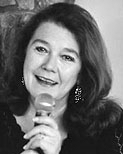
Judita Glauberson A Lithuanian translator and interpreter, Judita Glauberson has translated poems by Sigitas Geda and Laurynas Katkus and the screen script of the Lithuanian film BLINDA by Deima Kelias and Karolis Jankus into English. Her translations into Lithuanian include poems by Jerome Rothenberg, the radio play The Jericho Players by Bernard Kops and sections of the Encyclopaedia of Mythology (GAMTA, 1999). She has a BA in English Philology from Vilnius University. She also translates for the Chief Rabbi of Lithuania. In this issue, she is the co-translator of Sigitas Geda.
Antanas A. Jonynas A native of Lithuanian’s capital Vilnius, Anatanas A. Jonynas was born in 1953, came of age and grew into poetry while the Soviet state was in its decline there. Although many could read the signs, few could dispatch such ingeniously succinct appraisals of the actual state of affairs, nor render it from such precisely splenetic reserves. Jonynas has any number of caustically elegant love poems to his credit, and is noted for the formal dexterity of his verse, which is munificently evident in both parts of the highly resolved version of Goethe’s Faust he recently published. (Note from Vyt Bakaitis, Breathing Free, Vilnius: Lithuanian Writers Union, 2001.)
Giedre Kazlauskaite was born in Vilkaviskis, Lithuania, in 1980. As a youth, she studied art in Vilnius at the M. K. Ciurlionis National School of Art (1991 – 1995). She is currently attending Vilnius University studying Lithuanian philology. Her honors include the 2000 Poetry Spring prize for the best debut in poetry and publication of her first novel, Farewell, School in 2001. She participated in the Commentary on Lithuanian poetry in this issue.
Laurynas Katkus Born in Vilnius, Lithuania, in 1972, Katkus studied Lithuanian and Comparative Literature in Vilnius and Leipzig. He worked in agriculture and as an interpreter, radio journalist and editor. In 1998 his collection of poems Balsai, ra teliai (Voices, Notes) was published. A second book, Nardymo pamokos (Diving lessons) is due to appear in 2002. His poems have been translated into English, German, Polish, Latvian and Belorussian. His translations into Lithuanian of R.M. Rilke, Gottfried Benn, e e cummings, Jerome Rothenberg, Susan Sontag and others have appeared in the press and as separate books. Currently, Laurynas Katkus lives in Berlin. He participated in the Commentary on Lithuanian poetry in this issue.
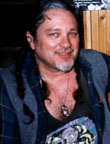 Kerry Shawn Keys comes from the Susquehanna Valley of Central Pennsylvania in the United States. He lives in Vilnius, Lithuania where he taught translation theory and creative composition from 1998 to 2000 as a Fulbright lecturer at Vilnius University. He currently freelances as a poet, translator, and cultural liaison. He has over30 books to his credit, including translations from Portuguese and Lithuanian, and his own poems rooted in the Appalachia hill country, and in Brazil and India where he lived for considerable time. His work ranges from theatre-dance pieces to flamenco songs to the Tao Te Ching to lyrical and intense ontological concerns. He received the Robert H. Winner Memorial Award from the Poetry Society of America in 1992. Selected poems have appeared in Czech and Lithuanian. In this issue, he has translated the works Marius Burokas, Laurynas Katkus, Kornelijus Platelis, and Eugenijus Alisanka and co-translated Sigitas Geda.
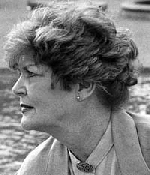 Carilda Oliver Labra was born in 1922 in Matanzas, Cuba. Her debut collection in l943, Lyric Prelude (Preludio lirico) immediately established her as an important poetic voice. At the South of My Throat made her famous: the coveted National Prize for poetry came to her in l950 as a result of the popular and notorious book, At the South of My Throat (Al sur de mi garganta) 1949. In honor of the tri-centennial of Sor Juana Ines de la Cruz in a contest sponsored by The Latin American Society in Washington D.C., in 1950, she had also received the national Cuban First Prize for her poems. In 1958, Labra published Feverish memory (Memoria de la fiebre) which added to her notoriety as a blatantly erotic woman. The book concerned a theme which has dominated her poetry—that of lost love—as it was written after the unfortunate and untimely death of her second husband. Today, in Spain a foundation offers “The Carilda Oliver Prize for Poetry,” and a documentary of her life has been produced.
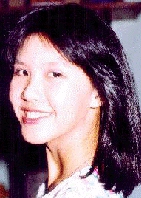 Co May Born “Nguyen Phuc Dan Thanh” in Di Linh (Central Vietnam), Co May and grew upin Hue. She emigrated to The Netherlands in 1992 and is currently living in Switzerland and workingas a Chemical Engineer. Her poetry has appeared in the collection Lan Ban(2000)with several other authors. She is also a regular contributor to the VietLiterary magazineVan Hoc Nghe Thuat on the Internet at http://saomai.org).
Nijole Miliauskaite was born in Keturvalakiai, Lithuania in 1950. Recipient of the 1996 Writer’s Union Prize, as well as a number of other Lithuanian and international literary prizes, Miliauskaite is regarded as one of Lithuania’s most subtle poets. She is the author of four books of poetry, all published in Lithuania. For the past twenty-five years she has devoted herself to her writing and to aiding her husband, the poet Vytautas Bloze, prepare his many manuscripts. She has a degree in Lithuanian literature from Vilnius University. Her poems appear in Lithuania: In Her Own Words, translated by Laima Sruoginis. She draws her poetic voice from a mixture of ritualized everyday routine that includes everything from tending her garden and collecting medicinal herbs to marketing and her personal spiritual practice that is a combination of meditation, yoga practice, Lithuanian pre-Christian tradition and Catholicism. She and her husband live in the town of Druskininkai. (Note from Laima Sruoginis, Lithuania: In Her Own Words, Vilnius: Tyto Alba, 1997.)
Pablo Neruda was born Ricardo Neftalí Reyes Basoalto in 1904 in southern Chile, the son of an engine-driver; only in 1945 did he legally take the name Pablo Neruda. From this humble beginning he built a colourful life as diplomat, communist, senator, freedom fighter, fugitive — but always a poet. His diplomatic duties took him to India and Indonesia, Mexico, Argentina, Spain and France, and he travelled widely in his private capacity in pursuit of his political and literary interests. Neruda was recalled to Chile in 1938, and then spent three years as Consul-General in Mexico. On his return to Chile in 1943 he formally joined the Communist Party, and was elected to the Senate in 1945. Under the repressive regime of Gonzalez Videla in Chile, the Party was outlawed in 1948 and Neruda was forced to flee into exile first to Argentina, thence to France. Only in 1954 was he allowed to return to his beloved Chile. The last fifteen years of his life — apart from a short spell as Ambassador to France — were spent at Isla Negra (his house on the coast near Valparaiso, opposite an island of that name) with his third wife, Matilde Urrutia. He is a major figure in the world’s literature, as well as dominating twentieth-century South American culture. He was awarded the Nobel Prize for Literature in 1971. He died in 1973, shortly after the murder of his friend President Salvador Allende and the return of repressive government to Chile.
 Than Nhien Born “Ton That Thien Nhan” in Hue (Central Vietnam) on January 9,1962, Than Nhien emigrated to the US in 1990. He currently lives in Washington State and writespoetry,short stories and plays. He has two poetry collection published – Vuc & Gio(1999,with several other authors) and Da Giac (2001) from which “Fetus” wasextracted.His work has appeared in numerous Viet Literary magazines inside and outsideVietnam, both on the Web and in traditional print medium.
Edgaras Platelis has co-translated into English the poems of Sigitas Geda and into Lithuanian the Tim Severin novel The Syndbad’s Voyage (Vilnius, VAGA, 1999). Son of poet Kornelijus Platelis, he has a Masters in World Literature from Vilnius University. He has co-translated Sigitas Geda.
Kornelijus Platelis, born in Siauliai, Lithuania, in 1951 came into poetry while stationed in Afghanistan as an engineer in the Soviet army. He has authored a seminal essay on the ecology of culture, “Being by the Nemunas,” and six collections of poetry, of which one, Snare for the Wind has also been published in English with Jonas Zdanys as translator. Zdanys’ translations of Platelis are also included in Four Lithuanian Poets. Platelis has translated poems by Heaney, Pound, Hughes, Shelley, Keats and Symborska and hymns from the Rigveda. Formerly the Minister of Education and Sciences and a Deputy Minister of Culture and Education for Lithuania, and a President of Lithuanian PEN Centre, he has directed VAGA, the major literary publisher, and currently is editor-in-chief of the literary weekly Literatura ir menas (Literature & Art). His honors include the Jotvingiai Prize and the Poetry Spring Laureate. He participated in the Commentary on Lithuanian poetry in this issue.
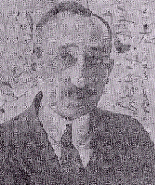 Lambros Porphyras, 1879-1932, was born in Chios but spent most of his life in the port of Piraeus. A recluse, he mixed only with a few men of letters and with humble fishermen and workmen, his favoured drinking companions. His poetry, refined and musical, is pervaded by a sincere sadness. His soft, perhaps sentimental symbolism shows the influence of Verlaine and Moreas. [This note is based on ‘Greek Poetry from Homer to Seferis’ by Prof.C.Trypanis.]
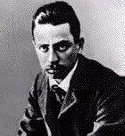 Rainer Maria Rilke is considered the greatest lyric German poet of the 20th century. He was born on December 4, 1875 in Prague. A trip of Russia in his early twenties was pivotal in his development, as were the years he spent as Rodin’s personal secretary in Paris. The translations in this issue are from his Duino Elegies, most of which were completed, along with his equally acclaimed Sonnets to Orpheus, within the month of February, 1922. Amond his other books were The Book of Hours, The Book of Pictures, New Poems, Requiem, and The Notebooks of Malte Laurids Brigge. He died of leukemia in Switzerland on December 29, 1926.
Todd Sanders is a poet and graphic designer living in Pittsburgh, Pennsylvania. His translation of Robert Desnos’ The Secret Book for Youki contains poems that have never previously been translated into English. Sanders has previously published two books of his own poetry with Air and Nothingness Press, as well as another book of translations of the poetry of Desnos, The Circle and the Star (see our feature). He is also the founder and publisher of two websites. The Library features biographies and works from most of the great French surrealists, as well as others. This site was chosen “The Best American Web Site About French Culture” by the French Embassy. Sanders has recently started an online center for Gidean studies featuring works, commentary and biography of the famous French writer, Andre Gide.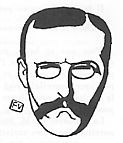 Albert Samain 18581900, was born at Lille, France. He helped found Mercurede France (1890). His books included Au jardin de l’infante (1893), L’Urne Penchée (1897), Aux Flancs du Vase(1898), Polyphèm(1899), and Le Chariot d’or(1901). Hispoems first appeared in Rodolphe Salis’s Chat Noir (1884-85). While heeschewed belonging to any particular group, he is usually associated withthe second wave of French symbolists after Verlaine & Mallarmé. He nevermarried, but spent most of his life in drudgery, and his escape was in theimagination captured by his verse.
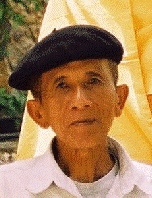
Laima Sruoginis, a poet and translator, has published an anthology of Lithuanian poetry in translation, Lithuania: In Her Own Words (Tyto Alba, Vilnius, 1997), and her own poetry and essays in journals such as Modern Poetry in Translation, The Beloit Poetry Journal, The Artful Dodger and others. She has received an Academy of American Poets Award, two New York State Poetry Fellowships, a Yeats Fellowship and a Literary Translator’s Award from the Lithuanian Poetry Spring Festival Committee. A Fulbright Lecturer at Vilnius University in 1997, presently she is an assistant professor of English at the University of Southern Maine. Born in the United States, she studied at the Lithuanian Gymnasium in Lampertheim, Germany, and at Vilnius University, where she also was a volunteer translator and interpretor for “Sajudis,” the Lithuanian grassroot resistance movement. She has an M.F.A. in Creative Writing from Columbia University. In this issue, she has translated the work of Nijole Miliauskaite and has an essay The Nation Sings.
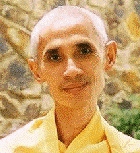 Tue Sy is a Buddhist monk and a Vietnamese dissident who at one point was on death row and only was released from jail in 1998, after tremendous pressure from international groups such as Human Rights Watch, combined with the Vietnamese government’s attempt to appeasethe US in order to obtain normal trading status whichbecame a reality on December 11, 2001. He’s a scholar and intellectual who oncewas Dean of Van-Hanh Buddhist University in Saigon. Although he’s nottechnically under house arrest, Tue Sy is still under constant surveillance by the secret police.
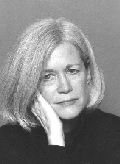 J.C. Todd has authored two chapbooks of poems, Nightshade (2000, 1995), and Entering Pisces (1985), both published by Pine Press. Nightshade, a finalist in the Flume Press chapbook contest, is distributed by Spring Church Books. Her poems have appeared in such literary journals as The Paris Review, Prairie Schooner, Virginia Quarterly Review and Beloit Poetry Journal and her translations of poems by the Ecuadorean writer Ivón Gordon Vailakis in Crab Orchard Review. She wrote the entries on Lucille Clifton and Etheridge Knight for The Oxford Companion to Twentieth Century Poetry in English. She has received a 2001 Leeway Award for Poetry and a Fellowship in Poetry and grants from the Pennsylvania Council on the Arts as well as four Pushcart Prize nominations for poetry. She has been a fellow in poetry at the Virginia Center for Creative Arts and the Hambidge Center. Recipient of a New Jersey Governor’s Award for Arts Education and a Distinguished Teaching Artist award for poetry workshops offered through the New Jersey Writers’ Project, she also teaches in the Writing for College program at Bryn Mawr College and the poetry program of the Geraldine R. Dodge Foundation. She is a graduate of the M.F.A. Program for Writers at Warren Wilson College. She is a Contributing Editor for The Drunken Boat. In this issue, she has translated Giedre Kazlauskaite and edited the Lithuanian feature.
Arturas ValionisArturas Valionis (b. Druskininkai, Lithuania, 1973), has published widely in the major literary and art magazines and poetry anthologies in Lithuania. His first volume of poetry, In Those Beautiful Years of Great Disappointments, is forthcoming in Lithuanian. He has an MA in Society and Politics and a Ph.D. in Sociology from Warsaw University, and was a visiting scholar at the New School for Social Research in New York in 1995. Awards include the best debut in the 1995 Poetry Spring anthology.
Egle Verseckaite has translated the poetry of Neringa Abrutyte in this issue.
Sam Wittand Clay WittSam Witt authored two collections of poetry, Everlasting Quail (University Press of New England, 2001) and Black Flames (TRS, 1997). His poems have appeared in Fence,Salon and other journals. Honors include a first place in the New Millenium awards and a Bread Loaf Conference Award for poetry. A graduate of the Iowa Writers Workshop, this year he is a visiting writer at Boise State University. His brother Clay co-translated “The Kiss” by Arturas Valionis.
Jonas Zdanys, born in the U.S. a few months after his parents immigrated from a United Nations camp for Lithuanian refugees, is an award-winning poet and a leading Lithuanian-American translator. He is the author of more than twenty books, including collections of his own poetry and translations of work by modern Lithuanian poets and prose writers. His work has received support from the National Endowment for the Arts, the Connecticut Commission on the Arts, the Yale University Center for International and Area Studies, and the Lithuanian Ministry of Culture and Education. Formerly an Associate Dean at Yale University and a professor at the State University of New York, currently he is Chief Academic Officer in the Connecticut Department of Higher Education. In this issue he translated “St. Elizabeth’s Hospital” by Kornelijus Platelis and “Musa Domestica” by Vytautas P. Bloze.
