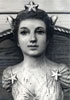
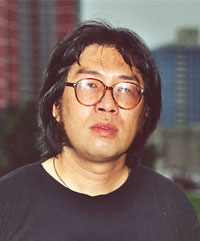
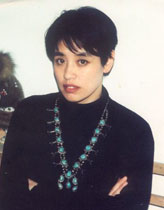
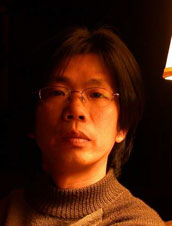
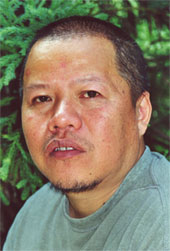
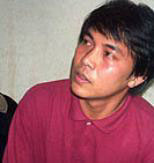
Photos of Yin Lichuan by Martin de Haan, of Felix Cheung by DavidLiew, and of Han Dong, Sun Wenbo, Ouyang Jianghe, Wang Xiaoni, and Wang Jiaxin by Maghiel vanCrevel
Photo of Jill Jones by Annette Willis
Photo of Annette Willis by Jill Jones
Photo of Gail Wronskyby Gary Goldstein
Photo of Dzvinia Orlowsky by Max Hoffman
All rights reserved.
Spring/Summer 2006: Contributors
Carlen Arnettgrew up near Chicago in a family of artists, writers,domestic servants and industrial inventors. She has lived in the RockyMountain west, desert California, rural New England, the UpperMississippi River Valley, and along Long Island Sound. Her poems, prosepoems and reviews have appeared in many publications, including PrairieSchooner, The Marlboro Review, Massachusetts Review, Night Out, ananthology from Milkweed Editions, Rain Taxi Review of Books andRuminator Review. She is co-editor, with Jane Brox, Dzvinia Orlowsky andMartha Rhodes, of The Four Way Reader #2. Honors for her poetry includefinalist for a Discovery/The Nation prize, nomination for the PushcartPrize, and fellowships from the MacDowell Colony and the McKnightFoundation. She has taught writing in college and community settings,and currently lives in Port Jefferson, New York with her husband andyoung son.
Darcy Cummings‘poems have appeared in journals in the United States and England,including Poetry Northwest, Journal of New Jersey Poets, CarolinaQuarterly, Negative Capability, Timber Creek Review, NaturalBridge, and Runes. A graduate of Glassboro State College(now Rowan University), the University of Pennsylvania and the JohnsHopkins Writing Seminars, Cummings has received fellowships from theNew Jersey State Council on the Arts and the Geraldine R. DodgeFoundation. She teaches writing for the Critical Writing Program at theUniversity of Pennsylvania, for the New Jersey Writers Project, andfor the Visual Poetry Program of The Public Arts Project at RutgersUniversity, Camden. The poems in this issue are from her forthcomingpoetry collection, The Artist as Alice: From a Photographer’sLife from Bright Hill Press.
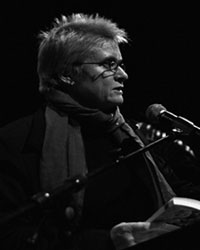 Jill Jones is a poet and writer who lives in Sydney, Australia. Herwork has been widely published in most of the leading literaryperiodicals in Australia as well as in a number of print magazines inNew Zealand, Canada, the USA, Britain and India. She is also widelypublished online. Her latest books are her fifth full length work,Broken/Open (Salt, 2005), which was short-listed for The Age Bookof the Year 2005 and the 2006 Kenneth Slessor Poetry Prize, and threechapbooks, Fold Unfold (Vagabond, 2005) poems written in responseto paintings; Where the Sea Burns (Picaro, 2004); and Struggleand Radiance: Ten Commentaries (Wild Honey Press, 2004). In 1993 shewon the Mary Gilmore Award for her first book of poetry, The Mask andthe Jagged Star (Hazard Press). Her third book, The Book ofPossibilities (Hale & Iremonger), was shortlisted for the 1997National Book Council ‘Banjo’ Awards and the 1998 Adelaide FestivalAwards. Screens, Jets, Heaven: New and Selected Poems won the2003 Kenneth Slessor Poetry Prize (NSW Premier’s Literary Awards). Shehas collaborated with photographer Annette Willis on a number ofprojects, including c-side, and also Sea Shadow LandLight, a multimedia presentation first delivered at the On the Beachconference held by Edith Cowan University at Fremantle in February 2004.She was a co-founder, with Laurin McKinnon, of BlackWattle Press, and in1995 she co-edited (with Judith Beveridge and Louise Wakeling) AParachute of Blue, an anthology of contemporary Australian poetry.With Michael Farrell, she co-edited a selection of Australian eroticpoetry for a 2003 edition of Slope online magazine. She has beena film reviewer, journalist, book editor and arts administrator. Shemaintains a weblog RubyStreet, as well as two websites, her home page and poemsextracted from her weblog off thestreet.
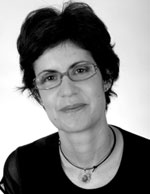 AdrianneKalfopoulou lives in Athens, Greece where she teachesliterature and creative writing at the American College of Greece. Inthe summers she is part of the faculty for the Scottish UniversitiesSummer School Programat the University of Edinburgh. She’s published apoetry collection,Wild Greens (Red Hen Press) and a book ofcritical work, The Untidy House (Mellen Press). Her prose memoir,Broken Greek, is forthcoming from Plain View Press at www.plainviewpress.net thissummer.
 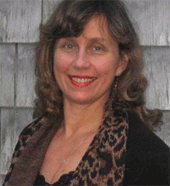 DzviniaOrlowsky A founding editor of Four Way Books, DzviniaOrlowsky is a contributing editor to Agni, The Marlboro Review,and Shade. She is the author of four collections of poetry, AHandful of Bees, Edge of House, Except for One ObsceneBrushstroke, and Convertible Night, Flurry of Stones(forthcoming, Carnegie Mellon University Press). Dzvinia Orlowsky hastaught as Faculty Fellow at the Mt. Holyoke Writers’ Conference, as wellas the Boston Center for Adult Education, Emerson College, Gemini Inkand the Stonecoast Writers’ Summer Conference and MFA Program forCreative Writing at the University of Southern Maine. She currentlyteaches at the Solstice MFA Program for Creative Writing of Pine ManorCollege. Her poems have appeared in a number of magazines includingColumbia, Field, Ploughshares, The American Poetry Review, andThe Massachusetts Review. Her poetry and translations ofcontemporary Ukrainian poets appeared in numerous anthologies includingDorothy Parker’s Elbow: Tattoos on Writers, Writers on Tattoos(Warner Books, 2002), A Map of Hope: An International LiteraryAnthology (Rutgers University Press, 1998) and From Three Worlds:New Writing from the Ukraine (Zephyr Press, 1996). She has alsorecently completed a translation from Ukrainian of Alexander Dovzhenko’snovella, The Enchanted Desna forthcoming from House Between WaterCollections. Dzvinia Orlowsky is a 1998 recipient of a MassachusettsCultural Council poetry grant, a 1999 Massachusetts Cultural CouncilProfessional Development grant, and a 2006 Pushcart Prize for poetry.
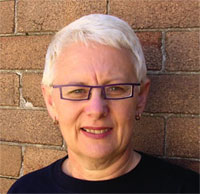 Annette Willis is an Australian photographer who has had eight solo exhibitions since2002. Her areas of specialisation include industrial archeology,landscape, urban decay, street art, text and texture. Her first majorblack and white exhibition, Remnants, examined transience in fourSydney urban landmarks, large and small, which were once part of thefabric of Australia’s oldest city and which are fast disappearing orhave disappeared altogether. Sites such as Cockatoo Island, North HeadQuarantine Station, St Peters Brickworks and the Edwardian Men’sLavatory in Macquarie Place were part of the early social history of astill young city. The 2005 exhibition, Romance of Death, featureda series of photographs taken in many burial grounds throughout Paris.These works are lyric abstractions rather than a documentaryrepresentation of tombstones. They investigate at close range both atangible and poetic presence through rhythm and shape within thecompositional space. Another 2005 exhibition, Wallworx, featuredlarge colour digital prints of stencil street art that was appearing onwalls, signs, billboards and dilapidated buildings in many Australiancities. The aim was to examine in context a range of imagery by a numberof young artists that was often elaborate and beautiful, political andpassionate, but also ephemeral and transient. Collaborations withwriters and other visual artists has been an important part of Annette’sartistic expression. Joint projects with the Australian poet, JillJones, include Hidden Shrines, Sea Shadow Landlight andBreath, The Hours. Formerly a teacher, researcher and academic,Annette holds a range of qualifications including a PhD in learningtheory and has lived and worked in Spain, Indonesia and Thailand. Annette’s work is held in the State Library of NSW as well as in privatecollections throughout Australia, New Zealand, the UK, Germany,Singapore and Hong Kong. More information about Annette Willis isavailable at www.annettewillis.com
  Gail Wronsky is theauthor of Poems for Infidels (Red Hen Press), Dying forBeauty (Copper Canyon Press), The Love-talkers (a novel,Hollyridge Press) and other books. She is the translator of VolandoBajito, a book of poems by Argentinean poet Alicia Partnoy. Herpoems have appeared in journals and anthologies including PoetsAgainst the War, A Chorus for Peace, The Poet’s Child, Pool, Volt,and Runes. The recipient of a California Artists Fellowship, sheis Director of Creative Writing and Syntext at Loyola MarymountUniversity in Los Angeles.
 Chinese Feature
Editor ofthis feature:
 Inara Cedrins is an American artist, writerand translator of Latvian descent. In 1998 she went to the CentralAcademy of Fine Art in Beijing to learn to paint in Chinese ink on silk,and remained in China for five years, teaching writing and literature atuniversities including Peking University and Tsinghua University. Twobooks of her poetry were published bilingually in English and Chinese bythe Foreign Literature Press in Beijing. In 2003 she went to Nepal tostudy the thangka painting technique; after the king’s coup andabolishment of democracy in 2005, she repatriated to Latvia. She teachesCreative Writing at the University of Latvia, and is working on a Balticanthology of poetry as well as this anthology of contemporary Chinesepoets.
 Introduction to this feature:
 Michael Martin Day was born and educated in Vancouver, Canada. He received his BA in AsianStudies and the Chinese Language from the University of British Columbia(UBC) in 1985 and his MA in Modern Chinese Literature from the sameuniversity in 1994. Between the years 1982 and 1992, he spent sevenyears in China, first as a cultural exchange scholarship student at theuniversities of Shandong and Nanjing, then as a teacher of Englishlanguage and literature in Zhanjiang and Xi’an, and later as ajournalist and editor in Beijing and Hongkong. He began teaching theChinese language as an assistant lecturer at UBC in 1986, and laterserved in the same position for courses in Modern Chinese Literature inChinese and a General Introduction to East Asian History and Culture. In1995 and 1996, he was lecturer in charge of the Chinese Language SummerProgram at the University of Lethbridge in Alberta, Canada. Since 2000,he has worked at Charles University, Prague, as a part-time lecturer ofModern Chinese Poetry, Advanced Chinese, and Poetry Translation. In2002, he entered the Doctoral program at the University of Leiden, theNetherlands, as a long-distance student under the supervision ofProfessor Maghiel van Crevel. In September 2003, he was awarded a CCKFoundation Doctoral Dissertation Fellowship, which made the writing ofhis thesis possible. He has published several English languagetranslations of Chinese poetry and fiction in Canada, the USA, the UK,and the Netherlands, as well as articles on Chinese poetry and politicsin the Czech Republic, Hongkong, and China (prior to 1989), and hasgiven numerous public lectures and talks on Chinese literature, culture,and politics. His doctorate China’s Second World of Poetry: TheSichuan Avant-Garde, 1982-1992 was published as an openly accessiblee-book on the day of official graduation at the University of Leiden inOctober 2005. This, other internet-related work, and an anthology oftranslated poetry are available athttp://www.sino.uni-heidelberg.de/dachs/leiden/poetry/index.html, thepoetry page of the Digital Archive for Chinese Studies, a joint-projectoperated by the universities of Heidelberg and Leiden. Michael hasrecently emigrated to join his wife in Minneapolis, Minnesota. Inaddition to his introduction, he hastranslated a number of poets in this issue
An essay on Xi Chuan’s poetry:
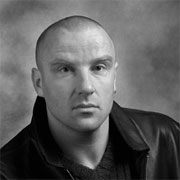 Maghiel van Crevelreceived his PhD (1996) in Chinese Literature from Leiden University. Helectured at the University of Sydney until taking up duty as Professorof Chinese language & literature at Leiden in 1999. Through regularfieldwork, with the help of authors, critics, publishers and literaryactivists, he has built an internationally unique collection ofmaterials on contemporary mainland-Chinese poetry: journals, individualcollections, multiple—author anthologies, correspondence, audio andvideo recordings and so on — with ample space for the undergroundand unofficial circuits that paved the way for todays avant-garde, andretain their importance to this day. Van Crevel has publishedextensively on mainland—Chinese texts (poems), contexts (theircultural and socio—political surroundings) and metatexts (discourseon poetry), in English, Dutch and Chinese. His essay, “Matter over Mind—On Xi Chuan’sPoetry” is included in this issue, as are his translations of anumber of poets.
mainland China
 XiChuan(real name: Liu Jun) is a poet, essayist and translator, and has beenrecognized as one of the most dynamic poets living in China today. Hewas born in 1963 in Jiangsu province, and graduated from the EnglishDepartment of Peking University in 1985. After graduation he became aneditor of the Globe magazine, compiled by the Xinhua News Agency.Xi Chuan plunged into writing innovative poetry writing in 1981. In 1988he started with friends an unofficial poetry magazine namedTendency (which was banned after three issues), initiating thespirit of the intellectual in order to stand away from the orthodoxideology. He was also a member on the editorial board of anotherunofficial magazine, Modern Han Poetry (1990-1995). After hispoet-friend Hai Zi committed suicide in the spring of 1989, Xi Chuanundertook the work of collecting and collating the posthumous works ofthe poet, and now Hai Zi is regarded as a poet-hero by the younggeneration. Xi Chuan is one of the key figures in the contemporaryChinese literary sphere. He has published four collections of poemsincluding A Fictitious Family Tree (1997) and RoughlySpeaking (1997), two books of essays and one book of critique, inaddition to a play and numerous translations, including works of EzraPound, Jorge Luis Borges and Czeslaw Milosz. His own poetry and essayshave been widely anthologized. He was awarded the October Prize forliterature by the October Bimonthly in 1988, the Prize of ShanghaiLiterature Monthly in 1992, the Prize of the People’s Literature Monthlyin 1994, the Modern Chinese Poetry Prize 1994, the Anne Kao Prize forPoetry in 1995, the Aiwen Prize for Literature in 1999. He is the winnerof prizes, honors and fellowships including the Modern Chinese PoetryAward (1994), UNESCO-ASCHBERG bursaries of artists (1997), nationalLuxun Prize for Literature (2001), Zhuang Zhongwen Prize for Literature(2003). His poems and essays have been translated into English, German,French, Dutch, Italian, Spanish, Bulgarian, Japanese, Korean, andothers. In 1995, he was invited to the Poetry International, Rotterdam,Holland. In 1996 he visited Saskatoon, Regina and Calgary, Canada as aguest of the Visiting Foreign Artists’ Program supported by the CanadianDepartment of External Affairs and the Saskatchewan Writers Guild. In1997, he was invited to the Biennale Internationale des Poetes enVal-de-Marne, Paris, France. In the same year, being a laureate of theUNESCO-ASCHBERG bursaries of artists, he had a three-month residency inNew Delhi, India. He was one of the top ten winners in the WeimarInternational Essay Prize Contest (Germany, 1999), and was awarded aresidency for three months at the Kunstlerhause Schloss Wiepersdorf,Germany, in 2000. In May of 2001, he was invited to the conferenceentitled Arte e Identidade Cultural na Construcao de um Mundo Solidario,held in Sao Paulo, Brazil, organized by the Alliance for a Responsible,Plural and United World. In the fall semester 2002, as a Freeman fellow,he participated in the International Writing Program at the Universityof Iowa, USA. In 2004, he was first invited to the Danish-Chinese PoetryFestival that took place in Copenhagen and Aarhus, Denmark, then to theBerlin International Literature Festival, Germany. Xi Chuan is nowteaching literature as an associate professor at the Central Academy ofFine Arts in Beijing.
 Zhai Yongming wasborn in 1955 in Chengdu, China. For two years as a teenager she was sentto do manual labor in the countryside; with her return to the city inthe 1976, she devoted much of her energy to writing poetry, inspired bythe breakthroughs that were taking place in literature in the earlypost-Mao period. She also studied in the Laser Technology Department ofthe Chengdu Institute for Telecommunications and Engineering, graduatingin 1981. She began to publish poems in 1981; though her name means“eternal light”, she is a poet of inner psychologicaldarkness. In 1984 her first cycle of 20 poems, Women, waspublished. It was followed by Jing’an Village, Life in ThisWorld, and The Designs of Death. Her poetry collectionsinclude Women (1986), Above All the Roses (1989),Collected Poems of Zhai Yongming (1994) and Plain Songs in theDark Night (1997). Feminism is at the heart of her poetry; accordingto traditional Chinese thought, the feminine or yin principle ischaracterized by darkness, water and the spectral light of the moon, allimages used in her work. She has been invited to internationalconferences and poetry festivals in England, Holland, France and Italy,and spent some eighteen months in the USA in 1990-1992.
  Chen Dongdongwas born in 1961 in Shanghai and is a graduate of the Chinese Departmentof Shanghai Normal University. He worked as a middle-school teacher inShanghai, and is considered one of the leading poets of the 1990sgeneration. He has published a collection entitled Shipian(Poems) and is known for several long poems, includingZansong (Eulogy) and Xiju (Comedy). ChenDongdong was detained in May 1997 for allegedly having had “illicitsexual relations,” and was released after ten months in custody; hehad been poetry editor of Tendency Quarterly, a magazine thatbegan in the Beijing underground in 1988 and was closely monitoredbecause of its alleged links with the dissident community both withinand outside China. Recipient of a Hellman-Hammett grant, he was bannedfrom all official poetry activities and from publishing because he haddefended free expression and refused to cooperate with police.
 Yu Jianwas born in 1954 in Ziyang in Sichuan province, but moved to Yunnan withhis family at a very young age. He began writing poetry in the early1970’s, influenced both by classical Chinese poetry and modern Westernwriters such as Walt Whitman. In 1984, he was one of the founders of theunofficial literary magazine Them; in 1989 he published his firstcollection of poetry, 60 Poems. This was followed by TheNaming of a Crow (1993), A Nail through the Sky (1999),Note Anthology (2001) and Anthology and Image (2003).Thefive-volume selected poetry and prose collection Yu Jian’s Poems(2004) includes the definitive version of Flight. He has alsopublished two books of prose, Notes on Brown Paper (1995) andNotes from the Human World (1997). In 1988, he received theinaugural Wang Zhong Cultural Award. He is also a director ofdocumentary films: these include The Locomotive from 1910,Slow and he Blue Train Station. He has written three plays: InConnection with AIDS (performed in Beijing by the Mou Sen TheatreWorkshop), About an Evening Conversation (Paris) and About aDiscussion on the Far Shore of the Nature of ChineseWords.
Duoduo (real name LiShizheng) was born in Beijing in 1951) and due to the CulturalRevolution was unable to finish his secondary education; he was put towork in the countryside from 1969 to 1975. He wrote his first poetry in1972 and three years later also started to write prose. He was obligedto write clandestinely, never imagining he would one day have readers,but continued to write throughout the 1980’s, publishing in samizdatpublications, and then more openly as the authorities relaxed theirgrip. His poems and short stories have been published in magazines andanthologies, and in 1988 he was awarded First Prize at the BeijingUniversity Art and Literature Festival. He left China for the first timeat the invitation of Poetry International the morning after theTiananmen massacre that he had witnessed; it was clear that he could notreturn to his country, and he stayed in Leiden as a guest of theInstitute for Sinology and the Ludo Pieters Fund, becoming a Dutchcitizen. Duoduo had worked as a journalist before leaving China, andwrote columns for the newspaper NRC Handelsblad for some years;these were published in the collection Bang dat ik verloren raak(Afraid of getting lost). The Boy Who Catches Wasps: SelectedPoetry of Duo Duo was published in 2002. His work has beentranslated into Dutch, English, German, and Italian.
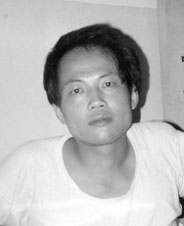 Sun Wenbo was born in1956 in Shaanxi province, and moved with his family to Sichuan at a veryyoung age. He wrote his first poetry in 1983, for a recital at thefactory where he was working as a mechanic, but it was not until thelate 1980’s that he really got into his stride. His poems have appearedin a range of magazines and anthologies and he has become a distinct,contemporary voice in Chinese poetry. Within the framework of poetryfrom the People’s Republic, his work stands out by paucity of imageryand a thoughtful tone unfit for grand gestures and intoxication. Hispoem The Program, written in 1994, could be read as an expositionon the pros and cons of loud and quiet styles.
 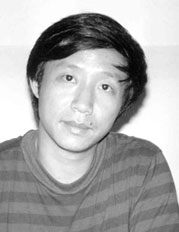 Ouyang Jianghe was born in 1956 in Luzhou in Sichuan Province; becausehe shared the name Jianghe with the already famous Misty poet fromBeijing, in 1985 he added Ouyang as a prefix to differentiate the two.Also in this year he began to participate in Sichuan’s rowdy unofficialpoetry scene, taking on a behind-the-scenes role in the production ofjournals such as Day By Day Make It New and Han Poetry,while contributing to most major journals in the province and someoutside, such as Tendency, during the rest of the 1980’s and oninto the 1990’s. During the same period, an increasing quantity ofOuyang’s poetry and critical essays appeared in official literaryjournals, his first book-length collection of poetry and essays wasofficially published only in 1997. In the early 1990’s, he was able toobtain a passport and spent several months in the USA and westernEurope. He now resides in Beijing.
 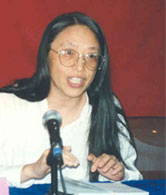 Wang Xiaoni is aproduct of the so-called “obscure” (menglong)generation of poets that emerged in China in the late 1970s. Even in theformative period of her career, she was very clear about what she wastrying to achieve as a poet: in a brief statement entitled Wo yaoshuo de hua (What I want to say) published in FujianLiterature in 1981, she says, “I think good poetry comes withdaring to, and being good at, exposing the complex state of the humanpsyche with skill and relative accuracy. To gloss over or to avoid suchthings as the relationship between people or the realities of society isnegative, insincere and of no possible good.” Her early poems wereconsiderably unusual for their time because they carried no obviouspolitical messages and emphasized intense or intimate personal feelings.Much of her 1990’s suite of thirteen poems entitled On VisitingFriends is organized into sequences; publications have been Wodeshixuan (My Selected Poems), 1986, Fangzhu Shenzhen(Exile in Shenzhen), prose, 1994, and Wode zhili baozhe wo dehuo (My paper wraps my fire), poems, 1997. She took up ateaching position at Hainan University in September 2005.
 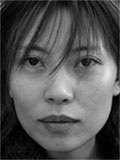 YinLichuan, born in 1973, studied French at PekingUniversity, the flagship of Academe in China, and film at the ParisEcole Superieure Libre d’Etudes Cinematographiques. She was a member ofa controversial group of authors called the Lower Body, groundedin the turbulent social realities of contemporary China, creating asensation from the summer of 2000 until late 2001. Critics read lowerbody as a synonym for genitals, and equated Lower Body poetrywith pornography, but it is too frequently ironic and insufficientlyfocused on sex for that; in its own inimitable way it reflects darksides of life in China’s big cities, viewed from within the ideologicalvacuum surrounding the urban young, and their concomitantlifestyles— that is, a bitter—cheerful sense of NoFuture. The trivial texture of everyday life has been acceptedsubject matter in Chinese poetry since the 1980’s; the tension herearises between two types of language: that of official reality as aproduct of socialist ideology, and the dispassionate reports of YinLichuan, in cool chatter, while what happens is enough to make onecringe. She has a regard for poetic form, in ditty-like, playfulrepetition, near-rhyme and beautifully flowing rhythm. She also writesprose and essays, but for the most part her work is only accessible onthe Internet.
 Yang Qian was a childduring the Cultural Revolution, and graduated from the JournalismDepartment of the People’s University in 1980. The fate of theTian’anmen democracy movement convinced him that it was no longerpossible to be a journalist, and he turned to fiction. After writingIntentional Injury, which debuted at the Chinese NationalExperimental Theatre, Beijing, Yang transferred to Shenzhen, working inthe television broadcast station of the recently established NanshanDistrict Government. He began experimenting with performance inShenzhen: he is the artistic director and founder of Fat Bird Theatreand artistic director and founder of Zero Sun Moon theatre club inShenzhen. He is a grassroots theatre activist, also organizingchildren’s theatre clubs. The loosening of political control overcultural production has enabled Yang to build a free-lance artisticcareer, able to participate in collaborations with Hong Kong andSingapore artists. With Fat Bird, he participated in the production ofFox Tales, which traveled to Guangzhou, Hong Kong and Singaporeas part of Nuren Xi/Woman, an evening of three one-act plays in 2003/4.The Human City and City of Gods, two environmentalperformances engaged Shenzhen’s changing urban landscape (2003). Awardsinclude the Cao Yu Theatre Gold Medal for Neither Type NorCategory, national level award (2003); Shenzhen City Golden AutumnBronze Medal for Hope, municipal level award (1997); ShenzhenArts Recognition award for Intentional Injury (1996). He isadjunct professor of aesthetic theory at Shenzhen University.
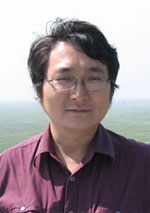 Li Sen was born in 1966 in TengchongCounty, Yunnan Province, People’s Republic of China. He has been workingat Yunnan University since he graduated from the Department of Chinese,Yunnan University, in 1988. Currently, he is professor and Vice Dean ofthe College of Arts of Yunnan University. He has published severalbooks, including Painters in My Heart, Absurd but Attractive Games,Accounts of Animals , and Birds’ World . He is one of thepoets known as “They,” an influential poetry group of ChineseExperimental poetry.
Li Nan, born in1964 in Qinghai, People’s Republic of China, now lives in Hebei. Sinceshe started writing poetry in 1983, she has published two collections,and her work has been included in important anthologies of Chinesepoetry. A former journalist, she is now a freelance writer.“Poetry,” she says, “does not change my destiny butchanges my view of destiny.”
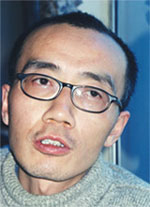 Han Dong was born in Nanjing in 1961. Aftergraduation from Shandong University in 1982, he began work in Xi’an,where he edited his own small unofficial poetry journal (OldHome) and contributed to the then more influential SameGeneration, out of Lanzhou in Gansu province. Upon returning toNanjing in 1984, Han contacted old contributors to Old Home and poetssuch as Yu Jian and Wang Yin he had met via correspondence throughSame Generation, and began to edit a new journal, Them…The first issue appeared in early 1985 and was followed by four moreeditions until 1989. Over the next four years, Han devoted much of hisenergy to writing fiction. Them reappeared in 1993, with a further foureditions until 1995. In 1998 this was followed by an officiallypublished anthology of Them poetry. Han continues to write both poetryand fiction, and contributes to the Them website at www.tamen.netwhere new issues of the Them webzine have been appearing sincesummer 2002.
 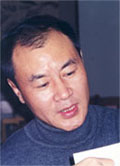 Wang Jiaxin was born in Hubei, China in 1957. After having worked inthe countryside for three years as a consequence of the culturalrevolution, he studied at university, then worked as a reader for apoetry magazine. From 1992 to 1994, he traveled as a writer to England,the Netherlands, Belgium and Germany. Since 1994, he has been a lectureron modern Chinese literature and comparative literary studies at theBeijing Institute for Education Sciences. He has published poetry inChina and in England: Stairway (1991), Watching (1993),Nightingale in his own time and The Wandering Rocks in1996.
 in Tibet
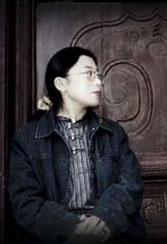 Woeser (Weise in Chinese) is a Tibetan poetfrom the western Tibetan area of Sichuan (Kham). She was born in 1966and grew up in the midst of both Tibetan and Han Chinese cultures. Shegraduated from the Southwest Minority University Chinese Department, andhas published articles, poetry, and prose in Chinese. In 1990, shereturned to her birthplace, Lhasa, as an editor/writer for the journalTibetan Literature. Her first poetry collection, Tibet Above, wona national minority literature award in 2001. However, her followingbook Notes on Tibet, a collection of prose on current Tibetansocial realities, was banned by the central authorities. She has sincelost her job and social benefits, but remains resolute in her mission toreclaim Tibet.
 Meizhuo was born in 1966 in Amdo, east Tibet and lived in various places in thenortheast provinces before her parents, both government employees, werestationed in Xining, the capital of Qinghai Province. After graduatingfrom Xining Teachers’ College, Meizhuo was assigned to work at XiningFilm Institute; later she was employed at the Literature and ArtAssociation (Wenlian). At the Film Institute, she began to explore herinterest in Tibetan culture. She published her first story in 1987. In1997, her novel, The Clan of the Sun (Taiyang Buluo), wonthe national award for minority writers. She is a member of the Qinghaiprovincial writers’ association and lives currently in Xining, Qinghaiprovince.
minorities in China
Yidam Tseringwas born in Tsongkhakar (Chinese: Pingan) county in Tsoshar prefecture(Chinese: Haidong) in 1933, into a poor family. As a child he was ashepherd and attended school sporadically. His formal education wasdisrupted by the arrival of the People’s Liberation Army in Lanzhou, thecapital of present-day Gansu: Yidam thought the PLA were “goodguys” because they distributed food and money to the villagers, andjoined the revolutionary ranks. In October of that year he joined ayoung cadres training class in Xining (capital of Qinghai) and studiedfor some months, then started to work in that school. In 1954, Yidamjoined the Northwest Nationality Dance Troupe in Lanzhou as art anddance teacher and also choreographer; for the first time he startedwriting. He began to collect, arrange and translate Tibetan folk songsinto Chinese and to compose new texts for ancient, well-known tunes. Hepublished a collection of traditional folk songs in 1963 (WeddingSongs). Later he was deputy director of the Gansu Folk Art ResearchCommittee. His own first poem, The Golden Steed (1958), was ahymn to the co-operative transformation of agriculture and the effortsand determination of people in constructing Socialism. In September1964, he finished his first collection of poems, Snowy MountainsCollection, but due to the Cultural Revolution, the book was onlypublished in 1980. During the Cultural Revolution, Yidam Tsering wasstigmatised and early poems he had composed were burned by the RedGuards. He began searching for his Tibetan identity and becameincreasingly concerned with the development of Tibet and Tibetaneducational improvement. An influential figure within the contemporaryTibetan literary scene and one of the first poets who introduced Tibetanculture into the Chinese language, he used Tibetan symbols such as thesnow lion and snow, introducing Tibetan culture and history to a largeChinese readership. He only wrote in Chinese but his work was translatedinto Tibetan and was widely read. He became a prolific writer, producingamong other publications five anthologies of poems and essays. In‘Crystalline Seeds’, a poem written in 1983, Yidam Tsering celebratesthe richness of the Tibetan language. He encouraged young Tibetanintellectuals to write in their mother tongue. Among his other literaryactivities was the compilation of a collection of essays in praise ofthe scientific achievements of the famous Tibetan activist andintellectual, Baba Phuntsog Wangyal. He was also requested by theeditors of the prestigious literary journal sBrang char (LightRain) to write the foreword for the eight volumes (poems, shortstories, translations and essays) published to mark the 20th anniversaryof the journal. Other well-known Tibetan writers also invited YidamTsering to write forewords for their books. His concern for Tibetanculture and language was uncompromising: during a public debate oncontemporary Tibetan literature, he excluded his own writings as beingpart of Tibetan literature since they were written in a foreignlanguage. He died on 24 October 2004 in Lanzhou.
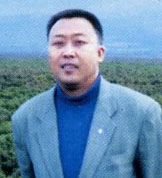 Baitao is a Mongolian poet writing in Chinesefrom the autonomous region of Inner Mongolia in China. Born in 1959, hestarted writing poetry at twenty-one and has since published severalpoetry collections including his Arising from an Eagle, which received anational award for minority literature. His poetry has been praised forthe elegant way it expresses the deep relationship between the Mongolianculture and their homeland, the steppe. Yet, he especially gives voiceto the tragedy of environmental destruction being wrought bydesertification of the grasslands in the modern era.
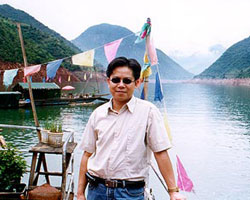 Shamais a Yi poet from the south western region of China, an area dubbed bythe poet the “Southern Highlands,” which includes parts ofSichuan, Yunnan, and Guizhou provinces. The Yi are a minority ethnicgroup who live throughout this mountainous area and number over 6million people. Known for their enchanting ballads and vivid folktales,the Yi have a colorful and diverse body of cultural traditions spreadamong several subgroups. Shama is a passionate member of this cultureand strives to both share and preserve its traditions through hispoetry. However, in the modernizing world of “marginal” China,Shama also reveals the pain of separation and the loss of identity inthe rapidly changing landscape of the highlands. He himself embodiesthese colliding forces by simultaneously embracing the language ofmodernity, Chinese, and writing his people into the annuals of thecultural centre. Shama currently lives in Panzhihua, Sichuan where heworks as an editor of a local government periodical.
 Luruo Dijiis a member of the Pumi ethnic minority in China. The Pumi are a smallgroup of about 30,000 that live mostly in the higher elevations ofYunnan and Sichuan provinces. They are related to the Qiang ethnicgroup, but also have their own unique religion and customs. Luruo Dijiwas born in 1967 in the southwest province of Yunnan. He has a degree ineconomic management and currently serves as the Deputy Director ofFinance for his native county. He started writing as a student and hasbeen published in numerous Chinese literary journals and newspapers.With a commendation from the well-known Chinese poet Yu Jian, Luruo Dijihas become an increasingly familiar name in China as well asinternationally. The striking sense of place and ethnic identityexpressed in his poems seem to hint at a modern China that is vastlymore dynamic than traditionally conceived.
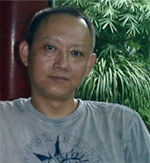 Jimu Langge is an Yi poet born in 1963 in the Liangshan area ofSichuan. He started writing poetry at the age of twenty, and was aparticipant in the advant garde poetry style “Non-ism” based in Chengdu.As both an ethnic and an advant garde poet in China, he combines ethnicthemes with a distinctly postmodern ethos. His treatment of issues suchas national belonging and cultural hybridity display his multifacetedsense of irony. He currently lives in Chengdu.
 Chinese poets abroad
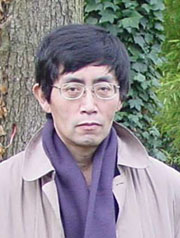 BeiDao Zhao Zhenkai was born in 1949 in Beijing: hispseudonym Bei Dao, literally, “North Island,” was suggested bya friend as a reference to his provenance from Northern China and hischaracteristic solitude. Both his father, an administrative cadre, andhis mother, a medical doctor, came from traditional, middle-classShanghai families. During the Cultural Revolution, he joined the RedGuard movement, expecting a spirit of cooperation between the ChineseCommunist Party and the countrys intellectual elite; but like many othermiddle-class youth he soon became disillusioned and was later sent tothe countryside, where he became a construction worker. By 1974, Bei Daohad begun a sequence of poems which probed the boundaries of theofficial literature of his time and were to become a guiding beacon forthe youth of the April Fifth Democracy Movement of 1976, a peacefuldemonstration in Tiananmen Square. He became one of the best-known ofthe so-called “misty” poets — a term applied by theauthorities in an attempt to dismiss their avant garde challenge tosocialist realist hegemony. In 1978 he and colleague Mang Ke founded theunderground literary magazine Jintian (Today), which ceased publicationin 1980 under police order. In the early 1980s Bei Dao worked at theForeign Languages Press in Beijing. He was the key target in thegovernment’s Anti—Spiritual Pollution Campaign, but in 1983 hemanaged to meet secretly the American poet Allen Ginsberg, in China aspart of a group of American authors. Bei Dao noted that Ginsberg wasmostly interested in Bei Dao’s dissident status: later they met severaltimes, among others in South Korea, where Ginsberg upset high officialswith his questions about Korea’s human rights. In 1983 Bei Dao’s poemswere published in the East Asia Papers series of the Cornell UniversityEast Asia Program and in Renditions 19/20 in Hong Kong by The ChineseUniversity Press. Poems also appeared in the Bulletin of ConcernedAsian Scholars (1984) and in Contemporary Chinese Literature(1985). When the political situation changed in the mid—1980s, BeiDao started to travel in Europe and in the United States, often with hiswife, painter Shao Fei, and their daughter, Tiantian. Bei Dao’s poetryis personal, depicting intimacies in a society where trust can literallybe a matter of life and death, and has been said to represent thedisillusionment of his generation. Although political control of thepublic debate showed some signs of relaxation, his poetry became morepessimistic, culminating in the nightmarish “Bai ri meng” (1986). BeiDao shi xuan (1986, The August Sleepwalker), a collection ofpoems written between 1970 and 1886, was received with enthusiasm, butthe book was soon banned by the authorities (published again in 1990).After a year in England, followed by a tour in the United States, BeiDao returned to China in the late 1988. The novella Bodong(Waves), the first draft of which he had completed in 1974,stories about the “lost generation” of the Cultural Revolution, made BeiDao one of the prominent figures in Chinese modernist fiction. It wasfollowed by shorter prose text dealing with contemporary subjects, suchas the gulf between the official truth and reality. In 1989 Bei Daosigned a letter with 33 intellectuals to the NPC and the CentralCommittee, which led to a petition campaign that called for the releaseof political prisoners, among them the democratic activist WeiJingsheng. At the time of the massacre in Tiananmen Square, Bei Dao wasin Berlin: some of his poems had been circulated by students during thedemocracy movement, and he was accused of helping to incite the eventsin the Square. He decided to stay in exile. Jintian wasre-launched in Stockholm in 1990, and Bei Dao serves as theEditor-in-Chief. After teaching in Sweden, Denmark, and Germany, Bei Daomoved to the U.S. and became a resident at the University of Michigan.His books of poetry include Old Snow (1991); At the Sky’sEdge: Poems 1991—1996 (1996), for which David Hinton won theHarold Morton Landon Translation Award from The Academy of AmericanPoets; Landscape Over Zero (1995); Forms of Distance(1994), and Unlock (2000). His awards and honors include aGuggenheim Fellowship and the Aragana Poetry Prize from theInternational Festival of Poetry in Casablanca, Morocco. He has been acandidate several times for the Nobel Prize in Literature, and waselected an honorary member of The American Academy of Arts and Letters.He traveled to Palestine as part of a delegation for the InternationalParliament of Writers. Bei Dao was a Stanford Presidential lecturer andhas taught at the University of California at Davis. He is currently theMackey Poet in Residence at Beloit College, where he also served as theLois Wilson Mackey ’45 Distinguished Professor of Creative Writing.
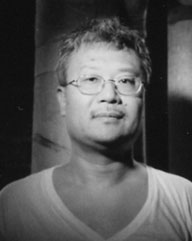 Ha Jin (Xuefei Jin) is an accomplished poet, novelist, short story writer, andprofessor, born in mainland China. He grew up in a small rural town inLiaoning Province, and from the age of fourteen to nineteen volunteeredto serve in the People’s Liberation Army, stationed at the northeasternborder between China and the former Soviet Union. He left because hewanted to go to college; but colleges remained closed during theCultural Revolution, which continued when he was demobilized, so heworked as a telegrapher at a railroad company for three years inJiamusi, a remote frontier city in the Northeast. In 1977 collegesreopened, and he passed the entrance exams and went to HeilongjiangUniversity in Harbin where he was assigned to study English, even thoughthis had been his last choice for a major. He received a B.A. inEnglish in 1981, and then studied American literature at ShandongUniversity, where he received an M.A. in 1984. The following year hecame to the United States to do graduate work at Brandeis University,from which he earned Ph. D in English in 1993. As he watched themassacre in Tiananmen Square in 1989 on the television in his home inBoston, he realized he could never go back: it would be impossible towrite honestly in China. Ha Jin had no audience in Chinese, and so choseto write in English: this meant much labor, some despair, and alsofreedom. Abandoning his plan to go back to China and teach, he secured ajob at Emory University teaching creative writing.. The author ofseveral critically acclaimed works, including Between Silences(University of Chicago Press, 1990), Facing Shadows (HangingLoose Press, 1996); two collections of short stories, Under the RedFlag (University of Georgia Press, 1997), which received theFlannery O’Connor Award for Short Fiction and was a finalist for theKiriyama Pacific Rim Book Award, and Oceans of Words (ZolandBooks, 1996) which received the PEN Hemingway Award. He also published anovella, In the Pond (Zoland Books, 1998), which was selected asa best fiction book of 1998 by the Chicago Tribune. Set in Chinaduring the Cultural Revolution, Ha Jin’s works explore the timelessthemes of brutality, desire and wasted potential. Jin used his militaryexperiences as raw material for the stories in Ocean of Words;while there are elements of his life and experiences in his work, heinsists that it is not autobiographical. Waiting, his firstfull-length novel, was the winner of the 1999 National Book Award forFiction and the 2000 PEN/Faulkner Award for Fiction, and a finalist forthe Los Angeles Times Book Award for fiction. He has also written acollection of stories called, The Bridegroom, published byPantheon Books. His short stores have been included in The BestAmerican Short Stories (1997 and 1999), three Pushcart Prizeanthologies, and Norton Introduction to Fiction and NortonIntroduction to Literature, among other anthologies.
 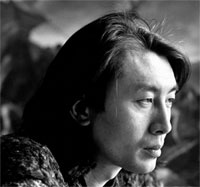 Xue Di was born inBeijing in 1957. He is the author of three volumes of collected worksand one book of criticism on contemporary Chinese poetry in Chinese. InEnglish translation, he has published three full length books,Another Kind of Tenderness, An Ordinary Day and Heart intoSoil, and four chapbooks, Forgive, Cat’s Eye in aSplintered Mirror, Circumstances and Flames. His work hasappeared in numerous American journals and anthologies and has beentranslated into English, French, German, Dutch, Spanish, and Japanese.Since shortly after the Tiananmen Square Massacre in 1989, he has been afellow in Brown University’s Freedom to Write Program in Providence,Rhode Island. Xue Di is a two—time recipient of the Hellman/HammettAward, sponsored by Human Rights Watch.
Stephen Shu-NingLiu was born in 1930, Fuling, China, near the YangtzeRiver, the son of a hermetic painter who was a landlord and the grandsonof a Mandarin scholar who taught him Chinese classics when he was five.After graduation from Nanjing University in 1948 and military service inthe Chinese Expeditionary Army, he came to America in 1952. He receivedhis B. A. in English in1956 from Wayland Baptist College in Plainview,Texas, and his M. A. in English in 1959 at the University of Texas inAustin. He earned a Ph.D. in English from the University of North Dakotain 1973. With his degrees in English, Liu taught at colleges anduniversities including Northern Montana College (1966—1970), theCollege of San Mateo (California) as a visiting lecturer (summer 1968),as well as the University of North Dakota as a visiting lecturer (summer1972). He returned to teach at the University of North Dakota from1970—1973. In August 1973, he took a position as English professorat Clark County Community College, in Las Vegas, Nevada and remainedthere until his retirement in 2001. Liu wrote essays, short stories, andpoems published in English and Chinese; his poetry has been publishedinternationally in many literary magazines, anthologies and collegetexts. He was the first Nevadan to receive a Fellowship in CreativeWriting from the National Endowment for the Arts (1981—82) and wona Pushcart Prize for poetry in 1982. In 1985, he won the NevadaGovernor’s Award for Literature.
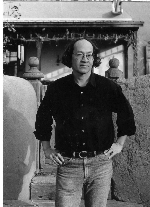 Arthur Sze , born in New York City in 1950, isa second—generation Chinese American. Educated at the University ofCalifornia, Berkeley, Sze is the author of seven volumes of poetry,including Archipelago (Copper Canyon, 1995), River River(Lost Road, 1987), Dazzled (Floating Island, 1982), TwoRavens (1976; revised edition, Tooth of Time, 1984), The WillowWind (1972; revised edition, Tooth of Time, 1981), TheRedshifting Web: Poems 1970—1998 (Copper Canyon Press, 1998),a finalist for the 1999 Lenore Marshall Poetry Prize, and, mostrecently, Quipu (Copper Canyon, 2005). Sze directs the CreativeWriting Program at the Institute for American Indian Art in Santa Fe,New Mexico, where he has taught for more than a decade. He becamewell-known in New Mexico as a distinctive and compelling presence in thepoetry of the region, and was co-publisher, with John Brandi, of Toothof Time books. He has won numerous awards; an Asian American LiteraryAward, a Balcones Poetry Prize, a Lila Wallace-Reader’s Digest Writer’sAward, a John Simon Guggenheim Memorial Foundation Fellowship, anAmerican Book Award, a Lannan Literary Award for Poetry, three WitterBynner Foundation for Poetry Fellowships, two National Endowment for theArts Creative Writing Fellowships, a George A. and Eliza Gardner HowardFoundation Fellowship, a New Mexico Arts Division InterdisciplinaryGrand, and the Eisner Prize, University of California at Berkely. Hispoems have also appeared in numerous magazines and anthologies, and hehas conducted residences at Brown University, Bard College and theNaropa Institute. Rich in allusions, his poetry evinces a preferencefor Asian juxtaposition rather than Western rhetoric. Sze made his debutas an equally exceptional translator with the publication of The SilkDragon (Copper Canyon Press, 2001), which follow the trajectory ofSze’s interests in Chinese literature, from the classic T’ang masters,Wang Wei, Li Po and Tu Fu to important contemporary poets such as WenI-to and Yen Chen. (The Silk Dragon was featured in a previousissue of The Drunken Boat along with a selection of work, and an interview with Sze).
 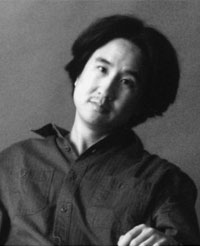 Timothy Liu was born toparents from the Chinese mainland in San Jose, California in 1965 andeducated at UCLA, Brigham Young University (B.A. in English) theUniversity of Houston (M.A. in English) and the University ofMassachusetts at Amherst. In addition to California, Utah, Texas, andMassachusetts, he lived in Hong Kong for two years as a Mormonmissionary and in Iowa for four years as an Assistant Professor atCornell College. Place affects his imagination; Liu struggles to balancethe internal, sensitive, solitary world of the poet against the externalstruggle of an Asian, Mormon, gay man with everyday living. His firstbook of poems, Vox Angelica (Alice James Books), received the1992 Norma Farber First Book Award from the Poetry Society of America.His other books are Burnt Offerings (1995) and SayGoodnight (1998), a finalist for the Lambda Literary Award, bothpublished by Copper Canyon Press; Hard Evidence (Talisman House, 2001)and Of Thee I Sing (University of Georgia Press, 2004), selectedas a 2004 Book of the Year by Publishers Weekly. A new book of poems,For Dust Thou Art, is forthcoming from Southern IllinoisUniversity Press in Fall 2005. He is also Editor of Word of Mouth: AnAnthology of Gay American Poetry (Talisman, 2000). His poems havebeen included in more than twenty anthologies and have appeared in suchmagazines and journals as Antioch Review, Denver Quarterly, GrandStreet, Chelsea, Kenyon Review, New England Review, Paris Review,Ploughshares, Poetry, and TriQuarterly. An AssociateProfessor of English at William Paterson University, he lives inHoboken, NJ.
 in Taiwan
Yao Feng (YaoJingming) is a Macau poet and professor and author of A NoiteDeita-se Comigo (2001). He has organized and translated into Chinesethe poetry of Portuguese contemporary authors Selecta de PoetasPortugueses Contemporãneos (1999). He was co-organizer andtranslator of the bilingual anthology of Macau poets Antologia dePoetas de Macau (1999).
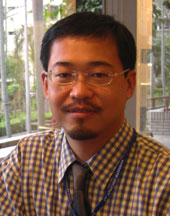 ChenKehua was born in Hualian on the east coast of Taiwan in1961. He began writing poetry in 1976 while in high school, andpublished his first collection, Whale Boy, in 1981. His most recentcollections are Engaging in a Complicated Poetry for the Sake of Death(1998) and Flowers and Tears and Rivers (2001). He works as anopthalmologist at the Veterans Hospital in Taipei, and it is tempting toview his poetry in the same light: as a rigorous though magicalprocedure for the removal of all the various forms of darkness thatbeset the human mind. He was disillusioned early with the shining‘ideals of consumer society; for him, reality was not only to becriticized —it had to be entirely re-imagined as well’. In morerecent poetry written during the 1990s Chen Kehua’s poetry has becomeboth more speculative and introspective, with Buddhist elementsconspicuous.
 ChenLi, born in 1954 and raised in Hualien, on the east coastof Taiwan, is regarded as “one of the most innovative and excitingpoets writing in Chinese today.” He started writing poetry in the1970’s, under the influence of modernism. He turned to social andpolitical themes in the 1980’s, and in the 1990’s explored a wide rangeof subjects and styles, combining formal and linguistic experiments withconcern for indigenous cultures and the formation of a new Taiwaneseidentity. He subtly mixes in his poetry the elements of Westernmodernism and post-modernism with the merits of Oriental poetics and theChinese language. To date he has published seven books of poetry and wonmany awards for his work, as well as being a prolific prose writer andtranslator. In collaboration with his wife Chang Fen-ling, he hastranslated into Chinese the work of a large number of Latin American,East European as well as English poets, including Neruda, Paz,Szymborska and Heaney. In 1999, he was invited to Rotterdam PoetryInternational. In 2004, he was invited to Salon du Livre in Paris. Hispoems have been translated into English, French, Dutch, Japanese andother languages.
 Hsia Yü(or Xia Yu, as her name is sometimes spelled) was born in Taiwan but nowdivides her time between Paris and Taipei, where she makes a living as alyricist and translator and enjoys a much-deserved reputation for beingone of the most provocative and cosmopolitan poets writing in Chinesetoday. She is a founding editor of the Taiwan poetry journal XianzaiShi (Poetry Now) and the author of four volumes of verse,most recently Salsa (1999).
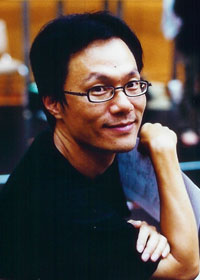 Hung Hung is the pen-name of Yen Hung-ya. Born in 1964 in Taiwan,Hung Hung is a poet, translator, and award-winning filmmaker and theatredirector. A graduate of the National Institute of Arts, TheatreDepartment, and a founding editor of On Time Poetry, he haspublished five volumes of poetry as well as short fiction, intimateessays and theatre criticism, plus numerous translations from English,French, and other languages. He is a graduate of the National Instituteof Arts and has, at one time or another, been a chief editor ofPerforming Arts Review and The Modernist Poetry (theleading publications in their respective fields in Taiwan); artistic andstage director of Stalker Theatre Group, which was founded in 1994;co-author of the script for Edward Yang’s film, A Brighter SummerDay (1991); and director of more than a dozen plays, three operas,and three films. His first film, The Love of Three Oranges(1998), was invited to the Venice International Film Festival and wonthe Prix FIPRESCI at the Chicago Film Festival and the Prix Jacques Demy(for Best Director) at the Festival des 3 Continents. The HumanComedy (2001), his second cinematic venture, won the Prix du Publicat the Festival des 3 Continents as well as the Best Film Award atMuscat Film Festival. His latest film, A Garden in the Sky, is adigital film full of visual excitements and fantastic imagination andwas invited to the Moscow International Film Festival. He is now workingon his next film project, and has served as curator of the TaipeiPoetry Festival since 2004.
 in Macao
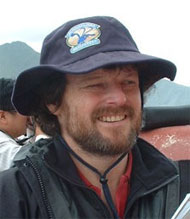 ChristopherKelen is a well known Australian poet whose works have been widely publishedand broadcast since the mid seventies. The Oxford Companion toAustralian Literature describes Kelens work as “typicallyinnovative and intellectually sharp.” Kelen holds degrees inliterature and linguistics from the University of Sydney and a doctorateon the teaching of the writing process, from UWS Nepean. Kelens firstvolume of poetry, The Naming of the Harbour and the Trees, won anAnne Elder Award in 1992. In 1988 Kelen won an ABA/ABC bicentennialaward with his poem “Views from Pinchgut.” In 1996 he wasWriter-in-Residence for the Australia Council at the B. R. WhitingLibrary in Rome. In 1999 he won the Blundstone National Essay Contest,conducted by Island journal. He also won second prize in the GwenHarwood Poetry Award that year. In 2000 Kelen’s poetry/art collaboration(with Carol Archer) Tai Mo Shan/Big Hat Mountain was exhibited atthe Montblanc Gallery in Hong Kong’s Fringe Club. And in 2001 anothercollaboration (essay and watercolor) titled Shui Yi Meng/Sleep toDream was shown at the Montblanc Gallery. Both exhibitions have beenpublished as full color catalogues. Kelen’s fourth book of poems,Republics, dealing with the ethics of identity in millennialAustralia, was published by Five Islands Press in Australia in 2000. Afifth volume, New Territories, a pilgrimage through Hong Kongstructured after Dante’s Divine Comedy, was published with theaid of the Hong Kong Arts Development Board in 2003. In 2004 Kelen’schapbook Wyoming Suite: North American Sojourn was released byVAC Publishing in Chicago. In 2005, Kelen’s long poem Macao wasshortlisted for the Newcastle Poetry Prize and a re-edited version ofTai Mo Shan appeared in Southerly. Kelen’s most recentvolume of poems is Eight Days in Lhasa (VAC, 2006). A new volumeof Macao poems Dredging the Delta is forthcoming from CinnamonPress in the U.K. Apart from poetry Kelen publishes in a range oftheoretical areas including writing pedagogy, ethics, rhetoric, culturaland literary studies and various intersections of these. Kelen is anAssociate Professor in the English Department at the University ofMacau, where he has taught Literature and Creative Writing since 2000.He is the principal investigator in the University of Macau’s Poems andStories of Macao Research Project and the editor of the on—linejournal Writing Macao: creative text and teaching.
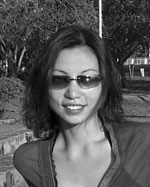
  Papa Osmubul, real name Oscar Balajadia, is a Macao resident of Filipino origins,married to a Chinese local. He is a teacher and a Masters student of Dr.Chrisopher Kelen at the University of Macao. He writes in Tagalog andanother Filipino language as well, but mainly in English. He haspublished two books of poetry, Parnaso, in Filipino (1991,Angeles City, Philippines) and Lighthouse, in English (1999,Quezon City, Philippines). His poems have been published in PoemsNiederngasse, Adagio Verse Quarterly (USA),Mitochondria (USA), Quarterly Literary Review Singapore(QLRS), LauraHird, Muse Apprentice Magazine, Retort Magazine(Australia), Jacobyte Poetry (Australia), Philippines FreePress, Philippine Graphic, National Midweek, A Critical Survey ofPhilippine Literature, The Surface (USA), Aesthetica: a Review ofContemporary Artists (UK), Stylus Poetry Journal(Australia—New Zealand), Our Own Voice: Filipino Literature inthe Diaspora, Dalityapi Makata, Bird and Egg, Spreadhead, SpillwayMagazine, Rattle Magazine, Wild East (Hong Kong Literary Circle),and others. Several poems of his are forthcoming in the future issues ofliterary magazines including Snow Monkey, Quarterly Literary ReviewSingapore (QLRS), and others. His work will be anthologized inSynaptic Graffiti: Slam the Body Politik (poetry on CD,Australia) and in Mitochondria: an Anthology of Rarities and LooseEnds. He has just finished writing the manuscript of his next bookentitled ‘Voice in the Air’. An amateur artist, he has heldearly 2004 a solo art exhibition entitled White and Black at UNESCOCenter in Macao, through the sponsorship of Macao Foundation.
 Yao Feng (Yao Jing Ming), a Macau poet and professor, lectures in the PortugueseDepartment at the University of Macau. He has published a number ofvolumes of poetry and edited and translated into Chinese the poetry ofPortuguese contemporary authors Selecta de Poetas PortuguesesContemporâneos (1999) and A Noite Deita-se Comigo(2001). He was co-organizer and translator of the bilingual Anthology ofMacau poets Antologia de Poetas de Macau (1999). His poems havebeen selected for many different poetry anthologies. He is also theeditor of Poesia Sino-Ocidental.
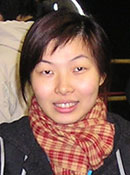
 Jenny Oliveros Lao has adegree in Tourism Studies, and an MBA from the Inter-UniversityInstitute of Macau. She is currently a lecturer in English at the MacauPolytechnic Institute and an MA student in English Studies at theUniversity of Macau.
 Agnes Lam IokFong was born in Macau, and is a poet, columnist on twodailies in Macao, and current Vice President of Macau PEN. She haspublished four books in Macao and mainland China; of these two arecollections of poems and two of non-fiction. Three of her poems won theMacao Literature Prize in the 1990s. She is chief editor of NewGeneration magazine. She teaches broadcast and print journalism atthe University of Macau.
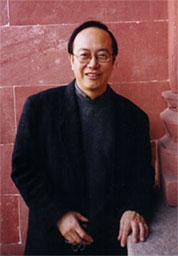
 Agnes Vong Lai Ienggraduated from the University of Macau in 2002 and is currently writingher MA thesis on the topic, Macao Poetry Today— a study ofcontemporary writing across cultures. Her translations also appear inthis issue.
in Hong Kong
 P.K.Leung , or Leung Ping-Kwan, has published 10 volumes ofpoetry, including the bilingual volumes City at the End of Time,Foodscape, Clothink. His selection of poems Travelling with aBitter Melon was published by Asia 2000. He teaches literature andfilm at Lingnan University. He was writer in residence in Berlin in1998, and a volume of poems, The Politics of Vegetable, wastranslated into German and published in Berlin. Leung is also a fictionwriter, and a collection of his stories in French translation, Ileset continents, was published by Gallimard.
 Louise ShewWan Hotaught Shakespeare and English at the Chinese University of Hong Kong,giving poetry readings internationally and publishing poems inAustralian, American, British and Canadian magazines. A collection ofher poems, Local Habitation, was published in 1994 by theDepartment of Comparative Literature, University of Hong Kong, andTwilight Books. A second collection, New Ends, Old Beginnings,was published by Asia 2000 in 1997. Louise Ho has retired and lives inAustralia.
AlanJefferies moved to Hong Kong from Sydney in 1998. Heholds degrees in Writing and Communication, and has worked as an Englishteacher, librarian, and teacher of creative writing. He is the author offour books, including Blood Angels: Poems 1976—1997. He isone of the initiators of the Outloud poetry readings and collaborativeevents in Hong Kong.
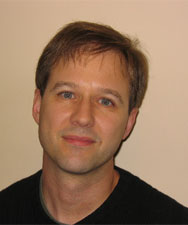 TimothyKaiser was born in Iowa, USA, and grew up in the ruggedmountains of northwest British Columbia and on the plains of wheatbeltSaskatchewan, Canada. He holds degrees from the University ofSaskatchewan and an MA in English Studies from the University of HongKong. His work has been published in Canada (The Antigonish Review,Wascana Review), the US (Atlanta Review), the UK (DreamCatcher), and in Hong Kong (City Voices, Outloud, Yuan Yang).Recently, his story about a teacher on a Dene First Nations reserve innorthern Saskatchewan, “Mother Margaret and the Rhinoceros Cafe”, wonfirst prize in the 2003 Canadian Cross-Cultural Short Story Competition.Tim teaches secondary English and history at the Canadian InternationalSchool of Hong Kong. His wife is from a Hakka village in the NewTerritories of Hong Kong; the couple lived with her family during hisfirst years in Hong Kong and village life is represented in many ofTim’s poems.
in Singapore
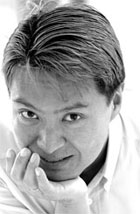 Felix CheongSeng Fei graduated from the National University ofSingapore with a BA (Hons) in 1990 and completed his Master ofPhilosophy in Creative Writing at the University of Queensland in 2002.He was the recipient of the National Arts Council’s Young Artist of theYear for Literature Award in 2000. His three books of poetry areTemptation and Other Poems (1998), I Watch the Stars GoOut (1999) and Broken by the Rain (2003). His work has alsobeen published in newspapers, poetry websites, foreign journals and 6anthologies of Singaporean poetry. As a literary activist, he has beeninvolved in promoting Singaporean literature abroad. He was instrumentalin organizing a Singapore contingent of writers on 4 successful readingtours — The Philippines (January 2001), Australia (July 2001), theUS (April 2002) and the UK (August 2003). Felix has been invited toperform his work at the Brisbane Writers’ Festival, the QueenslandPoetry Festival, the Hong Kong Literary Festival, the Singapore Writers’Festival and the Edinburgh International Book Festival.
 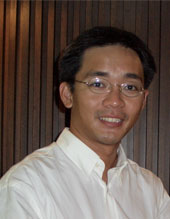 Gilbert Kohwas born in 1973 and is a lawyer working in Singapore. He was the winnerof the 2005 Golden Point Award for Poetry. His poems have been publishedin anthologies, literary journals and poetry websites internationally.Credits include Atlanta Review (the US); Yuan Yang (HongKong); Papertiger New World Poetry (Australia); QuarterlyLiterary Review Singapore (Singapore); Softblow (Singapore);Love Gathers All:The Sinapore-Philippines Anthology of LovePoetry (Philippines & Singapore); and Graphic Poetry (theUK).
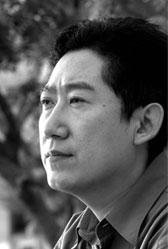 Yong Shu Hoong was born in 1966 in Singapore, and graduated from theNational University of Singapore with a Computer Science degree in 1990;he has a MBA from Texas A&M; University at College Station. During thistime he wrote the poetry collection Pangs of Hunger, shortlistedfor the 1995 Singapore Literature Prize. His first book of poetry,Isaac (1997), featured poems written between 1992 and 1997,including several taken from the unpublished Pangs of Hunger. Thebook was nominated for National Book Development Council of Singapore’sBook Award. One of the poems, “The Sobering Age”, was chosenfor the 1999 Poems On The Move program and displayed on Mass RapidTransit trains, and at bus stops and public housing estates. IsaacRevisited, a rearrangement of Isaac with eight additionalpoems, was released in 2001. Two additional collections of his poetryhave been published: dowhile (2002) and Frottage (2005).He currently works as a journalist in Singapore; his writings haveappeared in publications including BigO, The New Paper, The StraitsTimes, The Arts Magazine, and the South China Morning Post,and on Web sites including Orientation and the MTV Asia website.Yong’s poems are also included in anthologies like No Other City: TheEthos Anthology of Urban Poetry, Rhythms: A Singaporean MillennialAnthology of Poetry and Love Gathers All: TheSingapore-Philippines Anthology of Love Poetry. Yong is active inpromoting Singapore literature both locally and overseas: he is theorganizer of the monthly subTEXT reading at The Book Café. He has alsoparticipated in readings and literary festivals held in Singapore,Malaysia, Hong Kong, England, Australia and the United States ofAmerica.
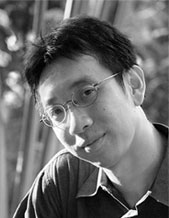 Alvin Pang, born inSingapore in 1972, is the author of two Straits Times Top Ten Books ofthe Year: Testing The Silence (1997), nominated for the NationalBook Development Council for the Book Awards in 1998/9, and City ofRain (2003). A first class honors graduate in Literature from theUniversity of York, he was also an Honorary Fellow in Writing with theUniversity of Iowa’s International Writing Program (2002). A formerteacher, civil servant, journalist, columnist and online producer, Pangis founder and editor of online poetry anthology The PoetryBillboard, and manages literary websites including the LiterarySingapore news website, writer.per.sg, and verbosity.net, where hisarticles, essays and commentaries appear. He was co—editor of NoOther City: The Ethos Anthology of Urban Poetry (2000) and one of aquartet of bilateral editors who developed Love Gathers All: ASingapore—Filippino Love Poetry Anthology (2002). Pang was thefeatured poet of the Spring 2002 issue of the Atlanta Review; hiswork has been featured in journals such as the English Review(UK), Paper Tiger (Australia), Interlogue: Studies inSingapore Literature, Quarterly Literary Review Singapore andRhythms: The Millennium Anthology of Singapore Poetry, for whichhe was also the English Language Poetry Editor. He is the Country Editor(Singapore) for the forthcoming Penguin Book of Southeast Asian Verse. Arecipient of several Singapore International Foundation and NationalArts Council grants, Pang has made international appearances in supportof Singaporean writing and frequently assists the National Arts Councilin literary projects. He contributes commentary to The StraitsTimes, and is a founding director of the Wordfeast internationalpoetry festival and The Literary Centre (Singapore). He served on theorganizing committees of the Singapore Writer’s Festivals in 1997, 1999,2001 and 2003. He led a delegation of Singapore writers to Australia inJuly 2001, another to the Austin International Poetry Festival in April2002, and attended the Edinburgh International Book Festival in 2003 asan invited international writer.
 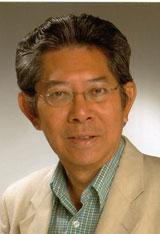 Robert Yeo(b. 1940) belongs to what may be called the second generation ofSingapore poets, and has written significant poetry and fiction but isprobably best known for his drama, a notable force in theatredevelopment since his first play, The Adventures of Holden Heng,appeared in 1969. He is one of the first playwrights to dare to explorepolitical issues openly in his work. He addresses directly andindirectly many issues relating to post—colonial writing,censorship and political sensitivities, social and educational changes,and local personalities. He has published four books of poetry, onenovel, and written five plays, all of which have been performed inSingapore and abroad. A Part of Three, Poems 1966—1988, waspublished in 1989: written over a span of 25 years, these range fromshort, compressed and formal lyrics to longer, free verse pieces;tonally, they are in turn serious, ironic, reflective and satirical. Hisother works include Changi, which examined the Internal SecurityAct at the level of the individual experience, which remains relevanteven now in the post 9/11 era. More recently, a book has been written onRobert’s work, his motivations and the messages that he sought to bringforth in the early years of Singapore’s development and even incontemporary Singapore. Volume 5 of the Interlogue Series of Studiesin Singapore Literature is devoted to Roberts work.
 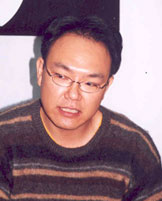 EddieTay was a research scholar at the National University ofSingapore whose research interests included the literature and cultureof Singapore; he is currently a Ph.D. student at the Department ofEnglish, University of Hong Kong, conducting research on representationsof Malaya in the writings of Maugham and Burgess alongside the thematicsof nationalism and transnationalism in the literature of Singapore andMalaysia. His first book of poetry, Remnants, consists ofrenditions of the mythic and colonial history of Malaya as well ashomage to the Tang Dynasty poets Li Po, Tu Fu and Li Ho. His secondvolume of poetry, A Lover’s Soliloquy, extends his interests inTang Dynasty poetry through renditions of the erotic poetry of LiShang-yin. It also explores in the language of eroticism the modern citylife. The poems included are taken from Tay’s second volume.
 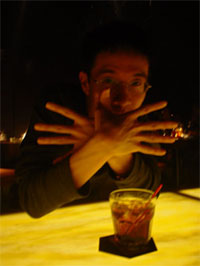 Toh Hsien Min has published two collections of poetry, Iambus(Singapore, 1994) and The Enclosure of Love (Singapore, 2001).His work has also been published in periodicals such as Acumen,Atlanta Review, London Magazine, The London Review of Books, OxfordPoetry and Poetry Ireland Review, as well as anthologies suchas the Oxford-Cambridge May Anthologies, No Other City andLove Gathers All. He has read his work at international literaryfestivals such as the Edinburgh International Book Festival, the AustinInternational Poetry Festival and the Queensland Poetry Festival. HsienMin is the founding editor of the Quarterly Literary ReviewSingapore (www.qlrs.com), the leading literary journal in Singapore,a founding director of The Literary Centre (Singapore) and an organizerfor Singapore’s first international poetry festival, Wordfeast. He is apast winner of the Shell-National Arts Council Scholarship for the Arts. Hsien Min read English at Keble College, Oxford, where he was alsoPresident of the Oxford University Poetry Society.
 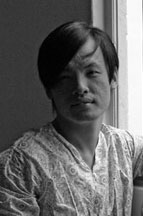 Cyril Wong (1977) isthe author of four collections of poetry in Singapore. Internationally,his poems have appeared in Atlanta Review, Fulcrum, Cider PressReview and Asheville Poetry Review. He has been nominatedthree times for the Pushcart Prize. He was a featured poet at theEdinburgh International Book Festival and the Hong Kong InternationalLiterary Festival; and is the founder of Softblow, an onlineinternational poetry journal. His Still Flight, 2005, was firststaged as a one-woman monologue in English.
 Arthur Yap was born inSingapore in 1943; he was educated at the University of Singapore andthe University of Leeds in England, and obtained his PhD from theNational University of Singapore. His first collection of poems, OnlyLines, published in 1971, received the National Book DevelopmentCouncil of Singapore’s first award for poetry. He also received theCouncil’s award for Down the Line in 1982 and Man SnakeApple in 1988. His poetic career stretches over more than aquarter-century: writing in the period from the 1950’s to 1970’s, whenSingapore had only just been separated from Malaysia to become anindependent state in 1965, after almost one hundred and fifty years ofBritish colonialism. Yap was among the poets reacting to theseuncertainties. The resistance offered by Yap is not to national entitiesbut to ordinary people who deny faith in and responsiveness to whattheir conformity blinds them to. Portraying a self alienated from thedrives of society, his poetry is perceptive rather than angry orreproachful, and his keen ear for mimicry allows him to depict withintonation while keeping himself in the background, as if disguised. Hewas represented in the collective Five Takes (1974) and inSeven Poets (1973). In 1983, he was awarded the prestigiousSoutheast Asia Write Award in Bangkok and the Cultural Medallion forLiterature in Singapore. Collections of his poetry includeCommonplace (1977); selected poems from Down the Line andMan Snake Apple & Other Poems have been put together in TheSpace of City Trees (2000). His poems have also been translated intoJapanese, Mandarin and Malay. He has been influential among the youngergenerations of Singapore writers, and published new poems in the Bookssection of the Straits Times Life and in QLRS in October2001. Yap is also an artist who has held seven solo exhibitions inSingapore as well as participated in group exhibitions in Malaysia,Thailand and Australia.
Translators
d dayton is a student of contemporary Chinesepoetry, prose, and film. His research focuses on the literature of theperiphery in China such as minority writers who write in Chinese andChinese writers that conceive of themselves as outside the ‘culturalcenter’. He currently lives in Sydney, Australia.
Huichun (Amy) Liang is a Chinese Lecturer atNortheastern Illinois University and Lake Forest College. Hertranslations have appeared on the Transparent Languages multi-media webpages and dictionary; and her writing has appeared in Da Gong(Hong Kong), Sing Tao Daily (US), and a variety of media in thePeople’s Republic of China.
Steven Schroeder is a poet andphilosopher who teaches and writes in Chicago and Shenzhen, China. Hispoetry has appeared or is forthcoming in a number of literary journals(including Rhino). His most recent collection is RevolutionaryPatience, published by Virtual Artists Collective in 2004
Yangdon Dhondup holds a Ph.D. from the Schoolof Oriental and African Studies, University of London.
Simon Patton was born in Melbourne, Australiain 1961. He currently works as a freelance literary translator based inBrisbane. He also co-edits the China domain of Poetry International Webwith the mainland Chinese poet Yu Jian at china.poetryinternational.org.
Alison Mara Friedman graduated from BrownUniversity with a degree in Comparative Literature. She currently livesin Beijing where she writes about dance in China and also works forChina Radio International.
Wang Hao, born in 1974 in Yunnan, PeoplesRepublic of China, is assistant research fellow at Yunnan Universitywhere he studied English and literary theory. He has been working at theInternational Exchange Programs of Yunnan University since 1997.
Andrea Lingenfelter Andrea Lingenfelter is atranslator of contemporary Chinese poetry, fiction, and occasional filmsubtitles. She has translated the work of Xia Yu, Zhai Yongming, LingYu, Liu Kexiang, Lin Yaode, Luo Ying, Feng Qing, Sun Weimin, Fu Tianlinand others. She is also the translator of several novels, includingFarewell My Concubine by Lilian Lee, and Candy by MianMian. She composed the English subtitles for Chen Kaige’s 1996 film,Temptress Moon. Ms. Lingenfelter has a doctorate from theUniversity of Washington and currently resides in Seattle.
Christine Tsui-hua Huang was born in Taipeiin 1965 and majored in Foreign Literature at National Taiwan University,working alternatively as film programmer (Taipei Golden Horse FilmFestival etc.), film producer (Hung Hung’s first 3 films) and asfree-lance translator. An all-time firm supporter of literature and art,she is now Festival Director of Women Make Waves Film Festival 2006(Taiwan).